
Most Shopify fashion store owners try to increase sales by focusing on traffic. They run ads, improve SEO, post on social media, work with influencers, offer discounts, and launch new collections. These strategies can bring more visitors to the store, but traffic alone does not guarantee sales. Fashion shoppers need confidence before they buy.
Unlike physical retail, online shoppers cannot try products before purchasing. They cannot feel the fabric, check the stretch, compare fit in front of a mirror, or immediately know whether the product will suit their body shape. This creates hesitation at the most important stage of the buying journey.
That hesitation is usually not about price alone. It is about fit. To increase Shopify sales, fashion stores need more than visibility. They need product fit confidence. When shoppers believe a product will fit as expected, they are more likely to add it to their cart, complete checkout, keep the product, and return for future purchases.
Industry research supports this. Fashion ecommerce has long struggled with size and fit-related returns, and research on size recommendation systems shows that poor fit affects customer experience, profitability, and return rates.
This guide explains how product fit confidence increases Shopify sales, why size accuracy matters, how it affects conversion and retention, and what fashion brands can do to improve fit confidence across the customer journey.
What Is Product Fit Confidence?
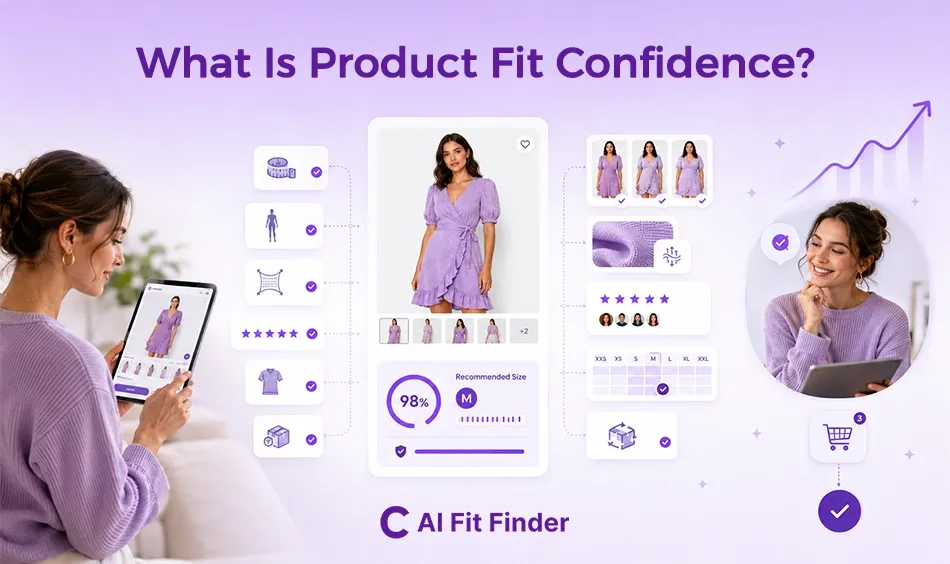
Product fit confidence is the shopper’s belief that a product will fit as expected before they complete the purchase. It answers the question every fashion shopper asks:
“Will this actually fit me?”
Fit confidence is not created by one element alone. It comes from multiple trust signals working together, including:
- Accurate size guidance
- Clear fit descriptions
- Model size references
- Fabric and stretch details
- Customer reviews
- Product images
- Brand sizing consistency
- Return transparency
When these signals are clear, shoppers feel supported. When they are missing or confusing, shoppers hesitate. For Shopify fashion stores, product fit confidence is a conversion lever. It reduces uncertainty and helps customers move from browsing to buying.
Why Fit Confidence Matters in Fashion Ecommerce
Fashion ecommerce is different from many other product categories. A shopper buying a phone case or kitchen tool mainly evaluates product features, price, reviews, and delivery. But a shopper buying clothing or footwear must also predict how the item will feel and fit on their body. That creates a higher level of purchase risk. A product may look good in photos but still fail because:
- The size runs small
- The fabric has no stretch
- The cut does not suit the customer’s body shape
- The length is different from what was expected
- The customer is between sizes
- The size chart is difficult to understand
Recent fashion sizing coverage shows that poor fit and inconsistent sizing remain major reasons shoppers hesitate, especially when sizing feels unreliable across brands. This is why fit confidence is not a small detail. It directly affects whether shoppers trust the product enough to buy.
One reason shoppers hesitate is that choosing the correct size label does not always guarantee the right fit. Fabric, cut, body shape, and brand sizing can all affect the final result. Our guide on why clothes don’t fit even when the size is right explains why fit confidence requires more than basic size labels.
Why Fit Uncertainty Reduces Shopify Sales
Fit uncertainty creates friction at every stage of the funnel. A shopper may love the product, like the price, and trust the brand visually, but still leave because they cannot confidently choose a size.
Customers Delay Purchase Decisions
When shoppers are unsure about fit, they often postpone the purchase.
They may think:
- “I’ll check later.”
- “I need to measure myself.”
- “I’m not sure which size to choose.”
- “I don’t want to deal with a return.”
This delay often turns into lost sales.
Size Doubt Lowers Add-to-Cart Rate
The size selector is a critical decision point on fashion product pages. If a shopper cannot confidently select a size, they may never add the product to the cart. This means the sale is lost before checkout even begins.
Return Fear Increases Checkout Abandonment
Fit uncertainty does not disappear after add-to-cart. It often becomes stronger at checkout, when the customer is about to pay. At that point, shoppers start thinking about return policies, refund timelines, and whether the purchase is worth the risk.
Low Fit Confidence Reduces Repeat Purchases
A poor fit experience does not only affect one order. If the first product does not fit, the customer may assume the brand’s sizing is unreliable. That reduces future purchase confidence and weakens customer loyalty.
A major reason shoppers feel unsure before buying is clothing size inconsistency. When the same size fits differently across brands or product categories, customers struggle to trust their usual size, which can reduce conversions and increase purchase hesitation.
The Hidden Link Between Fit Confidence and Fashion Ecommerce Conversion Rate
Many Shopify stores treat conversion rate optimization as a design or checkout problem. They improve page speed, buttons, product images, popups, and payment options. These improvements matter, but fashion ecommerce conversion rate is also strongly influenced by product confidence. For fashion stores, conversion is not only about getting shoppers to click. It is about helping them feel safe enough to buy.
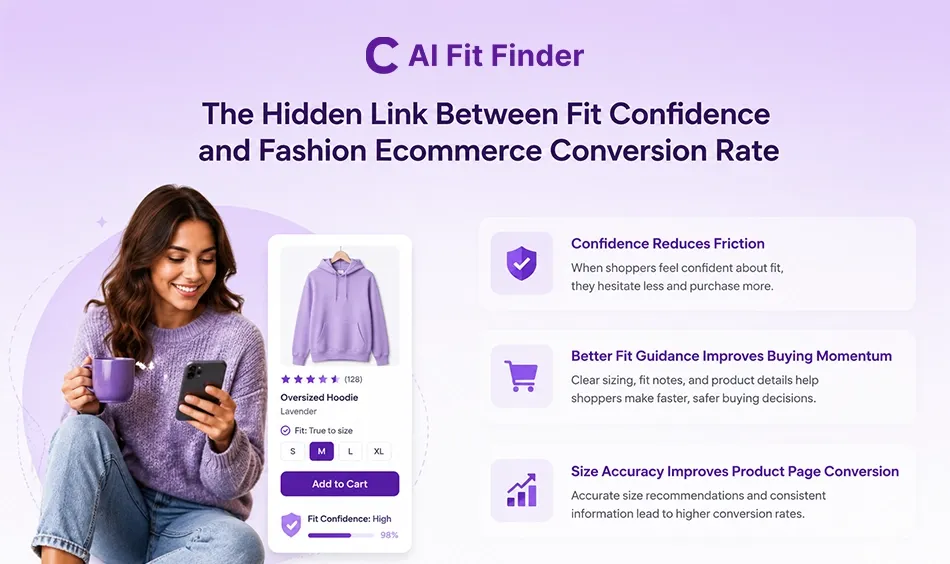
Confidence Reduces Friction
Every unanswered question creates friction. If shoppers wonder whether an item runs small, whether the fabric stretches, or whether they should size up, they slow down. Fit confidence removes this friction.
Better Fit Guidance Improves Buying Momentum
Strong fit guidance keeps shoppers moving. Instead of leaving the page to compare sizes, read unrelated reviews, or contact support, customers can make a decision directly on the product page.
Size Accuracy Improves Product Page Conversion
Improving size accuracy Shopify-wide helps customers choose the right size faster. Better size guidance reduces guesswork and gives shoppers a clearer path to purchase. This is especially important on mobile, where customers are less likely to study complex tables or scroll through long product descriptions.
How Size Accuracy Shopify-Wide Increases Sales
Size accuracy improves Shopify sales because it reduces uncertainty before purchase and improves satisfaction after delivery.
It Removes Guesswork
Customers should not have to interpret size charts alone. A static chart may show measurements, but it does not always explain whether the product runs small, stretches, or fits differently by body type. Size accuracy improves when shoppers receive clear guidance, not just data.
It Helps Customers Choose Faster
Confident shoppers make faster decisions. When size guidance is clear, customers spend less time comparing options and more time moving toward checkout.
It Improves First-Order Satisfaction
The first order is a trust test. If the product fits as expected, the customer feels reassured that the brand understands sizing. This makes future purchases easier.
It Supports Repeat Purchases
Customers return when they know what to expect. A shopper who trusts your sizing is more likely to buy across collections, try new styles, and place repeat orders with less hesitation.
Product fit confidence not only influences the first purchase. It also affects whether customers trust your store enough to buy again. Our guide on how size accuracy improves Shopify customer retention explains how better fit confidence supports repeat purchases, customer loyalty, and long-term revenue.
Product Fit Confidence vs Discounts: What Actually Drives Sales?
Many Shopify fashion stores use discounts to increase sales. Discounts can work in the short term, but they do not solve the reason shoppers hesitate. If the shopper is unsure about fit, a discount may reduce risk temporarily. But it does not build long-term trust.
| Factor | Discounts | Fit Confidence |
| Short-term sales lift | High | Medium |
| Long-term trust | Low | High |
| Return reduction | Low | High |
| Customer loyalty | Low | High |
| Margin protection | Low | High |
| Repeat purchase confidence | Medium | High |
Discounts can push a customer to buy once. Fit confidence gives them a reason to come back. For fashion stores, the stronger long-term growth lever is not always a lower price. It is a lower purchase risk.
Key Product Page Elements That Improve Fit Confidence
Product pages are where fit confidence is either built or lost. To increase Shopify sales, fashion brands need product pages that answer real shopper questions.
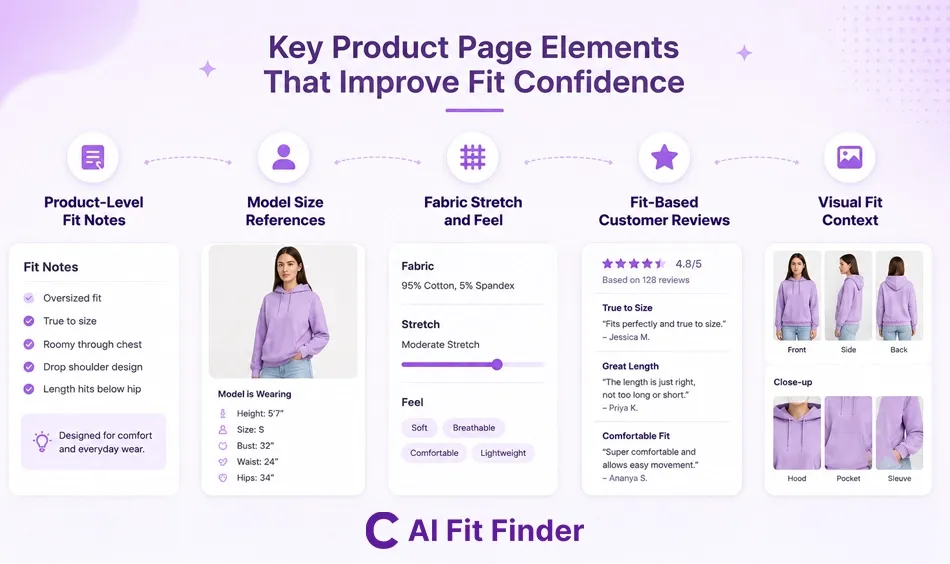
Product-Level Fit Notes
Fit notes should be specific to the product. Useful examples include:
- True to size
- Runs small
- Relaxed fit
- Slim fit
- Oversized fit
- Size up if between sizes
- Size down for a closer fit
Avoid generic copy. A customer needs to know how this product fits, not how your brand generally sizes.
Model Size References
Model references help customers visualize fit. Include details such as:
- Model height
- Size worn
- Body measurements
- Fit the description on the model
Example:
“Model is 5’7″ and wears size M. The dress has a relaxed fit through the waist.”
This gives shoppers context that a size chart cannot provide.
Fabric Stretch and Feel
Fabric plays a major role in fit. A medium in rigid denim will feel different from a medium in stretch jersey. Product pages should explain whether the fabric is:
- Non-stretch
- Lightly stretchy
- Structured
- Soft
- Body-hugging
- Thick
- Lightweight
- Flowy
This helps customers understand how the product will behave when worn.
Fit-Based Customer Reviews
Reviews are stronger when they include fit details. Encourage customers to mention:
- Size purchased
- Usual size
- Fit experience
- Comfort
- Whether the product runs small or large
- Body type or height when relevant
Research on size and fit recommendation systems also highlights the value of customer feedback and reviews for improving fit prediction.
Visual Fit Context
Images and videos should show the product clearly. Fashion shoppers benefit from:
- Multiple angles
- Close-up fabric shots
- Movement videos
- User-generated content
- Different body-type representation
Visual fit context helps shoppers imagine the product on themselves.
How Fit Confidence Reduces Returns and Protects Revenue
Returns are one of the highest hidden costs in fashion ecommerce. A sale is not truly profitable if the product comes back.
Fewer Wrong-Size Orders
When customers receive better size guidance, they are less likely to order the wrong size. This reduces return volume and improves net revenue.
Lower Reverse Logistics Costs
Returns create costs through:
- Return shipping
- Inspection
- Restocking
- Customer support
- Packaging
- Refund processing
- Inventory delays
Reducing size-related returns protects margins.
Better Post-Purchase Satisfaction
When customers keep what they buy, the purchase experience feels complete. They are more likely to leave positive reviews, recommend the brand, and buy again.
Stronger Brand Trust
Returns do not only cost money. They affect trust. If customers repeatedly experience a poor fit, they begin to associate the brand with risk. Better fit confidence reduces that risk and supports customer loyalty.
Fit confidence is one of the most effective ways to reduce return risk before the purchase happens. Our guide on how to reduce size-related returns in fashion ecommerce explains how better sizing guidance, product clarity, and fit expectations help protect revenue after checkout.
How Fit Confidence Improves Customer Loyalty in Shopify Stores
Customer loyalty in fashion is built through consistency. A shopper may buy once because of a trend, ad, or discount. But they return because the experience worked.
First Fit Experience Builds Trust
The first fit experience shapes the customer’s opinion of your store. If the product fits well, the customer feels understood. If it does not, the customer may question the brand’s reliability.
Consistent Sizing Encourages Repeat Orders
Customers are more likely to reorder when sizing feels predictable. Consistent sizing helps customers buy faster because they do not need to restart the decision process every time.
Better Fit Guidance Supports Customer Loyalty
Strong fit guidance improves customer loyalty Shopify stores need because it makes customers feel supported. They trust the brand not only to sell stylish products, but to help them choose correctly.
Practical Ways to Improve Product Fit Confidence on Shopify
Fit confidence can be improved through clear product experience, better sizing logic, and ongoing customer feedback.
1. Replace Generic Size Charts With Product-Specific Guidance
Generic charts are often too broad. Different products fit differently because of fabric, cut, design, and category. A fitted dress, oversized hoodie, and stretch leggings should not rely on the same sizing explanation. Add product-specific fit notes to every important product page.
2. Add Between-Size Recommendations
Many shoppers fall between sizes. Instead of leaving them to guess, give clear instructions.
Examples:
- “If between sizes, choose the larger size for comfort.”
- “Size down for a closer fit.”
- “Choose your usual size for a relaxed look.”
- “If you prefer a looser fit, size up.”
This small guidance can reduce hesitation significantly.
3. Use Fit Feedback From Returns and Reviews
Return data and reviews are powerful sources of insight. If many customers say an item runs small, update the product page. If returns show repeated length issues, mention the length more clearly. Do not let customers repeat the same mistake.
4. Add Size Recommendation Tools
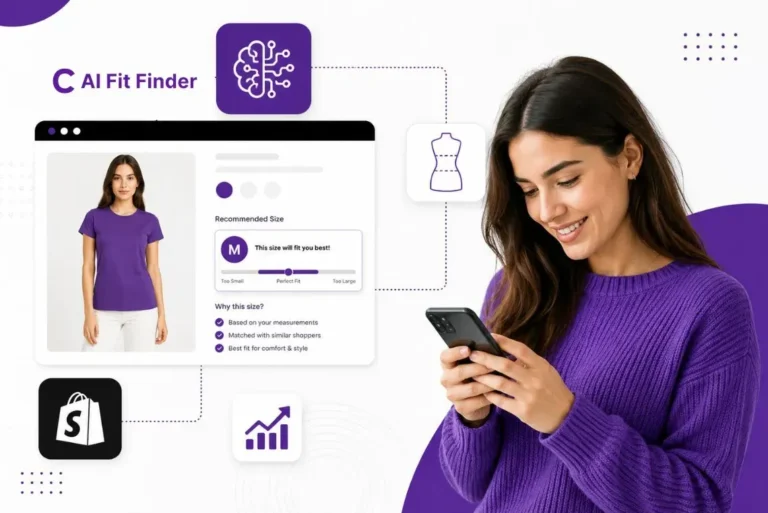
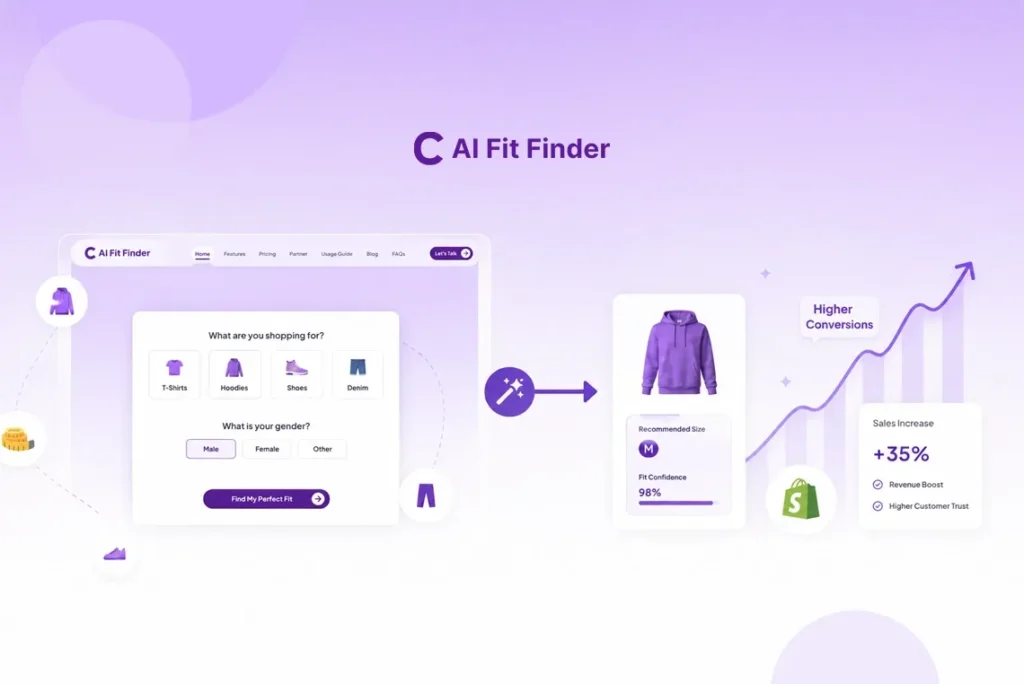
Size recommendation tools help customers make faster, more confident decisions. These tools can guide shoppers based on inputs, preferences, product category, or sizing logic.
Research into personalized size and fit recommendations has shown that data-driven approaches can support better fit prediction and reduce size-related problems in fashion ecommerce. For Shopify fashion stores, this can help reduce guesswork and improve buying confidence.
5. Improve Mobile Fit Guidance
Many fashion shoppers browse on mobile. Sizing information should be easy to find without excessive scrolling. Keep fit notes close to the size selector and avoid hiding important guidance inside tabs that shoppers may miss.
6. Use Fit Confidence Messaging Near Add-to-Cart
Add reassurance near the decision point.
Examples:
- “Not sure about your size? Get a fit recommendation.”
- “Runs true to size.”
- “Model wears size M.”
- “Choose a size up for a relaxed fit.”
The goal is to answer fit doubts before they interrupt the purchase.
How Smart Size Guidance Helps Increase Shopify Sales
Smart size guidance supports sales by helping shoppers make better decisions at the exact moment they are unsure.
Personalized Size Recommendations
Instead of forcing shoppers to interpret a chart, smart guidance can recommend a size based on relevant inputs. This reduces mental effort and supports faster purchase decisions.
Real-Time Product Page Confidence
Fit guidance should appear before hesitation causes drop-off. If shoppers only discover sizing help after they are already confused, the opportunity may be lost. Strong size recommendation experiences should support the customer directly on the product page.
Better Sizing Data Over Time
Stores can improve sizing accuracy by learning from:
- Customer selections
- Return reasons
- Fit feedback
- Product-level issues
- Customer reviews
This turns sizing from a static chart into an evolving conversion system.
Metrics to Track Fit Confidence Impact on Shopify Sales
To understand whether fit confidence is improving sales, track both pre-purchase and post-purchase metrics.
Product Page Conversion Rate
This shows whether product pages are converting visitors into buyers. If fit guidance improves, product page conversion may improve.
Add-to-Cart Rate
Add-to-cart rate is especially important for sizing. If customers are viewing products but not adding them to the cart, size uncertainty may be one of the blockers.
Size-Related Return Rate
Track returns caused by:
- Too small
- Too large
- Poor fit
- Wrong size selected
- Length issue
A decline in size-related returns is a strong sign that fit confidence is improving.
Checkout Abandonment Rate
If customers add products but abandon checkout, fit doubts may still be present near the final decision stage.
Repeat Purchase Rate
Fit confidence should improve repeat buying. If customers trust sizing after the first order, they are more likely to return.
Common Mistakes That Reduce Product Fit Confidence
Many Shopify fashion stores unintentionally create sizing friction.
Relying Only on Static Size Charts
Charts provide measurements, but they do not guide decisions. Customers still need to interpret numbers and understand how those measurements translate into fit.
Hiding Size Guidance Below the Fold
Sizing information should be visible before shoppers feel stuck. If fit details are buried below long descriptions or hidden tabs, many customers will miss them.
Ignoring Customer Fit Feedback
Reviews, returns, and support questions reveal real sizing problems. Ignoring them means future customers keep facing the same issues.
Using the Same Fit Description for Every Product
Different products need different fit guidance. A relaxed shirt, slim dress, and structured jacket should not use identical sizing language.
Treating Fit as a Return Problem Instead of a Sales Problem
Fit uncertainty affects revenue before the order is placed. By the time a customer returns a product, the sales opportunity has already been damaged. Fit confidence should be improved before checkout.
Product Fit Confidence Checklist for Shopify Fashion Stores
| Fit Confidence Element | Why It Matters | Impact |
| Fit notes near the size selector | Answers size doubts quickly | Reduces hesitation |
| Model size reference | Adds real-world context | Improves confidence |
| Fabric stretch details | Sets accurate expectations | Reduces returns |
| Fit-based reviews | Builds social proof | Improves trust |
| Size recommendation tool | Guides size selection | Reduces guesswork |
| Return reason tracking | Finds sizing issues | Improves future accuracy |
| Mobile-friendly sizing UX | Helps mobile shoppers | Improves conversion |
Use this checklist to audit your highest-traffic product pages first.
The Fit Confidence Sales Framework
To improve product fit confidence in a structured way, use this five-stage framework.
Stage 1: Identify Fit Friction
Review product page data, return reasons, customer support tickets, and reviews. Look for repeated problems such as:
- Size confusion
- Too-small returns
- Too-large returns
- Length complaints
- Unclear fabric expectations
Stage 2: Add Product-Level Fit Context
Update product pages with fit notes, model references, fabric behavior, and customer feedback. This gives shoppers more confidence before purchase.
Stage 3: Guide Size Selection
Add smart recommendations, between-size guidance, and easy-to-understand sizing messages. The goal is to help customers choose without overthinking.
Stage 4: Reduce Returns
Measure whether size-related returns decline after improving fit guidance. This shows whether customers are making better decisions.
Stage 5: Increase Shopify Sales
Track sales impact through conversion rate, add-to-cart rate, repeat purchases, and net revenue. Fit confidence should improve both front-end sales and post-purchase profitability.
Frequently Asked Questions
- How can I increase Shopify sales for a fashion store?
You can increase Shopify sales by improving product pages, reducing size uncertainty, adding trust signals, optimizing checkout, using better fit guidance, reducing returns, and increasing repeat purchases. For fashion stores, product fit confidence is one of the most important sales drivers.
- What is product fit confidence?
Product fit confidence is the customer’s belief that a product will fit as expected before they buy. It is built through size accuracy, fit notes, model references, fabric details, reviews, and clear product guidance.
- How does size accuracy improve Shopify sales?
Size accuracy improves Shopify sales by reducing hesitation, helping customers choose the right size faster, lowering return fear, and increasing purchase confidence.
- Do size charts help increase fashion ecommerce conversion rate?
Size charts can help, but they are not enough alone. Fashion ecommerce conversion rate improves more when size charts are supported by fit notes, model references, customer reviews, and size recommendation tools.
- How does fit confidence reduce returns?
Fit confidence reduces returns by helping customers choose the right size before purchase. Better size decisions lead to fewer wrong-size orders and higher post-purchase satisfaction.
- What tools help improve product fit confidence on Shopify?
Size recommendation tools, customer review tools, analytics tools, and product page optimization tools can all improve product fit confidence on Shopify.
- How does fit confidence improve customer loyalty?
Fit confidence improves customer loyalty by creating trust. When customers receive products that fit as expected, they are more likely to buy again and recommend the brand.
Conclusion
Shopify fashion stores do not increase sales only by getting more traffic. They increase sales when shoppers feel confident enough to buy.
Product fit confidence removes one of the biggest barriers in fashion ecommerce: uncertainty. When customers understand how a product fits, which size to choose, and what to expect after delivery, they are more likely to complete the purchase.
Better fit confidence improves conversion, reduces returns, protects margins, and strengthens customer loyalty. To increase Shopify sales, fashion stores should treat fit confidence as a core part of their sales strategy, not just a sizing detail. Because when shoppers trust the fit, they trust the purchase.