
Swimwear returns are harder to manage than regular apparel returns because swimsuits are highly fit-sensitive, seasonal, personal, and often affected by hygiene rules. A shopper may return a swimsuit because it feels too tight, does not support the bust, offers less coverage than expected, pulls at the torso, or simply does not feel comfortable on their body.
For Shopify swimwear brands, this creates a serious challenge. Returns do not only reduce revenue. They also increase support workload, affect inventory planning, reduce profit margins, and damage customer confidence.
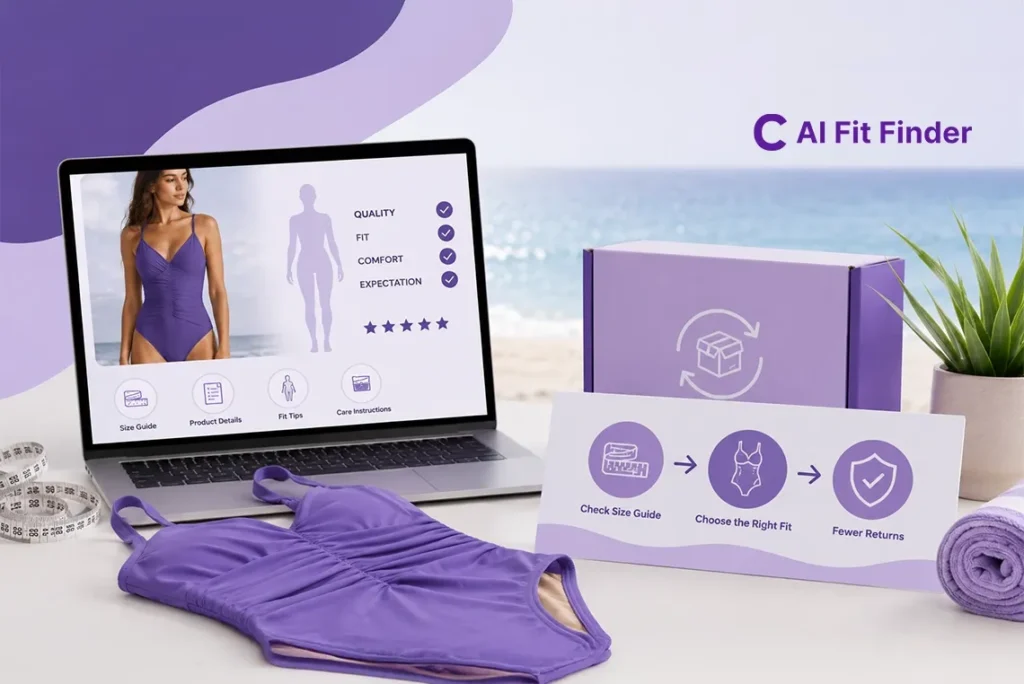
But reducing swimwear returns is not only about writing a stricter return policy. The bigger opportunity is to prevent avoidable returns before checkout.
Most swimwear returns begin at the product page, when shoppers are unsure about size, fit, support, stretch, coverage, or torso length. If the sizing experience is unclear, shoppers either leave the page, guess their size, or buy multiple sizes with the intention of returning the ones that do not fit.
In this guide, you’ll learn:
- Why swimwear returns are different from regular apparel returns
- The most common reasons customers return swimsuits
- Why basic swimwear size charts do not prevent returns
- How sizing confusion leads to wrong-size orders
- How Shopify swimwear stores can reduce returns before checkout
- What product-page elements improve fit confidence
- How to improve swimwear return policies without hurting conversions
- How AI size recommendations can help reduce swimwear fit issues
For Shopify swimwear brands, the goal is simple: help shoppers choose the right swimsuit size before they buy, so fewer orders turn into avoidable returns.
Why Swimwear Returns Are Different From Regular Apparel Returns
Swimwear is one of the most sensitive categories in fashion ecommerce. A slightly loose t-shirt may still be wearable. A slightly wrong swimsuit may not be.
Swimwear must fit closely across multiple body areas and perform well in different conditions, including dry try-on, movement, swimming, lounging, and water exposure. This makes swimwear returns more complex than regular apparel returns.
| Swimwear Return Challenge | Why It Matters |
| Hygiene rules | Returned swimwear may require tags, liners, and condition checks |
| Fit sensitivity | A small sizing issue can make the item uncomfortable |
| Bust support | Poor support can make tops or one-pieces unwearable |
| Torso length | One-piece swimsuits often fail when torso fit is wrong |
| Coverage expectations | Shoppers may return if the coverage feels too revealing |
| Compression fit | Sculpting swimwear may feel tighter than expected |
| Seasonal demand | Return volume may increase during swimwear season |
Return policy platforms and ecommerce return experts often focus on swimwear as a category that needs careful return rules, especially around hygiene liners, tags, return windows, exchanges, and return eligibility. Those rules are important, but they mainly solve the problem after the order is delivered.
Shopify swimwear brands also need to solve the problem earlier. A clear return policy protects the business after purchase. A better sizing experience reduces the chance that the customer needs to return the swimsuit at all.
The Biggest Reasons Customers Return Swimwear
Swimwear returns usually happen because the product does not match the shopper’s fit expectations. The customer may like the design, color, and quality, but still return it if the sizing or comfort does not work. Here are the most common swimwear return reasons:
| Return Reason | What It Usually Means |
| Wrong size selected | Shopper guessed or used usual size instead of product-specific guidance |
| Torso too short | One-piece pulls at shoulders, bust, or hips |
| Torso too long | One-piece bunches or feels loose |
| Poor bust support | Bikini top or one-piece does not feel secure |
| Bottom coverage issue | Customer expected more or less coverage |
| Fabric too tight | Compression or sculpting fit was not clearly explained |
| Between-size confusion | Shopper did not know whether to size up or down |
| Product looked different | Photos did not show fit, coverage, or body shape clearly |
| Ordered multiple sizes | Shopper planned to return unwanted sizes |
| Return policy unclear | Customer misunderstood eligibility or conditions |
Size and fit are major drivers of fashion ecommerce returns. In swimwear, the issue becomes even more important because the product sits close to the body and is strongly connected to comfort, confidence, and support.
A return often feels like a post-purchase problem, but the root cause usually starts earlier. If the shopper did not have enough sizing confidence before checkout, the return risk was already created.
A swimsuit can match the size chart and still feel wrong because fit depends on torso length, body shape, fabric stretch, compression, bust support, and coverage. Our guide on why clothes don’t fit even when the size is right explains why apparel fit is more complex than a size label or measurement range.
Why Basic Swimwear Size Charts Do Not Prevent Returns
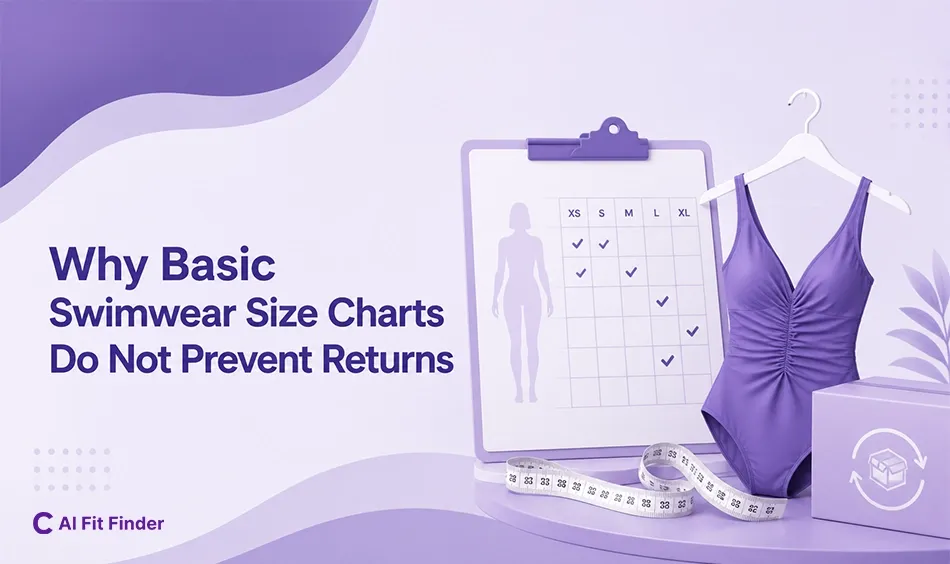
A basic swimwear size chart is helpful, but it does not always prevent returns. Most size charts show body measurements such as bust, waist, and hips. That is useful information, but shoppers still need to interpret what those numbers mean for a specific swimsuit.
A shopper may still wonder:
- Should I size up or down?
- What if my bust and hips match different sizes?
- Does this swimsuit stretch?
- Is this one-piece suitable for a long torso?
- Is the bikini bottom full coverage or cheeky?
- Is this swimsuit meant to feel compressive?
- Will the top support a fuller bust?
- What size should I choose if I am between sizes?
A size chart gives information. It does not always make a decision. That is where many swimwear brands lose control of the buying experience. When shoppers do not know what size to choose, they may guess, abandon the product page, contact support, or order multiple sizes. A better swimwear sizing experience should combine:
| Sizing Element | Why It Helps |
| Body measurements | Helps shoppers compare bust, waist, hips, and torso |
| Product-specific fit notes | Explains how each swimsuit is designed to fit |
| Fabric stretch details | Sets expectations around compression and comfort |
| Coverage labels | Helps shoppers understand bottom and top coverage |
| Bust support details | Reduces uncertainty for bikini tops and one-pieces |
| Model measurements | Gives visual sizing context |
| Between-size guidance | Helps shoppers choose confidently |
| AI size recommendation | Turns sizing data into a direct size suggestion |
A swimwear size chart is the foundation. But it should not be the entire sizing experience. A strong swimwear size guide is the foundation of reducing size confusion before checkout. It helps shoppers understand bust, waist, hip, torso, support, stretch, and coverage details before choosing a size. If your store still relies on a basic chart, this guide explains what Shopify swimwear brands should include to improve fit confidence.
How Sizing Confusion Leads to Swimwear Returns
Sizing confusion creates return risk before the customer places the order. Here is the typical journey:
| Shopper Moment | What Happens |
| Shopper finds a swimsuit | They like the style and product photos |
| They open the size chart | Measurements are listed, but the decision is still unclear |
| They compare their usual size | The chart does not fully match their body |
| They guess between sizes | They choose based on instinct or past brands |
| The swimsuit arrives | Fit feels too tight, too loose, too short, or unsupportive |
| They start a return | The merchant loses margin, time, and possibly the customer |
This is why Shopify swimwear brands need to think beyond returns management. The best return reduction strategy starts before checkout.
When product pages answer sizing questions clearly, shoppers can choose with more confidence instead of guessing. This reduces the chance of wrong-size orders and helps Shopify swimwear brands control avoidable returns before they happen.
How to Reduce Swimwear Returns Before Checkout
The best way to reduce swimwear returns is to improve the buying decision before the shopper clicks “Add to Cart.” Here are practical steps Shopify swimwear brands can apply.
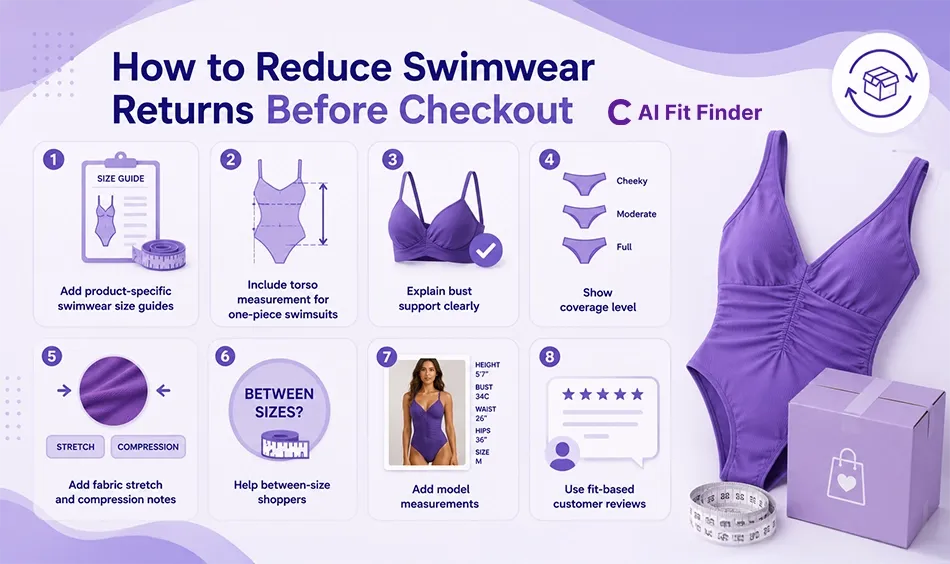
1. Add product-specific swimwear size guides
Do not use one generic apparel size chart for all swimwear products. A one-piece swimsuit, bikini top, bikini bottom, rash guard, and swim dress all have different fit requirements. Each product type should include the measurements and fit details that matter most.
2. Include torso measurement for one-piece swimsuits
Torso length is one of the biggest sizing gaps in swimwear ecommerce. A one-piece swimsuit can match bust, waist, and hip measurements but still fit poorly if the torso length is wrong.
Long-torso shoppers may feel pulling at the shoulders or hips. Short-torso shoppers may experience bunching or loose areas. Add torso guidance wherever one-piece fit matters.
3. Explain bust support clearly
For bikini tops and one-piece swimsuits, bust support is a major decision factor. Brands should clearly mention:
- Underwire support
- Removable padding
- Adjustable straps
- Cup coverage
- Band support
- Suitable cup range
- Light, medium, or high support
This helps shoppers understand whether the swimsuit is right for their body and activity level.
4. Show coverage level
Coverage confusion often leads to dissatisfaction. Use clear terms such as:
| Coverage Term | Meaning |
| Full coverage | More fabric and secure fit |
| Moderate coverage | Balanced everyday swimwear coverage |
| Cheeky coverage | Less back coverage |
| High rise | Sits higher on the waist |
| Low rise | Sits lower on the hips |
| High leg | Creates a longer-leg visual fit |
Do not assume shoppers understand your brand’s coverage language. Explain it clearly. Swimwear returns are often part of a larger fashion ecommerce problem: shoppers choosing the wrong size before checkout. Our guide on how to reduce size-related returns in fashion ecommerce explains how better pre-purchase sizing guidance can help apparel brands lower return risk and protect revenue.
5. Add fabric stretch and compression notes
Swimwear fabric can feel very different depending on its construction. If the product is sculpting, compressive, double-lined, or performance-focused, shoppers should know before they buy.
Helpful fit notes include:
- “Designed for a snug sculpting fit”
- “Size up if between sizes”
- “High-stretch fabric”
- “Medium compression”
- “Adjustable fit”
- “Runs small in bust”
- “Best for long torsos”
These small details can reduce surprise after delivery.
6. Help between-size shoppers
Many returns happen because shoppers fall between two sizes. Instead of leaving them to guess, provide simple guidance:
| Situation | Recommended Guidance |
| Between sizes in compressive swimwear | Size up |
| Between sizes in adjustable bikini top | Choose based on bust support preference |
| Bust and hips match different sizes | Prioritize the area where the swimsuit is most fitted |
| One-piece torso is borderline | Check torso length before choosing |
| Shopper prefers more coverage | Size up or choose full-coverage style |
Between-size guidance can be one of the simplest ways to reduce sizing hesitation.
7. Add model measurements
Model photos are more useful when paired with measurements.
Include:
- Model height
- Bust, waist, and hip measurements
- Size worn
- Cup size where relevant
- Torso note for one-piece styles
This helps shoppers compare the product visually and realistically.
8. Use fit-based customer reviews
General reviews are helpful, but fit-based reviews are better. Ask customers:
- Did it run small, large, or true to size?
- What size did you buy?
- What is your usual size?
- How was bust support?
- How was torso length?
- How was bottom coverage?
This gives future shoppers more real-world sizing context.
Product Page Elements That Help Reduce Swimwear Returns
Your product page should reduce sizing doubt at the exact moment shoppers are choosing a size. Here are the most important product-page elements:
| Product Page Element | Return-Reduction Benefit |
| Size guide near size selector | Reduces guessing at the decision point |
| Find My Size widget | Gives guided sizing support |
| Torso guidance | Helps one-piece shoppers |
| Bust support details | Reduces dissatisfaction with tops |
| Coverage labels | Sets expectations before purchase |
| Fabric stretch notes | Reduces surprise after delivery |
| Fit-based reviews | Adds real buyer context |
| Model measurements | Improves visual comparison |
| Clear return policy | Reduces post-purchase confusion |
| Exchange CTA | Encourages size correction instead of refund |
The key is placement. If the size guide is hidden below the fold, inside a hard-to-find tab, or not mobile-friendly, many shoppers will not use it. Swimwear size help should appear near the size selector because that is where the shopper needs guidance most. For mobile shoppers, this matters even more. The size guide should be easy to open, easy to read, and easy to act on.
How to Improve Your Swimwear Return Policy Without Hurting Conversions
A strict return policy may reduce some returns, but it can also hurt conversions if shoppers feel too much risk. Swimwear shoppers already feel uncertainty around fit, hygiene, and comfort. If the return policy feels unclear or too restrictive, they may abandon the purchase.
The goal is to create a return policy that protects your business while maintaining customer trust. A strong swimwear return policy should explain:
| Policy Element | Recommendation |
| Hygiene liner | Require liner attached for eligible returns |
| Tags | Require original tags attached |
| Condition | State that swimwear must be unworn and unwashed |
| Return window | Make the number of days clear |
| Exchanges | Encourage size exchanges when fit is the issue |
| Final sale | Clearly label before checkout |
| Return shipping | Explain who pays and when |
| Store credit | Offer as a refund alternative |
| Inspection process | Explain that returns are reviewed for eligibility |
The policy should be visible before checkout, not only after the order is placed. Place return policy links near:
- Product descriptions
- Size guide
- Cart page
- Checkout
- Footer
- FAQ section
This reduces confusion and prevents customers from feeling misled.
Refunds vs Exchanges: How Swimwear Brands Can Protect Revenue
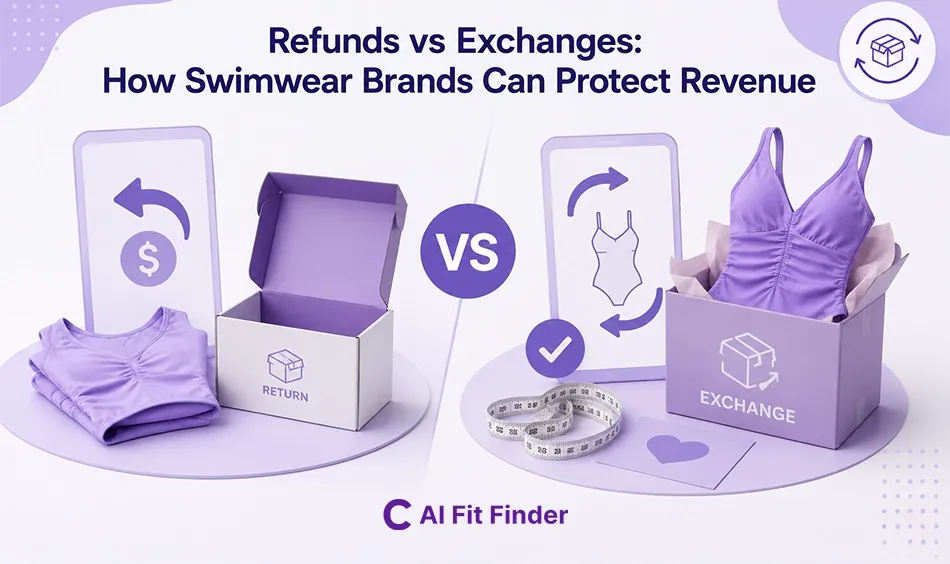
Not every return needs to become a lost sale. For Shopify swimwear brands, exchanges can protect revenue while still giving customers a positive experience.
| Return Outcome | Revenue Impact |
| Refund | Revenue is lost |
| Size exchange | Revenue is retained |
| Store credit | Revenue stays with the brand |
| Gift card | Encourages future purchase |
| Product swap | Keeps customer inside the catalog |
If a customer likes the swimsuit but chose the wrong size, a size exchange is better than a refund. To encourage exchanges:
- Make exchanges easy to start
- Recommend the better size during the exchange flow
- Offer free exchanges when possible
- Show alternative sizes or styles
- Provide fit support before the exchange is completed
- Use return reasons to guide the replacement item
The key is to avoid treating every return the same way. A customer returning because of poor fit may still want the product. They just need a better size, better support, or a different style.
How Return Reason Data Helps Reduce Future Swimwear Returns
Many brands collect return reasons, but the data is often too vague. A return reason like “wrong size” does not tell the merchant what actually went wrong.
A return reason like “wrong size” is too broad. Brands need to understand whether the issue came from bust fit, waist looseness, torso length, bottom coverage, or fabric compression. Better return reason data helps brands improve product pages, size guides, size recommendations, and future designs.
| Generic Return Reason | Better Return Reason |
| Wrong size | Too tight in bust |
| Wrong size | Too loose in waist |
| Wrong size | Torso too short |
| Wrong size | Torso too long |
| Did not fit | Bottom coverage too small |
| Did not fit | Top lacked support |
| Did not fit | Fabric too compressive |
| Did not fit | Between sizes |
| Not as expected | Coverage looked different |
| Not comfortable | Straps or seams caused discomfort |
Detailed return reasons help merchants identify patterns.
For example:
- If many one-piece returns mention torso length, add torso guidance.
- If bikini top returns mention support, add cup range and support level.
- If bottom returns mention coverage, improve photos and coverage labels.
- If customers say fabric feels tight, explain compression more clearly.
Return data should not only help process returns. It should help prevent the next return.
Swimwear Fit Issues by Product Type
Different swimwear products create different return risks.
| Product Type | Common Return Reason | How to Reduce It |
| One-piece swimsuit | Torso too short or too long | Add torso measurement and long-torso guidance |
| Bikini top | Poor bust support | Add cup range, padding, underwire, and support level |
| Bikini bottom | Wrong coverage | Show coverage type and model images |
| Swim dress | Length or bust fit issue | Add bust, waist, hip, and length notes |
| Rash guard | Tight shoulders or sleeves | Add activity-fit and stretch guidance |
| Swim shorts | Waist or mobility issue | Add waistband and inseam details |
| Sculpting swimwear | Feels too tight | Explain compression and size-up guidance |
| Tankini | Top length or bust issue | Add torso and support guidance |
This product-specific approach is important because swimwear is not one category with one fit logic. A bikini top needs different guidance from a one-piece. A swim dress needs different guidance from rash guards. A high-compression swimsuit needs different guidance from a relaxed beachwear style. The more specific your fit guidance is, the less your customer has to guess.
Swimwear Returns Checklist for Shopify Stores
Use this checklist to audit your current swimwear returns and sizing experience.
| Checklist Item | Status |
| Product-specific size guide added | Yes / No |
| Torso measurement included for one-piece suits | Yes / No |
| Bust support explained | Yes / No |
| Coverage level shown | Yes / No |
| Fabric stretch and compression explained | Yes / No |
| Model measurements added | Yes / No |
| Fit-based reviews collected | Yes / No |
| Return policy visible before checkout | Yes / No |
| Hygiene and return eligibility explained | Yes / No |
| Exchanges promoted before refunds | Yes / No |
| Return reasons are detailed and actionable | Yes / No |
| AI size recommendation widget added | Yes / No |
If your store answers “No” to several of these, shoppers may still be choosing sizes with uncertainty. And when shoppers guess, avoidable returns become more likely.
How AI Size Recommendations Help Reduce Swimwear Returns
AI size recommendations can help reduce swimwear return risk by guiding shoppers toward the most suitable size before checkout. Instead of asking shoppers to interpret a size chart alone, AI-powered recommendations can use shopper inputs, product-specific size data, and fit preferences to provide a clearer sizing direction. For Shopify swimwear brands, this is especially useful because swimwear fit depends on more than basic size labels.
| Swimwear Return Problem | How AI Fit Finder Helps |
| Shoppers guess between sizes | Gives guided size recommendations |
| One generic chart for all products | Supports product-specific sizing logic |
| Low fit confidence | Improves product-page sizing clarity |
| Wrong-size orders | Helps reduce preventable size mistakes |
| Repetitive sizing questions | Gives shoppers self-service fit help |
| No sizing behavior insight | Provides analytics on recommendation engagement |
| International size confusion | Supports more guided sizing experiences |
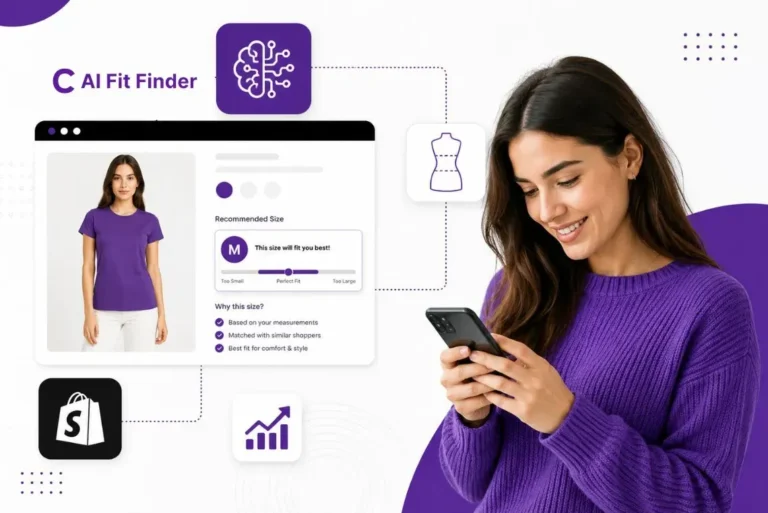
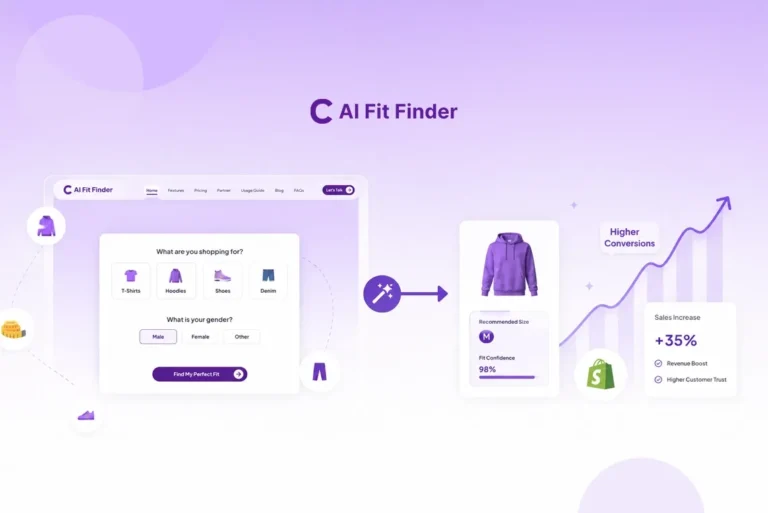
AI Fit Finder helps Shopify apparel and swimwear stores provide personalized size recommendations directly on product pages. For swimwear, this can help shoppers choose based on their body inputs, fit preference, product sizing rules, and product category. It gives customers a more guided experience than a static size chart alone.
Swimwear returns often begin with size doubt before checkout. With AI Fit Finder, Shopify swimwear brands can give shoppers personalized size recommendations directly on product pages, helping them choose the right fit with less guesswork. Install AI Fit Finder on Shopify and improve swimwear sizing confidence before shoppers place an order.
Frequently Asked Questions
1. How can Shopify stores reduce swimwear returns?
Shopify stores can reduce swimwear returns by improving product-page sizing guidance, adding torso measurements, explaining bust support, showing coverage levels, providing fabric stretch details, collecting fit-based reviews, and using AI size recommendations before checkout.
2. Why do customers return swimsuits?
Customers usually return swimsuits because of the wrong size, poor bust support, torso mismatch, unexpected coverage, tight compression, unclear product photos, or confusion about fit. Many swimwear returns happen because shoppers guessed their size before buying.
3. Do swimsuit size charts reduce returns?
Swimsuit size charts can reduce returns when they are accurate, easy to use, and product-specific. However, a basic chart may not be enough. Brands should also include fit notes, torso guidance, coverage details, fabric stretch information, and personalized size recommendations.
4. What should a swimwear return policy include?
A swimwear return policy should include a return window, hygiene liner rules, tag requirements, item condition, exchange options, final sale rules, return shipping details, refund method, and eligibility conditions. The policy should be visible before checkout.
5. How do you handle swimwear returns for hygiene reasons?
Swimwear returns should require original tags, hygiene liners, unworn condition, and unwashed condition. Brands should clearly explain these rules on product pages, return policy pages, and checkout so shoppers understand eligibility before buying.
6. How can brands reduce wrong-size swimsuit orders?
Brands can reduce wrong-size swimsuit orders by using accurate size guides, torso measurements, bust support details, coverage labels, fabric notes, model measurements, customer fit reviews, and AI-powered size recommendation tools.
7. Should swimwear brands offer refunds or exchanges?
Swimwear brands should offer exchanges where possible because size exchanges help retain revenue and improve customer experience. Refunds may still be necessary, but exchanges and store credit can reduce revenue loss from fit-related returns.
Conclusion
Reducing swimwear returns is not only about creating a stricter return policy. It starts before checkout. Shopify swimwear brands can reduce avoidable returns by improving sizing guidance, adding torso and bust support details, explaining coverage and stretch, collecting better return reason data, and using AI-powered size recommendations.
A clear return policy protects your business after purchase. A better sizing experience prevents many returns before they happen. For swimwear brands, that difference matters. When shoppers understand how a swimsuit will fit before they buy, they are more likely to choose the right size, keep the product, and trust the brand again.
The brands that reduce swimwear returns successfully will not only manage returns better. They will help shoppers buy with more confidence from the start.