
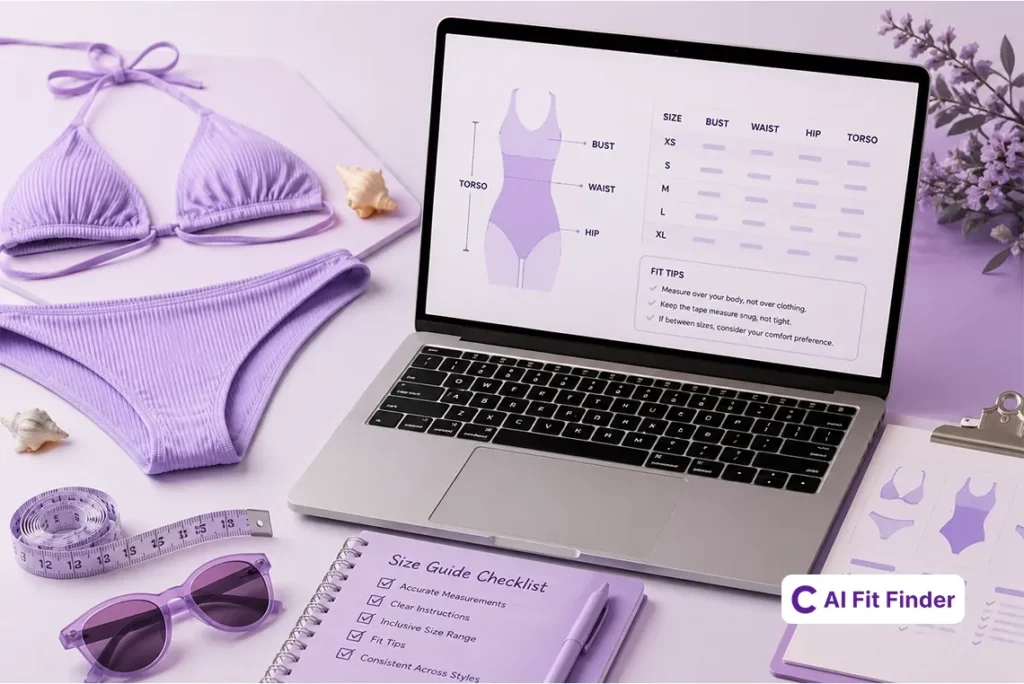
A swimwear size guide is essential for Shopify swimwear brands because swimsuits are one of the most fit-sensitive products in fashion ecommerce. Unlike regular apparel, swimwear must fit closely across the bust, waist, hips, torso, and support areas while still feeling comfortable, secure, and flattering.
For shoppers, choosing a swimsuit size online can feel risky. They may wonder whether to size up or down, whether the fabric has enough stretch, whether a one-piece will fit their torso, or whether a bikini top will provide the right level of support. If these questions are not answered clearly, shoppers may delay the purchase, leave the product page, or buy the wrong size.
That is why a basic swimsuit size chart is no longer enough for many fashion brands. Shopify swimwear stores need a sizing experience that combines accurate measurements, fit notes, product-specific guidance, fabric details, coverage information, and personalized size recommendations.
In this guide, we’ll cover:
- Why is swimwear sizing more complex than regular apparel sizing
- What measurements should every swimsuit size chart include
- How to structure a better swimwear size chart for Shopify product pages
- Why torso length, bust support, stretch, and coverage matter
- Common swimwear sizing mistakes fashion brands should avoid
- How better sizing guidance can improve conversions and reduce returns
- How AI-powered size recommendations can help Shopify swimwear brands improve fit confidence
For apparel Shopify store owners, the goal is simple: help shoppers choose the right swimwear size faster, buy with more confidence, and reduce size-related returns after purchase.
Why Swimwear Sizing Is More Complex Than Regular Apparel
Swimwear sizing is different from regular apparel sizing because swimsuits are designed to sit close to the body.
A loose t-shirt may still feel acceptable if the size is slightly off. A swimsuit usually does not offer the same flexibility. If the size is wrong, customers notice immediately. Swimwear must balance:
| Fit Factor | Why It Matters |
| Bust support | Important for bikini tops, one-pieces, and swim dresses |
| Waist fit | Helps with one-pieces, high-waist bottoms, and shaping swimwear |
| Hip fit | Critical for bottoms, coverage, and comfort |
| Torso length | Essential for one-piece swimsuits |
| Fabric stretch | Affects compression, comfort, and movement |
| Coverage preference | Impacts confidence and style choice |
| Activity level | Swimming, lounging, surfing, and sports use require different fits |
This is why Shopify swimwear stores should not rely on generic apparel size charts. A swimwear customer is not only asking, “What size am I?”
They are asking:
“Will this swimsuit fit, support, cover, and feel comfortable on my body?”
That question requires more detailed sizing guidance. Fashion ecommerce research also shows that size and fit issues are a major reason behind returns and customer dissatisfaction.
Narvar reports that size and fit remain the top reason for returns, accounting for 45% of returns in its 2022 returns report. For swimwear brands, that makes accurate sizing guidance a business priority, not just a customer service detail.
What Is a Swimwear Size Guide?
A swimwear size guide is a sizing resource that helps shoppers choose the right swimsuit size using body measurements, product fit information, fabric behavior, and style-specific guidance. A strong swimwear guide usually includes:
| Size Guide Element | Why It Matters |
| Bust measurement | Helps shoppers choose bikini tops, one-pieces, and supportive styles |
| Waist measurement | Important for one-pieces and high-waist bottoms |
| Hip measurement | Helps with bikini bottoms, swim shorts, and overall fit |
| Torso measurement | Critical for one-piece swimsuits |
| Cup size guidance | Helps shoppers choose supportive swim tops |
| Fabric stretch details | Explains whether the style feels compressive or flexible |
| Fit notes | Clarifies snug, sculpting, regular, or relaxed fit |
| Coverage description | Helps shoppers understand cheeky, moderate, or full coverage |
| Product-specific recommendations | Helps shoppers choose based on the exact swimsuit style |
Most competitor pages in Google SERP, such as Miraclesuit, ASOS, Billabong, Roxy, and La Vie en Rose, focus mainly on size charts. They show measurements, but they often do not explain how Shopify brands should use sizing information to improve conversion, reduce size confusion, and lower returns.
That creates an opportunity for fashion brands. A good swimwear size guide should not just display numbers. It should help shoppers make a confident decision.
A swimwear size guide becomes more effective when it goes beyond static measurements and helps shoppers make a confident sizing decision. Our complete guide to ecommerce size recommendation explains how online fashion stores can use shopper inputs, product size data, and fit logic to improve size accuracy across different apparel categories.
Why Shopify Swimwear Stores Need More Than a Basic Swimsuit Size Chart
A swimsuit size chart is useful, but it is not always enough. A customer can look at a chart and still wonder:
- Should I size up or down?
- What if I am between sizes?
- Will this one-piece fit my torso?
- Does the bikini top support a fuller bust?
- Is this bottom full coverage or cheeky?
- Does this fabric stretch when wet?
- Is this swimwear meant to feel snug?
- Will shaping swimwear feel tighter than regular swimwear?
These questions affect purchase confidence. Baymard reports that the average ecommerce cart abandonment rate is around 70%, showing how much revenue can leak before checkout. For swimwear stores, unclear sizing can add another layer of hesitation before shoppers even reach checkout.
A basic swimwear size chart gives measurements. A better swimwear size guide gives context. A personalized size recommendation gives direction. That is the difference between showing sizing information and helping customers choose the right size.
A traditional swimsuit size chart can show measurements, but it still leaves shoppers to interpret the best size on their own. Our guide on size recommendation vs size charts explains why guided recommendations can reduce sizing confusion and help shoppers choose faster than static charts alone.
Key Measurements Every Swimwear Size Guide Should Include
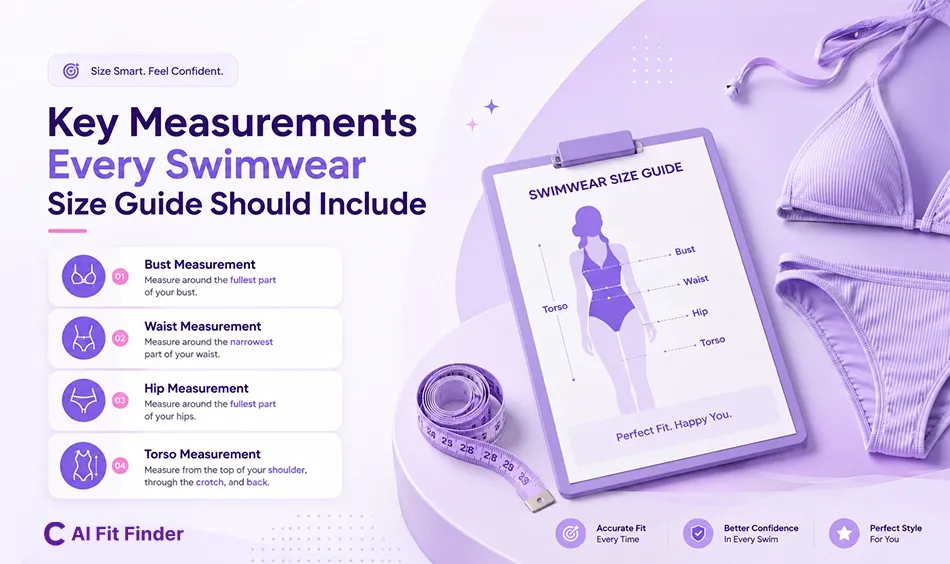
To create a useful swimwear size guide, Shopify brands need to include the measurements that actually affect swimsuit fit.
Bust Measurement
Bust measurement is one of the most important swimwear measurements. It affects:
- Bikini tops
- Tankinis
- One-piece swimsuits
- Underwire swimwear
- Swim dresses
- Supportive swim tops
For swimwear brands, bust guidance should go beyond “S, M, L.” Shoppers often need to know whether a top is better for smaller busts, fuller busts, adjustable support, removable padding, or underwire support.
Waist Measurement
Waist measurement matters for:
- One-piece swimsuits
- High-waist bikini bottoms
- Swim skirts
- Shaping swimwear
- Swim dresses
A waist measurement helps shoppers understand how the swimsuit will sit around the torso and midsection. For shaping or sculpting swimwear, brands should also explain if the fit is intentionally snug.
Hip Measurement
It is important for:
- Bikini bottoms
- Swim shorts
- One-piece swimsuits
- Swim skirts
- Full coverage styles
Hip fit affects comfort, coverage, and movement. If bottoms are too tight, they may dig in. If they are too loose, they may shift while swimming.
Torso Measurement
Torso measurement is one of the most overlooked parts of swimwear sizing. It is especially important for:
- One-piece swimsuits
- Longline swimwear
- Swim dresses
- Shaping swimsuits
- Performance swimwear
Nike’s women’s swimsuit fit guide includes torso measurement along with bust, waist, and hips, showing how important torso length is for swimwear fit.
For one-piece swimsuits, a customer may match the bust, waist, and hip measurements but still experience poor fit if the torso length is wrong. A short torso may cause bunching. A long torso may cause pulling, discomfort, or shoulder pressure.
Accurate swimwear sizing starts with accurate body measurements. If shoppers are unsure how to measure bust, waist, hips, or other key fit areas, our guide on how to know your body size for clothes explains the essential measurements needed to choose better sizes online.
Swimsuit Size Chart: What Fashion Brands Should Show
A strong swimsuit size chart should be easy to scan, mobile-friendly, and close to the size selector. Here is an example structure Shopify swimwear brands can adapt.
| Size | Bust | Waist | Hips | Torso | Fit Notes |
| XS | 32–33 in | 24–25 in | 34–35 in | 56–58 in | Best for petite frames |
| S | 34–35 in | 26–27 in | 36–37 in | 58–60 in | Regular fit |
| M | 36–37 in | 28–29 in | 38–39 in | 60–62 in | Most standard fit |
| L | 38–40 in | 30–32 in | 40–42 in | 62–65 in | Size up if between sizes |
| XL | 41–43 in | 33–35 in | 43–45 in | 65–68 in | Best for fuller coverage |
| XXL | 44–46 in | 36–38 in | 46–48 in | 68–70 in | Check bust and torso support |
This table is only an example. Each brand should build its own size chart based on product measurements, fabric stretch, fit model, grading, and customer feedback.
For Shopify stores, the best size chart is not the longest chart. It is the chart that helps customers make the fastest confident decision.
Swimwear Fit Guide by Product Type
Many swimwear stores make one common mistake: they use the same size chart for every product. But different swimwear styles have different fit requirements.
| Swimwear Type | Key Fit Areas | Brand Guidance Needed |
| One-piece swimsuit | Bust, torso, waist, hips | Torso length, compression, support |
| Bikini top | Bust, cup size, band fit | Support level, adjustability, padding |
| Bikini bottom | Waist, hips, coverage | Rise, cheekiness, stretch |
| Tankini | Bust, waist, torso | Top length and bust support |
| Swim dress | Bust, waist, hips, skirt length | Coverage and support |
| Rash guard | Chest, shoulders, sleeve length | Activity fit and stretch |
| Swim shorts | Waist, hips, inseam | Mobility and secure waistband |
| Performance swimwear | Chest, torso, compression | Snug fit and movement support |
A one-piece swimsuit should include torso guidance. A bikini top should include bust and cup support guidance. A bikini bottom should include coverage and rise information. A rash guard should include shoulder and sleeve guidance. This product-specific approach helps shoppers understand how each swimsuit is meant to fit.
Common Swimwear Sizing Problems Shoppers Face
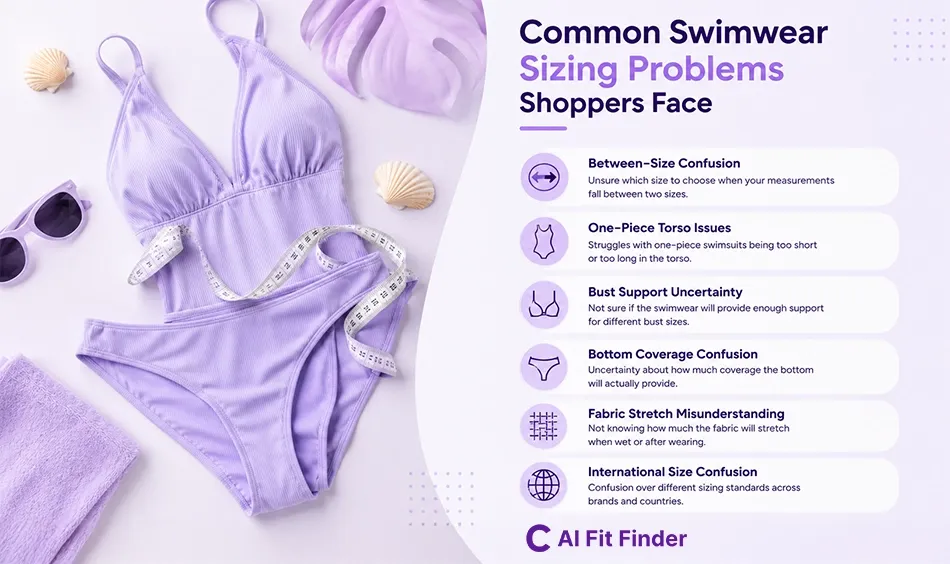
Swimwear shoppers often face sizing problems that regular apparel size charts do not fully solve.
Between-Size Confusion
Many shoppers fall between two sizes. Without clear guidance, they do not know whether to size up or down. For swimwear, the right answer depends on fabric, compression, coverage preference, and product type.
One-Piece Torso Issues
One-piece swimsuits can fit the bust and hips but still feel uncomfortable if the torso length is wrong. This is one of the biggest reasons torso measurement should be included in a swimwear size guide.
Bust Support Uncertainty
Shoppers with fuller busts need more than a bust measurement. They need support information, such as:
- Underwire support
- Removable padding
- Adjustable straps
- Cup coverage
- Band support
- Suitable cup range
Bottom Coverage Confusion
Terms like cheeky, moderate, full coverage, high rise, and low rise should be clearly explained. Coverage affects both style preference and comfort.
Fabric Stretch Misunderstanding
Swimwear fabric behaves differently from everyday clothing. Some styles feel snug because they are designed for compression. Others stretch more easily. Some fabrics feel tighter when dry and more flexible in water.
International Size Confusion
Global shoppers may search for “swimsuit size chart,” “swimwear size chart,” “swimming costume size chart,” or “bathing suit size guide. If your Shopify store sells internationally, your size guide should include regional terminology and size system support.
A swimsuit can match the size chart and still feel wrong because fit depends on fabric stretch, body shape, torso length, coverage, and garment construction. Our guide on why clothes don’t fit even when the size is right explains why sizing accuracy requires more than matching a label or measurement range.
Swimwear Size Chart vs AI Size Recommendation
A traditional swimwear size chart can help, but it still requires the shopper to interpret the data. AI-powered size recommendations can make the process easier by giving shoppers a direct size suggestion based on their inputs and the product’s sizing data.
| Factor | Traditional Swimwear Size Chart | AI Size Recommendation |
| Shows measurements | Yes | Yes |
| Gives personalized size guidance | No | Yes |
| Helps between-size shoppers | Limited | Yes |
| Accounts for fit preference | No | Yes |
| Supports torso-based logic | Limited | Yes, if configured |
| Works by product type | Often generic | Product-specific |
| Tracks shopper engagement | No | Yes |
| Reduces guesswork | Partially | Strongly |
A swimwear size chart informs shoppers. An AI size recommendation helps shoppers decide. For Shopify brands, that difference matters because hesitation can reduce add-to-cart confidence.
Research on fashion size recommendation systems highlights that personalized size and fit recommendations are important for customer satisfaction and can help reduce costs related to size-related returns.
How a Better Swimwear Size Guide Can Improve Shopify Conversion Rate
A better swimwear size guide can directly support conversion because it reduces uncertainty at the product-page level. When shoppers feel unsure, they delay. When they feel confident, they move forward. For Shopify swimwear stores, stronger size guidance can help:
| Conversion Area | Impact of Better Swimwear Sizing |
| Product-page confidence | Shoppers feel safer choosing a size |
| Add-to-cart rate | Less hesitation before selecting size |
| Mobile UX | Easier sizing decisions on smaller screens |
| Support tickets | Fewer “what size should I buy?” questions |
| Checkout confidence | Lower fear of wrong-size purchase |
| Repeat purchase trust | Better first-fit experience encourages return buyers |
This is why swimwear sizing should be part of your conversion rate optimization strategy. Many apparel stores focus on product images, reviews, price, and discounts. Those are important, but if shoppers cannot confidently choose a size, conversion can still suffer. A strong swimwear size guide removes friction before checkout.
How Swimwear Size Guides Help Reduce Returns
Returns are a major profitability challenge in fashion ecommerce. For swimwear, size-related returns can happen when customers:
- Rely only on S/M/L labels
- Ignore torso length
- Misunderstand cup support
- Choose the wrong bottom coverage
- Guess between sizes
- Do not understand compression fit
- Buy without checking product-specific fit notes
Every wrong-size order creates additional costs. For Shopify brands, returns can affect:
| Return Impact | Why It Matters |
| Revenue | Refunds reduce net sales |
| Inventory | Returned swimwear may not always be resold easily |
| Operations | Support and returns processing take time |
| Customer trust | Poor fit can reduce future buying confidence |
| Marketing efficiency | Paid traffic becomes less profitable if orders return |
A good swimwear size guide helps reduce preventable wrong-size purchases. It cannot eliminate every return, but it can reduce confusion before the customer places an order.
What Shopify Swimwear Stores Should Add to Product Pages
A swimwear size guide works best when it is visible, practical, and connected to the buying decision. Here are the product-page elements Shopify swimwear stores should include:
| Product Page Element | Why It Helps |
| Size guide near size selector | Reduces friction at the decision point |
| “Find My Size” widget | Helps shoppers choose faster |
| Bust support details | Critical for bikini tops and one-pieces |
| Torso guidance | Essential for one-piece swimsuits |
| Fit notes | Explains snug, sculpting, or relaxed fit |
| Fabric stretch details | Sets expectations around comfort |
| Coverage level | Helps shoppers choose bottoms confidently |
| Model size details | Adds visual context |
| Customer fit reviews | Provides real-world sizing feedback |
| Clear return policy | Reduces purchase anxiety |
The goal is to answer sizing questions before shoppers leave the product page. If the size guide is hidden below the fold or inside a difficult-to-find tab, many shoppers may miss it. For mobile shoppers, this is especially important. Size guidance should be easy to open, easy to read, and easy to act on.
Swimwear Sizing for International Customers
If your Shopify swimwear store sells globally, your sizing content should include international terminology. Customers may search for different terms depending on region.
| Region | Common Search Term |
| United States | swimsuit size chart |
| United Kingdom | swimming costume size chart |
| Australia | swimwear size chart |
| Europe | EU swimsuit size guide |
| Global ecommerce | swimwear size guide |
This matters for SEO and user experience. A shopper in the UK may search for “swimming costume size chart,” while a shopper in the US may search for “swimsuit size chart.” Both users want the same thing: help choosing the right swimwear size. Shopify brands selling internationally should also consider:
- US, UK, EU, AU sizing systems
- Inch and centimeter measurements
- Multilingual size guide support
- Local terminology
- Region-specific return expectations
International shoppers already face more sizing uncertainty. A localized swimwear size guide can reduce that friction.
Common Mistakes Fashion Brands Make With Swimwear Size Guides
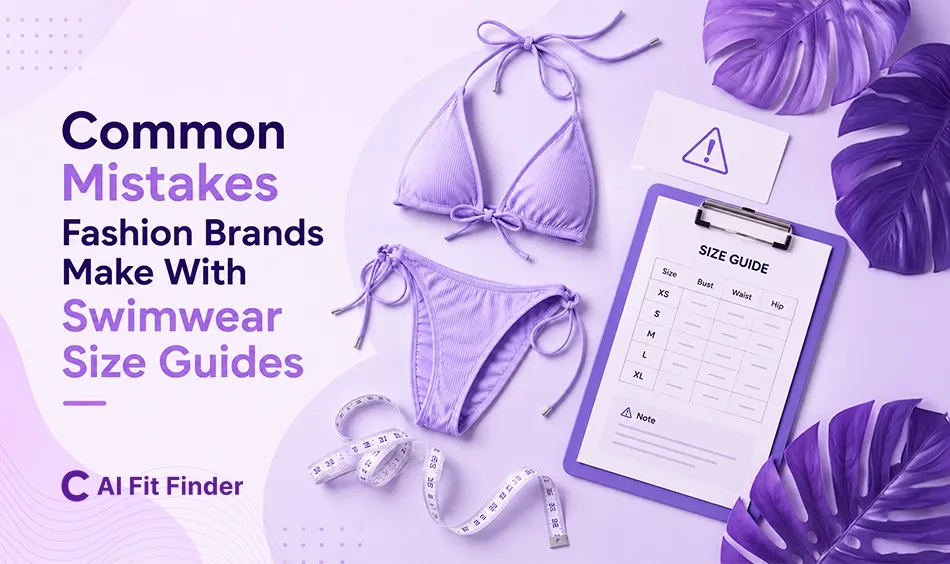
Many swimwear brands have size guides, but they are not always effective. Here are the most common mistakes.
Using a Generic Apparel Size Chart
Swimwear needs swimwear-specific measurements. Bust, waist, and hips are important, but torso, cup support, coverage, and stretch are also critical.
Hiding the Size Guide Below the Fold
The size guide should appear near the size selector because that is where the shopper needs help.
Not Explaining Fit Behavior
Words like sculpting, compression, cheeky, full coverage, long torso, and high support should be clearly explained.
Ignoring Product Type Differences
One-piece swimsuits, bikini tops, bikini bottoms, swim dresses, rash guards, and swim shorts need different fit logic.
Not Tracking Size Guide Engagement
If you do not know how shoppers interact with your size guide, you cannot improve it. Tracking size guide views, recommendation clicks, and add-to-cart behavior helps brands understand sizing friction.
How AI Fit Finder Helps Shopify Swimwear Brands
AI Fit Finder helps Shopify apparel and swimwear stores provide personalized size recommendations directly on product pages. For swimwear brands, this can help turn a static size chart into a guided sizing experience.
Instead of asking shoppers to interpret measurements alone, AI Fit Finder can help recommend the most suitable size based on shopper inputs and product-specific size data.
For Shopify swimwear stores, AI Fit Finder can support:
| Swimwear Store Need | How AI Fit Finder Helps |
| Reduce size confusion | Gives shoppers guided size recommendations |
| Support product-specific sizing | Helps configure different logic by product type |
| Improve fit confidence | Helps shoppers choose before checkout |
| Reduce between-size hesitation | Provides clearer size guidance |
| Improve mobile experience | Shows sizing support directly on product pages |
| Customize size guides | Supports smart size guide experiences |
| Track sizing engagement | Helps merchants understand widget usage and recommendations |
Swimwear shoppers need confidence before they choose a size. If your Shopify store sells one-pieces, bikinis, swim dresses, or active swimwear, AI Fit Finder can help turn your swimwear size guide into a guided recommendation experience. Install AI Fit Finder on Shopify and help shoppers choose the right fit before checkout.
Swimwear Size Guide Checklist for Shopify Stores
Use this checklist to audit your current swimwear sizing experience.
| Checklist Item | Status |
| Bust, waist, and hip measurements included | Yes / No |
| Torso measurement included for one-piece swimsuits | Yes / No |
| Cup size or bust support guidance added | Yes / No |
| Product-specific fit notes added | Yes / No |
| Fabric stretch explained | Yes / No |
| Coverage level explained | Yes / No |
| Size guide visible near size selector | Yes / No |
| Mobile-friendly size guide experience | Yes / No |
| AI size recommendation widget added | Yes / No |
| Analytics tracked for size guide usage | Yes / No |
| International sizing terms included | Yes / No |
| Fit-based customer reviews collected | Yes / No |
If your store answers “No” to several of these, your shoppers may still be guessing. And when shoppers guess, conversion and returns can both suffer.
Frequently Asked Questions
1. How do I figure out my swimsuit size?
To figure out your swimsuit size, measure your bust, waist, hips, and torso, then compare them with the brand’s swimsuit size chart. For one-piece swimsuits, torso length is especially important because the suit must fit vertically as well as around the body.
2. What is a size 20 swimsuit equivalent to?
A size 20 swimsuit is usually considered plus size and may be close to a 2X or 3X, depending on the brand. However, swimsuit sizing is not universal, so shoppers should always check the brand’s swimwear size chart before choosing a size.
3. What is a size 6 in swimsuits?
A size 6 in swimsuits is often similar to a small or medium, depending on the brand and size system. The best way to confirm is by comparing bust, waist, hip, and torso measurements with the brand’s swimsuit size guide.
4. What size to get in swimsuits?
Choose the swimsuit size that matches your largest key measurement. For example, if your bust fits one size but your hips fit another, choose the size that fits the area where the swimsuit is most fitted. Also consider fabric stretch, coverage, and support.
5. Do you size up or down for swimsuits?
You may size up in swimsuits if you are between sizes, prefer more coverage, or the fabric feels compressive. You may size down only if the swimsuit has high stretch and you prefer a snug fit. For one-piece swimsuits, never ignore torso length.
Conclusion
A strong swimwear size guide does more than show measurements. It helps shoppers make confident sizing decisions. For Shopify swimwear brands, the best size guide should include bust, waist, hips, torso, cup support, fit notes, fabric stretch, coverage guidance, and product-specific recommendations.
A static swimsuit size chart is a good starting point, but many shoppers need more support before they feel ready to buy. They need sizing guidance that answers real questions about fit, comfort, coverage, and support. For apparel Shopify store owners, better swimwear sizing can improve product-page confidence, reduce size-related returns, and support stronger conversion performance.
The brands that win in swimwear ecommerce will not only sell better designs. They will help shoppers choose the right fit with less doubt. And that starts with a smarter swimwear size guide.