
Buying a designer dress online can feel exciting until you reach the size selector. A dress may look perfect in photos, match your style, and feel like a worthwhile investment. But one question can slow everything down:
“How do I know this size will fit if I cannot try it on?”
Designer dress sizing is difficult to compare online because every brand may use different fit models, size charts, fabrics, silhouettes, and international sizing systems. A size 8 in one designer brand may not fit like a size 8 in another. Even two dresses from the same brand can feel different depending on the cut, fabric, and construction.
The safest way to compare designer dress sizing online is to use your body measurements, check each designer’s size chart, compare garment measurements where available, review fabric and fit notes, read customer reviews, and use size recommendation tools when offered.
In this guide, you’ll learn:
- Why designer dress sizes vary so much online
- Which body measurements matter most for dress sizing
- How to compare designer size charts before buying
- How fabric, silhouette, and stretch affect fit
- How to use the dress size conversion carefully
- common sizing mistakes to avoid
- How AI size recommendation tools help shoppers choose with more confidence
For Shopify apparel stores, this also highlights a bigger opportunity: customers do not just need more size information. They need a clearer sizing decision before checkout.
Why Designer Dress Sizing Is So Hard to Compare Online
Designer dress sizing is not universal. Each designer brand may build its size chart around a different fit model, target customer, garment style, or regional sizing system. That means size labels are only a starting point, not a guarantee of fit.
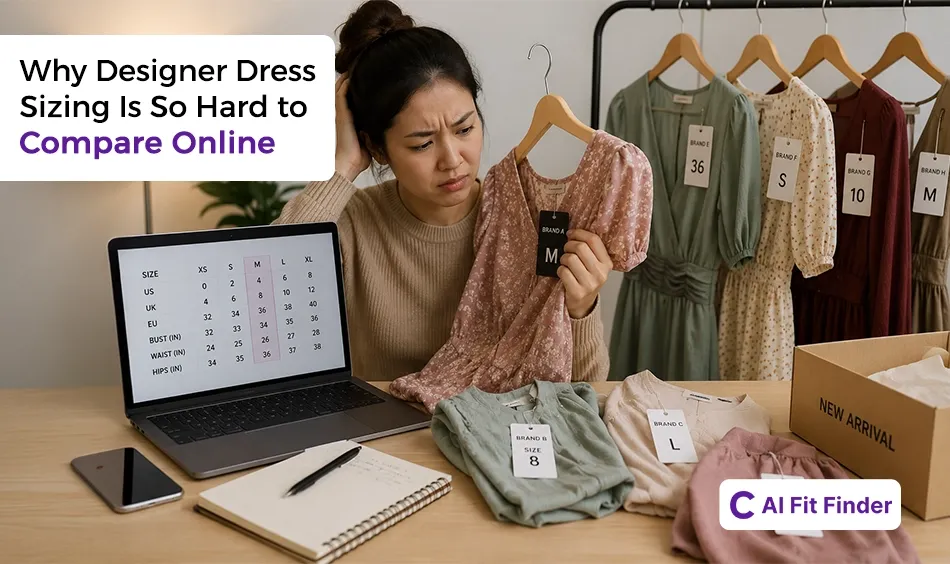
A shopper may usually wear a medium or a US size 8, but that does not mean every designer dress in that size will fit the same. Some designer dresses are cut closer to the body. Some use structured fabrics with little flexibility. Others are designed with more ease, stretch, or relaxed movement. This is why online dress sizing often feels inconsistent.
Common reasons designer dress sizing varies
| Reason | How It Affects Fit |
| Different fit models | Each brand may design around different body proportions |
| No universal size standard | Size labels vary between designers and countries |
| Fabric structure | Satin, lace, crepe, jersey, and sequin fabrics fit differently |
| Dress silhouette | Bodycon, sheath, wrap, and A-line dresses need different sizing decisions |
| International sizing | US, UK, EU, and Japanese sizes do not translate perfectly |
| Brand positioning | Luxury, formalwear, and occasionwear may fit more closely than casual dresses |
Cedar & Lily’s dress size guide also emphasizes that shoppers should focus on body measurements such as bust, waist, and hips instead of trusting size labels alone. Their chart shows how dress sizing is commonly mapped to these measurements, which is useful as a starting point but still needs brand-specific comparison.
For designer dresses, the goal is not to find “your size” once. The goal is to compare your measurements against the exact dress and brand you are buying from.
Can You Compare Designer Dress Sizes Without Trying Them On?
Yes, you can compare designer dress sizes online without trying them on, but you should not rely only on the size label. The best approach is to compare your bust, waist, and hip measurements with the designer’s size chart, check the dress silhouette, review fabric stretch, read fit reviews, compare garment measurements if available, and look for size recommendation tools.
Size comparison methods ranked by usefulness
| Sizing Method | Accuracy Level | Best Use |
| Size label only | Low | Quick reference only |
| General dress size chart | Medium | Basic sizing estimate |
| Brand-specific size chart | Medium to high | Comparing against designer measurements |
| Body measurements | High | Finding the closest size |
| Garment measurements | Very high | Comparing with dresses you already own |
| Customer reviews | Medium to high | Understanding real fit experience |
| Size recommendation tool | High | Personalized fit guidance before checkout |
Size labels are the least reliable method because they do not explain how the dress is cut. A size chart is better, but the shopper still needs to interpret it. Body measurements and garment measurements are stronger because they compare the actual body or dress dimensions.
A size recommendation tool can make this process easier by translating shopper inputs and product sizing data into a clear recommendation.
Finding the right dress size online becomes easier when shoppers combine measurements, size charts, fabric details, fit notes, and reviews. Our guide on how to find your perfect clothing size online explains a practical sizing process that helps reduce guesswork before checkout.
Step 1: Start With Your Body Measurements
The first step to comparing designer dress sizing online is knowing your body measurements. For dresses, the most important measurements are usually bust, waist, and hips. Depending on the dress style, shoulder width, torso length, and dress length may also matter.
Key body measurements for designer dress sizing
| Measurement | Why It Matters |
| Bust | Important for fitted bodices, wrap dresses, structured tops, and formal dresses |
| Waist | Critical for tailored dresses, sheath dresses, fitted gowns, and waistline placement |
| Hips | Important for bodycon, pencil, mermaid, fitted, and slip dresses |
| Shoulder width | Helpful for sleeved, structured, blazer-style, or formal dresses |
| Torso length | Important for gowns, jumpsuits, waist seams, and long-body fits |
| Dress length | Helps avoid dresses being too short, too long, or awkwardly placed |
To measure correctly, use a soft measuring tape and stand naturally. Do not pull the tape too tight. Measure over light clothing or underwear for the most accurate result.
Accurate measurements are the foundation of choosing the right designer dress size online. If you are unsure where to measure bust, waist, hips, or length, our guide on how to measure for a dress explains each step clearly so shoppers can compare size charts with more confidence.
How to measure for a designer dress
| Measurement | Where to Measure |
| Bust | Around the fullest part of your bust |
| Waist | Around the narrowest part of your natural waist |
| Hips | Around the fullest part of your hips and seat |
| Shoulders | From one shoulder edge to the other |
| Torso | From shoulder to waist or through the body, depending on garment type |
| Length | From the shoulder or waist to the desired hemline |
The biggest mistake shoppers make is starting with their usual size instead of their actual measurements. Designer sizing is not about what size you normally wear. It is about how your measurements match the dress you are considering.
Step 2: Compare Your Measurements With the Designer’s Size Chart
Once you know your measurements, compare them with the designer’s official size chart. Do not assume that your usual size will work across every brand. Even if you regularly wear a size 6 or size 8, designer brands may measure differently.
The best process is:
- Open the designer’s official size chart.
- Find the bust, waist, and hip columns.
- Compare each body measurement.
- Identify which size fits the most important measurement for that dress style.
- Check whether the dress has stretch or structure.
- Decide whether tailoring may be needed.
Example sizing decision
| Situation | Best Sizing Decision |
| Bust matches size 6, waist matches size 8, hips match size 10 | Start with size 10 and tailor if needed |
| Between two sizes in non-stretch fabric | Consider sizing up |
| Between two sizes in stretch fabric | Choose based on preferred fit |
| Buying a structured formal dress | Prioritize the largest key measurement |
| Buying from a new designer | Check reviews and return policy first |
| Dress is final sale | Avoid buying without strong sizing confidence |
For fitted designer dresses, you usually need to choose the size that accommodates the largest required measurement. For example, if your bust fits one size but your hips fit another, the tighter area will usually decide the best starting size.
Tailoring can adjust some areas, but a dress that is too small in the bust, hips, or shoulders may be difficult to fix.
Step 3: Check the Dress Style and Silhouette
A designer dress size cannot be judged by measurements alone. The silhouette matters. Two dresses can have the same size label but fit very differently because of their shape.
Dress silhouette comparison
| Dress Style | Fit Behavior | What to Check |
| A-line dress | More forgiving around the hips | Bust and waist |
| Bodycon dress | Closely follows the body | Bust, waist, hips, stretch |
| Sheath dress | Structured and less forgiving | Waist, hips, and shoulder fit |
| Wrap dress | Adjustable but still body-dependent | Bust coverage and waist tie |
| Slip dress | Depends on fabric drape | Bust, hips, fabric bias |
| Formal gown | Often structured and tailored | Bust, waist, length, torso |
| Maxi dress | Length can be tricky | Height, torso, hemline |
| Mermaid dress | Fitted through the hips and thighs | Hips, thighs, mobility |
A-line dresses are usually more forgiving because they open through the hips. Bodycon and sheath dresses need closer measurement accuracy because they sit closer to the body. Wrap dresses may offer flexibility, but bust coverage and waist placement still matter.
Cedar & Lily also notes that dress style and fabric can affect how a dress fits, which is why a size chart should be combined with style-specific judgment.
Step 4: Review Fabric, Stretch, and Construction
Fabric can completely change how a dress fits. A stretch jersey dress and a structured satin dress may have the same measurements on a chart, but they will not feel the same on the body.
Fabric and sizing impact table
| Fabric Type | Sizing Impact |
| Stretch jersey | More flexible and forgiving |
| Satin | Smooth but less forgiving |
| Crepe | Can be structured with limited stretch |
| Cotton | May shrink depending on care |
| Polyester blend | Stable but varies by weave |
| Lace | Depends on lining and stretch |
| Sequin fabric | Often less flexible and more structured |
| Silk | Drapes differently and may show tension |
| Structured fabric | Requires more precise sizing |
A dress with stretch may allow a closer fit. A non-stretch dress needs more room for movement. A heavily lined dress may feel tighter than an unlined dress even when the outer measurements look similar. This is why product descriptions matter. Look for details such as:
| Fit Detail | What It Means |
| No stretch | Size carefully, especially if between sizes |
| Slight stretch | Some flexibility, but still check measurements |
| Fully lined | May feel more structured or fitted |
| Bias cut | May drape differently on the hips and bust |
| Boned bodice | Bust and waist accuracy are important |
| Hidden zipper | Less adjustable than wrap or tie styles |
| Adjustable straps | Helps with bust and torso fit |
Fabric is one of the biggest reasons the same size can feel comfortable in one designer dress and tight in another.
Step 5: Compare Garment Measurements When Available
Body measurements tell you your size. Garment measurements tell you how the actual dress is built. This is one of the most useful ways to compare designer dress sizing online.
A body measurement chart may say a size 8 fits a 28-inch waist. But the actual garment waist may measure 29 or 30 inches, depending on ease, fabric, and design.
Body measurements vs garment measurements
| Body Measurement | Garment Measurement |
| Measures your body | Measures the actual dress |
| Used to estimate size | Used to compare real fit |
| Example: 28-inch waist | Example: dress waist measures 29.5 inches |
| Helps choose the size chart range | Helps compare with dresses you already own |
| Can vary by body shape | More specific to the product |
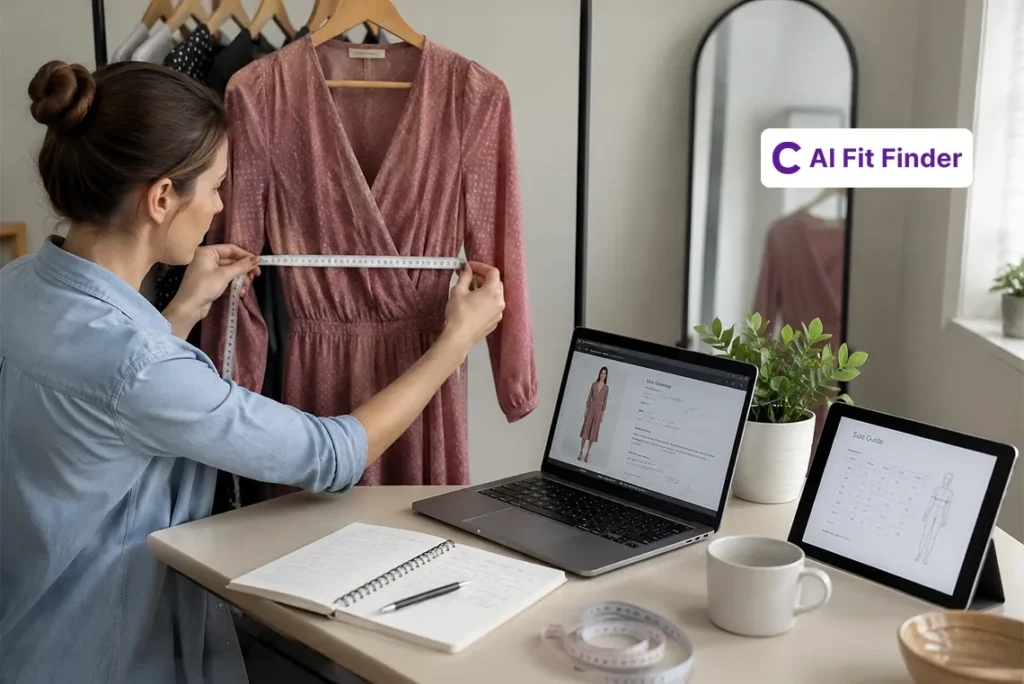
A helpful trick is to measure a dress you already own and love. Lay it flat and measure the bust, waist, hips, and length. Then compare those numbers with the designer dress you want to buy. This gives you a real-world fit reference.
What to compare with a dress you already own
| Existing Dress Measurement | Why It Helps |
| Bust width | Shows whether the bodice will feel tight |
| Waist width | Helps compare fitted or tailored areas |
| Hip width | Useful for bodycon, sheath, and slip dresses |
| Shoulder width | Important for structured or sleeved dresses |
| Length | Helps compare mini, midi, maxi, and gown fit |
| Sleeve opening | Helpful for fitted sleeves |
Garment measurements are especially important when shopping for designer, vintage, final sale, or international brands.
Step 6: Use Dress Size Conversion Carefully
Dress size conversion charts can help, but they should never be the final answer. A US size 8, UK size 12, EU size 40, and Japanese size 13 may roughly align, but designer sizing can still vary by brand.
General dress size conversion chart
| US Size | UK Size | EU Size | Japan Size |
| 0 | 4 | 32 | 5 |
| 2 | 6 | 34 | 7 |
| 4 | 8 | 36 | 9 |
| 6 | 10 | 38 | 11 |
| 8 | 12 | 40 | 13 |
| 10 | 14 | 42 | 15 |
| 12 | 16 | 44 | 17 |
| 14 | 18 | 46 | 19 |
Use this type of chart only as a starting point. International conversion tells you the nearest label, but it does not tell you how the dress is cut, whether the fabric stretches, or whether the designer’s fit model matches your body. For designer dresses, always confirm with the brand’s own size chart.
International dress sizes can be confusing because the US, UK, EU, and Asian sizing systems do not always match perfectly. For a deeper breakdown of regional size differences, our dress size conversion guide explains how to compare dress sizes across countries before buying online.
Step 7: Read Reviews for Real Fit Signals
Customer reviews can reveal what size charts cannot. A size chart may show measurements, but reviews show how the dress fits real people. Look for reviews that mention:
| Review Phrase | What It Usually Means |
| Runs small | Consider sizing up |
| Runs large | Consider sizing down |
| True to size | Use the brand chart normally |
| Tight in the bust | Check the bust measurement carefully |
| Loose at the waist | Tailoring may be needed |
| No stretch | Size up if between sizes |
| Long torso friendly | Good for taller or longer-torso shoppers |
| Shorter than expected | Check dress length |
| Hips were tight | Prioritize hip measurement |
Reviews are most useful when customers include their size purchased, usual size, height, body measurements, and fit experience.
For example, a review that says “runs small” is helpful, but a review that says “I am 5’6″, usually wear a size 8, bought a size 10, and it fit well at the hips” is much more useful.
The Reddit discussion in the SERP reflects this real shopper behavior: people often rely on reviews, measurements, return policies, and known brand experience because online sizing alone can feel unreliable.
Step 8: Check the Return Policy Before Buying
Even after doing everything right, designer dresses can still fit differently in real life. That is why the return policy matters. Before buying, check:
| Return Policy Question | Why It Matters |
| Is the dress a final sale? | Final sale increases risk |
| Are returns free? | Paid returns affect the total cost |
| Are exchanges allowed? | Useful if you need a different size |
| Is return shipping deducted? | Reduces the refund amount |
| Is there a restocking fee? | Important for expensive dresses |
| What is the return window? | Designer items may have shorter windows |
| Are sale items returnable? | Many are restricted |
| Does the dress need tags attached? | Common return condition |
A clear return policy reduces purchase anxiety. But better sizing guidance reduces the need to return in the first place. This matters for shoppers and ecommerce stores.
Bayard reports that average ecommerce cart abandonment is around 70%, showing how much revenue can leak before checkout. For fashion shoppers, size uncertainty can add another layer of hesitation before purchase.
Step 9: Use a Size Recommendation Tool When Available
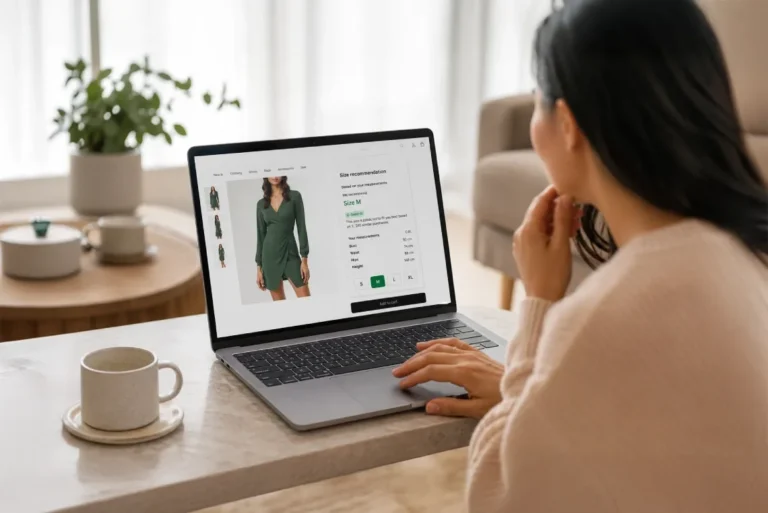
A size recommendation tool can make online designer dress shopping easier because it helps turn measurements and product data into a clearer size decision.
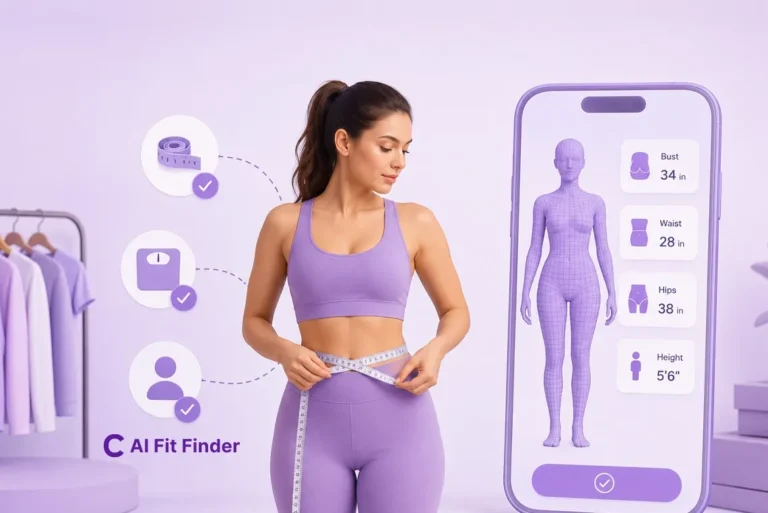
Instead of asking shoppers to manually compare charts, fit notes, reviews, and size labels, size recommendation tools can use shopper inputs and product-specific sizing data to suggest the most suitable size.
If your Shopify apparel store sells dresses, occasion wear, or other size-sensitive products, shoppers need more than a basic chart to feel confident. Install AI Fit Finder on Shopify to give customers personalized size recommendations directly on product pages and help them choose the right fit before checkout.
This is especially useful for designer dresses because fit depends on multiple details:
| Input | Why It Helps |
| Height | Helps with length and proportions |
| Weight | Gives general body context, but not enough alone |
| Bust | Important for bodice fit |
| Waist | Critical for tailored dresses |
| Hips | Important for fitted dress styles |
| Fit preference | Helps choose snug, regular, or relaxed fit |
| Product size data | Connects shopper inputs to the actual dress |
| Fabric behavior | Helps adjust recommendations by garment type |
For Shopify fashion stores, this is where tools like AI Fit Finder can improve the buying experience. Instead of leaving shoppers to compare designer dress measurements manually, AI-powered size recommendations can help them choose the most suitable size before checkout. That improves confidence for the shopper and reduces sizing friction for the merchant.
Designer Dress Sizing Comparison Checklist
Before buying a designer dress online, use this checklist.
| What to Check | Why It Matters |
| Bust measurement | Core fit point for fitted bodices |
| Waist measurement | Critical for tailored and formal dresses |
| Hip measurement | Important for fitted, sheath, and bodycon styles |
| Brand size chart | Each designer may size differently |
| Garment measurements | Best way to compare real dress fit |
| Fabric stretch | Affects comfort and flexibility |
| Dress silhouette | Determines which measurement matters most |
| Model information | Adds visual fit context |
| Customer reviews | Reveals real buyer experience |
| International conversion | Helps compare global designer sizes |
| Return policy | Reduces purchase risk |
| Size recommendation tool | Adds personalized guidance |
The more expensive or fitted the dress, the more careful the comparison should be. For casual dresses, a general size chart may be enough. For designers, formal, structured, or final-sale dresses, shoppers should use every available fit signal.
Common Mistakes When Comparing Designer Dress Sizes Online
Many wrong-size purchases happen because shoppers rely on incomplete information.
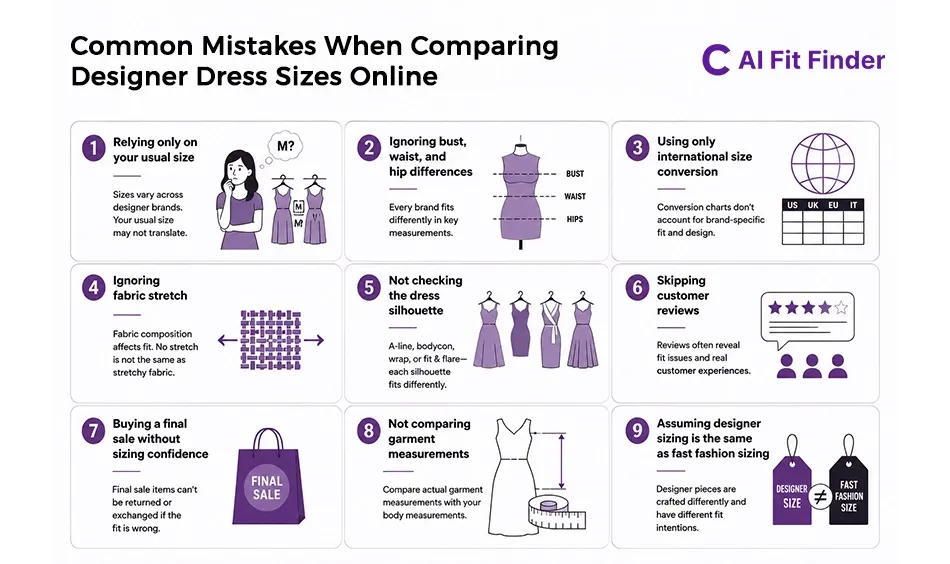
1. Relying only on your usual size
Your usual size is only a starting point. Designer brands vary too much for one size label to work everywhere.
2. Ignoring bust, waist, and hip differences
A dress may fit one area and be tight in another. Always compare all key measurements.
3. Using only international size conversion
Conversion charts are helpful, but they do not replace brand-specific sizing.
4. Ignoring fabric stretch
A non-stretch dress requires more precise sizing than a stretch dress.
5. Not checking the dress silhouette
An A-line dress and a bodycon dress in the same size may fit very differently.
6. Skipping customer reviews
Reviews reveal real fit issues like tight bust, short length, or loose waist.
7. Buying a final sale without sizing confidence
Final sale designer dresses can be risky if the sizing information is incomplete.
8. Not comparing garment measurements
Garment measurements are often more useful than size labels, especially for designer dresses.
9. Assuming designer sizing is the same as fast fashion sizing
Designer and luxury brands may use different fit models, cuts, and construction standards.
What Shopify Apparel Stores Can Learn From Designer Dress Shoppers
This topic is not only useful for shoppers. It also reveals an important lesson for Shopify fashion merchants. Customers do not trust size labels alone. When buying apparel online, shoppers look for multiple confidence signals before they buy.
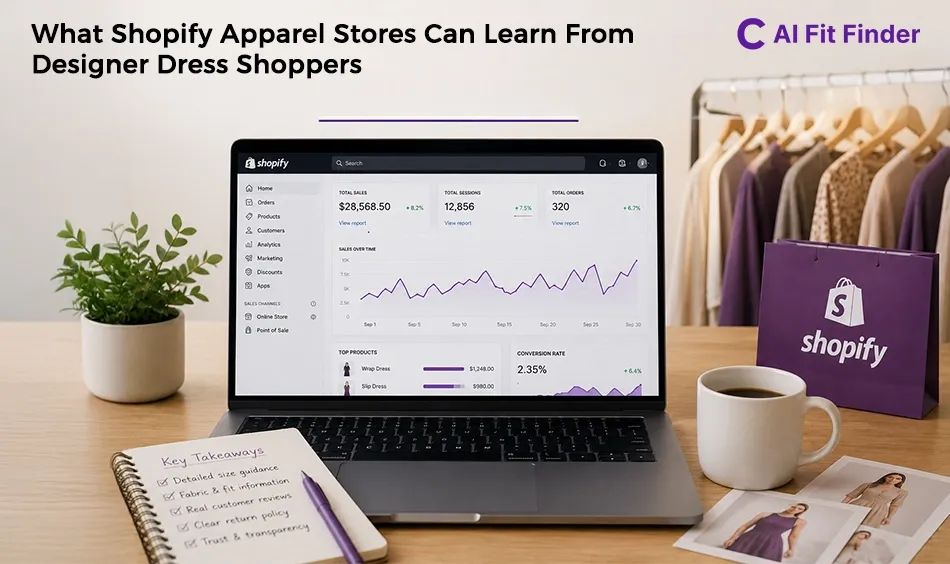
They compare measurements, read reviews, check fabric, look at model information, study return policies, and search for sizing advice. If your Shopify store only provides a static size chart, many shoppers may still feel uncertain.
What shoppers want before buying apparel online
| Shopper Need | Store Opportunity |
| “Will this fit me?” | Add personalized size recommendations |
| “Does this run small?” | Add product-level fit notes |
| “What size should I choose?” | Provide guided fit tools |
| “Is this fabric stretchy?” | Add fabric behavior details |
| “How does it fit real buyers?” | Collect fit-based reviews |
| “Can I return it?” | Make the return policy clear |
| “Is this size like another brand?” | Support brand-size references where possible |
Narvar reports that size and fit remain a leading cause of returns, accounting for 45% of returns in its 2022 State of Returns report. For Shopify apparel stores, better size guidance can help reduce buying friction before checkout and reduce return risk after purchase. That is why AI-powered size recommendation tools are becoming more important for fashion ecommerce.
How AI Fit Finder Helps Shopify Fashion Stores Improve Size Confidence
For Shopify fashion stores, AI Fit Finder helps turn static sizing into a guided fit experience. Instead of asking shoppers to compare dress size charts manually, AI Fit Finder can help recommend sizes based on shopper inputs and product-specific size data. This is useful for stores selling:
| Store Type | Sizing Challenge |
| Designer dresses | Fit varies by silhouette, fabric, and brand |
| Women’s fashion | Bust, waist, hips, and length need better guidance |
| Formalwear | Structured garments require more precise sizing |
| Occasionwear | Shoppers want confidence before buying higher-value items |
| International apparel | Size systems vary across countries |
| Multi-category fashion | Tops, bottoms, dresses, and footwear need different logic |
For merchants, the benefit is not only better sizing support. It is a stronger product-page experience. When shoppers know which size to choose, they are more likely to move forward.
That can support:
- Higher product-page confidence
- Faster size selection
- Fewer sizing questions
- Fewer wrong-size orders
- Stronger customer satisfaction
- Better repeat purchase trust
For online fashion, size confidence is not just a fit detail. It is a conversion factor.
Frequently Asked Questions
- How to tell if a dress fits without trying it on?
To tell if a dress fits without trying it on, compare your bust, waist, and hip measurements with the brand’s size chart. Also check the dress fabric, stretch, silhouette, model details, and customer reviews for real fit clues.
- How to figure out dress size before buying online?
Measure your bust, waist, and hips, then compare them with the designer’s official size chart. If you are between sizes, check whether the fabric has stretch and whether the dress is fitted, relaxed, or structured.
- How to figure out your dress size without measurements?
Without measurements, use your best-fitting dress as a guide. Compare its size, fit, fabric, and silhouette with the dress you want to buy. However, body measurements are still the most reliable way to find your dress size online.
- What is the 3-3-3 rule for clothing?
The 3-3-3 rule is a wardrobe method where you choose 3 tops, 3 bottoms, and 3 pairs of shoes to create multiple outfits. It helps simplify styling, but it does not help determine dress size.
- How do I know if I’m a size 8 or 10?
Compare your bust, waist, and hip measurements with the brand’s size chart. If your measurements fall between size 8 and 10, choose size 10 for fitted or non-stretch dresses and size 8 for relaxed or stretchy styles.
Conclusion
Comparing designer dress sizing online is possible, but shoppers should not rely on size labels alone. The best approach is to combine body measurements, designer size charts, garment measurements, dress style, fabric stretch, customer reviews, international conversion, and return policy checks. For shoppers, this reduces the risk of buying the wrong size.
For Shopify apparel stores, it highlights an important business lesson: customers need fit confidence before they buy.
A static size chart may provide information, but many shoppers need guidance. They want to know which size is best for their body, the specific dress, and their preferred fit. That is where size recommendation tools can make a difference.
AI Fit Finder helps Shopify fashion stores provide personalized size recommendations directly on product pages, giving shoppers more confidence before checkout and helping merchants reduce sizing friction. When shoppers feel confident about size, they are more likely to buy.
And in fashion ecommerce, that confidence can be the difference between a missed sale and a completed order.