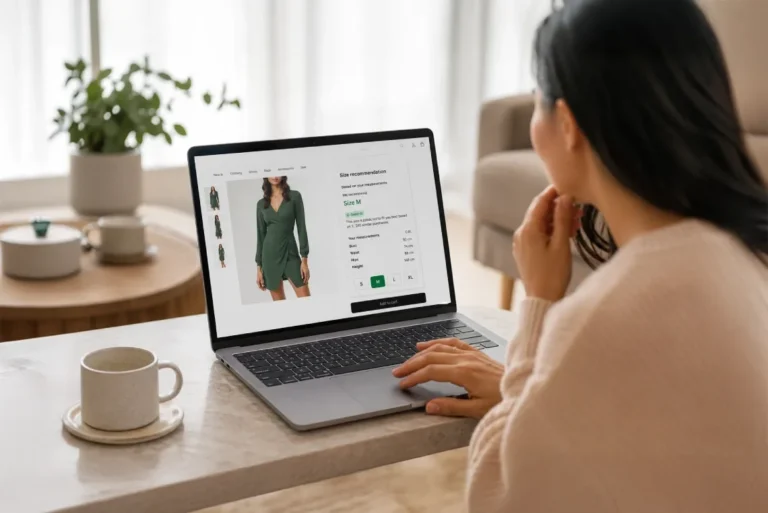

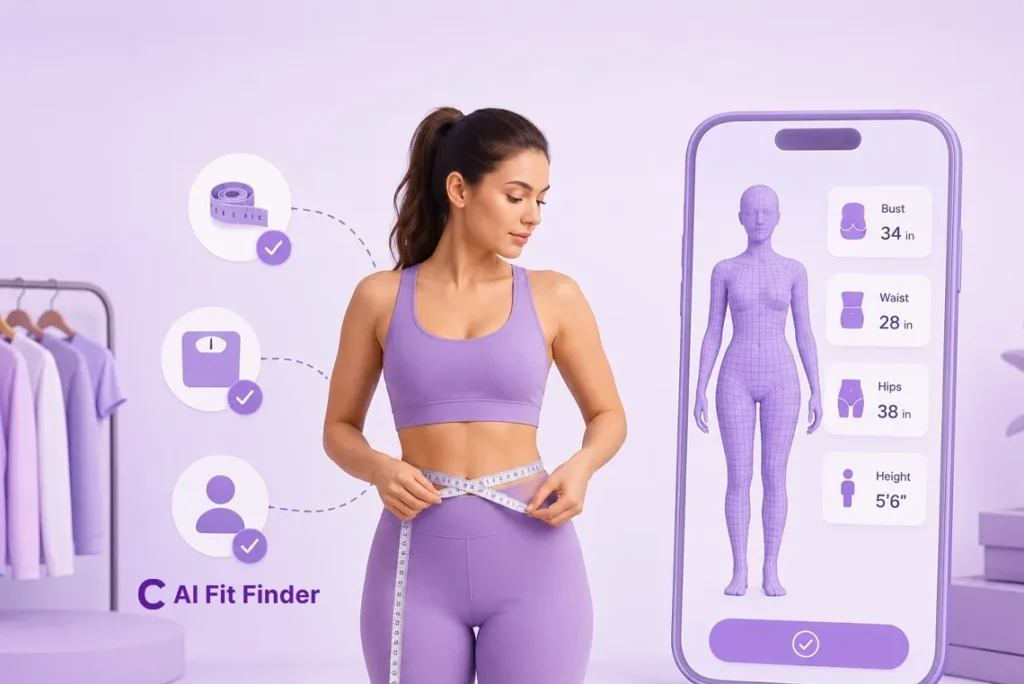
Many shoppers try to find their clothing size by using weight. It feels simple. If someone weighs 120 lbs, 150 lbs, or 180 lbs, it may seem logical to assume that weight should point to a clothing size. But clothing does not fit the body based on weight alone.
Clothing size depends on body measurements, not weight alone, because fit is determined by the shape, length, width, and proportions of the body. Two people can weigh the same but wear completely different clothing sizes because their chest, waist, hips, shoulders, inseam, torso length, and body shape may be very different.
This is one of the biggest reasons online shoppers struggle with sizing. A person may choose a size based on their weight or usual size, but the product still feels too tight, too loose, too short, too long, or uncomfortable in specific areas.
For fashion ecommerce stores, this creates a bigger problem. When shoppers are unsure about their size, they hesitate before buying. If they guess wrong, they may return the product. Over time, poor sizing experiences reduce customer confidence, increase returns, and make shoppers less likely to buy again.
In this guide, you’ll learn:
- Why weight alone does not determine clothing size
- Which body measurements matter most for clothes
- Why two people with the same weight wear different sizes
- How to measure your body for clothes correctly
- How to use a clothing size chart properly
- Why clothing sizes vary by brand
- How better size guidance helps shoppers and fashion ecommerce stores
By the end, you’ll understand why body measurements are far more reliable than weight when choosing clothing online.
Can Weight Tell Your Clothing Size?
Weight can give a very rough idea of body size, but it cannot accurately tell your clothing size. This is because weight only tells you how heavy a person is. It does not explain where that weight is distributed on the body. Clothing size depends on dimensions, not only body mass.
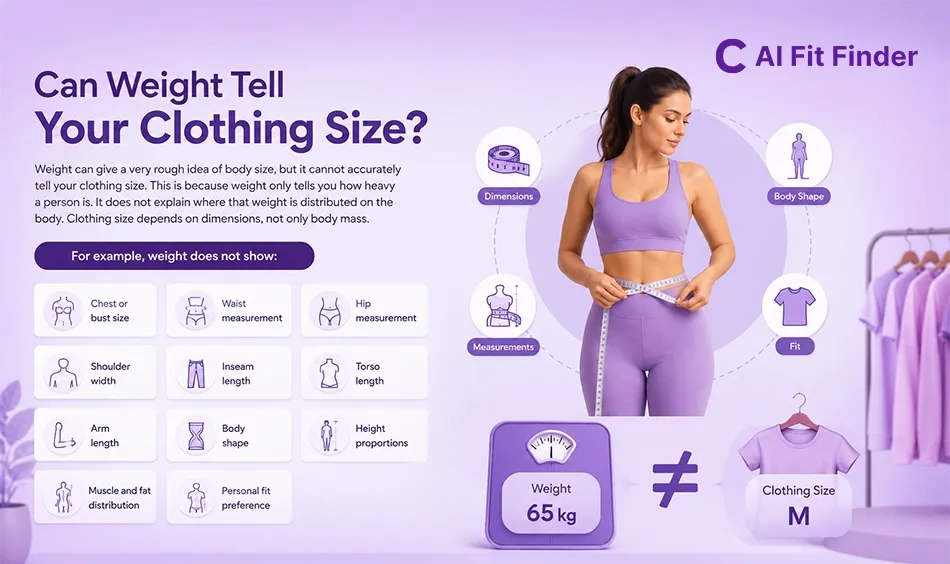
For example, weight does not show:
- Chest or bust size
- Waist measurement
- Hip measurement
- Shoulder width
- Inseam length
- Torso length
- Arm length
- Body shape
- Height proportions
- Muscle and fat distribution
- Personal fit preference
A person may weigh 150 lbs and have a smaller waist with broader shoulders. Another person may weigh the same but have wider hips and a shorter torso. A third person may have a more athletic build with more muscle mass. All three people may need different clothing sizes. That is why weight-based sizing is often inaccurate. A better answer is this:
No, weight alone cannot tell your clothing size. Clothing size is based on body measurements such as chest, waist, hips, shoulders, and inseam. People with the same weight can have different body shapes and wear different sizes.
Weight can support sizing in a general way, but it should never replace actual body measurements.
Why Clothing Size Depends on Body Measurements, Not Weight Alone
The reason clothing size depends on body measurements is simple: clothes are made to fit around specific parts of the body.
A shirt must fit the chest, shoulders, waist, and arm length. Jeans must fit the waist, hips, rise, thighs, and inseam. A dress may need to fit the bust, waist, hips, torso, and overall length. Weight does not provide this information.
Weight Does Not Show Body Shape
Body shape plays a major role in how clothing fits. Two people can have the same weight but very different shapes. One person may carry more weight around the hips, while another may carry more weight around the waist or upper body.
For example:
- A pear-shaped body may need a larger bottom size.
- An apple-shaped body may need more room around the waist.
- An athletic body may need more shoulder or thigh room.
- An hourglass shape may need clothing that fits both waist and hips correctly.
If both people choose clothing based only on weight, one or both may end up with the wrong size.
Weight Does Not Show Body Proportions
Body proportions are just as important as body shape. A person with a longer torso may need a different top size than someone of the same weight with a shorter torso. A taller person may need longer pants or sleeves, while a shorter person may need petite sizing or alterations.
This is why height and weight together are still not enough. They may help estimate general size, but they do not show the actual measurements that clothing needs to fit.
Weight Does Not Show Garment Fit
Different garments are designed to fit differently. A slim-fit shirt, relaxed-fit shirt, oversized hoodie, fitted dress, stretch leggings, and structured blazer may all require different sizing decisions.
The same person may wear:
- Medium in a relaxed-fit top
- Large in a fitted shirt
- Small in an oversized hoodie
- Size 8 in one pair of jeans
- Size 10 in another pair of jeans
This does not mean the person’s body changed. It means the garment design changed.
Weight Does Not Show Measurement Distribution
Weight does not explain how body measurements are distributed. A shopper may have a smaller waist and wider hips. Another may have a larger waist and narrower hips. Both may weigh the same, but their clothing needs are different.
This is why body measurements for clothes are more useful than weight. Measurements show the actual areas where garments need to fit.
Which Body Measurements Matter Most for Clothing Size?
To find the right clothing size, shoppers need to understand which body measurements matter most. Different products require different measurements. Tops, bottoms, dresses, jackets, and footwear all depend on different fit points.
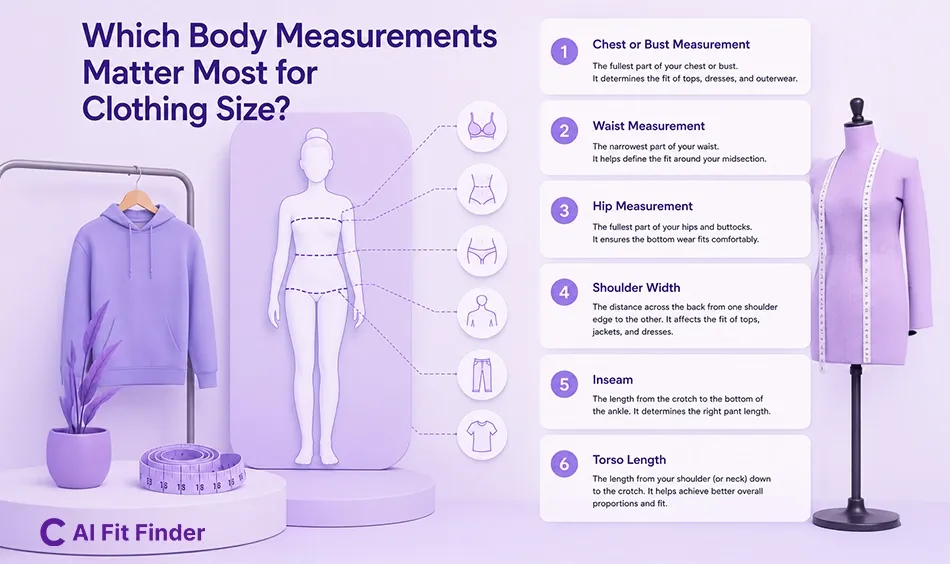
Chest or Bust Measurement
Chest or bust measurement is important for:
- T-shirts
- Shirts
- Blouses
- Dresses
- Jackets
- Coats
- Sportswear
- Bras and fitted tops
For tops and dresses, the chest or bust area is often one of the most important measurements. If this area is too tight, the garment may pull, gap, or feel uncomfortable. If it is too loose, the garment may look oversized or poorly fitted.
Waist Measurement
Waist measurement is important for:
- Jeans
- Trousers
- Shorts
- Skirts
- Dresses
- Jumpsuits
- Leggings
The waist is one of the most commonly used measurements in clothing size charts. However, it is important to measure the natural waist, not where low-rise jeans sit. The natural waist is usually the narrowest part of the torso.
Hip Measurement
Hip measurement is important for:
- Jeans
- Pants
- Leggings
- Skirts
- Dresses
- Fitted bottoms
The hip measurement should be taken around the fullest part of the hips and seat. This is especially important for fitted bottoms and dresses. A garment may fit the waist but feel tight around the hips if the hip measurement is not considered.
Shoulder Width
It matters for:
- Shirts
- Blazers
- Jackets
- Coats
- Structured tops
Shoulder fit is often overlooked, but it can make a big difference. If the shoulders are too narrow, the garment may pull and restrict movement. If they are too wide, the garment may look oversized or sloppy. This is especially important for formalwear, jackets, and tailored clothing.
Inseam
Inseam measurement is important for:
- Jeans
- Trousers
- Leggings
- Pants
- Jumpsuits
The inseam is the length from the crotch to the bottom of the leg. It determines whether pants will be full length, cropped, too short, or too long. Two people can wear the same waist size but need different inseams because of height and leg length.
Torso Length
Torso length matters for:
- Dresses
- Bodysuits
- Jumpsuits
- Rompers
- One-piece garments
- Long tops
A person with a longer torso may find that jumpsuits or bodysuits feel too short, even if the size chart matches their bust, waist, and hips. This is another reason weight alone cannot determine clothing size.
How to Measure Body for Clothes Correctly
Knowing how to measure your body for clothes is one of the best ways to choose the right size online. Accurate measurements help shoppers use a clothing size chart properly and reduce the risk of ordering the wrong size.
Use a Soft Measuring Tape
Use a flexible measuring tape designed for body measurements. A metal tape measure is not suitable because it cannot follow the curves of the body. The tape should sit flat against the body without twisting.
Measure Over Light Clothing
For best results, measure over underwear or light, fitted clothing. Bulky clothing can add extra inches and make measurements inaccurate.
Stand Naturally
Do not hold your breath, pull in your stomach, or stand in an unnatural posture. Clothing needs to fit your real body, not a temporary position. Stand relaxed with your feet close together.
Do Not Pull the Tape Too Tight
The measuring tape should be snug but not tight. If it digs into the skin, the measurement will be too small. If it hangs loosely, the measurement will be too large.
Accurate body measurements are the foundation of choosing the right clothing size online. If shoppers are unsure where or how to measure, our guide on how to know your body size for clothes explains the key measurements needed for better fit decisions.
Measure the Right Areas
Here is a simple guide:
| Measurement | Where to Measure | Best Used For |
| Chest/Bust | Around the fullest part of the chest or bust | Tops, dresses, jackets |
| Waist | Around the narrowest part of the torso | Jeans, skirts, dresses |
| Hips | Around the fullest part of the hips | Bottoms, dresses |
| Shoulders | From one shoulder edge to the other | Shirts, blazers, jackets |
| Inseam | From crotch to ankle | Pants, jeans |
| Torso | From the shoulder through the body, depending on the garment type | Bodysuits, jumpsuits, dresses |
Taking these measurements gives a more accurate size estimate than weight alone.
Clothing Size by Weight and Height: Why It Is Not Accurate
Many shoppers search for clothing size by weight and height because they want a quick answer.
For example, they may search:
- What size am I at 150 lbs?
- What clothing size is 5’5 and 140 lbs?
- What size should I wear based on height and weight?
- Can I find my dress size by weight?
The problem is that height and weight still do not show the full body shape.
Here is a simple example:
| Person | Height | Weight | Body Shape | Possible Size Difference |
| Person A | 5’2″ | 150 lbs | Curvier hips | Larger bottom size |
| Person B | 5’8″ | 150 lbs | Longer frame | Different length and fit |
| Person C | 5’5″ | 150 lbs | Broader shoulders | Larger top size |
| Person D | 5’5″ | 150 lbs | Athletic build | Different thigh or shoulder fit |
All four people weigh the same, but their clothing needs may be completely different. Height and weight can help create a general estimate, but they cannot replace body measurements. For accurate sizing, shoppers should measure the areas that the garment actually needs to fit.
Why Two People With the Same Weight Wear Different Sizes
Two people with the same weight can wear different clothing sizes because bodies are not shaped the same way. This is one of the most important points for shoppers to understand.
Body Shape Changes Fit
Body shape affects how clothing sits. For example, a dress may fit one person perfectly but feel tight on another person with the same weight because their hip or bust measurement is different.
Common body shape differences include:
- Wider hips
- Narrower hips
- Broader shoulders
- Fuller bust
- Smaller waist
- Longer torso
- Shorter legs
- More muscular thighs
These differences affect clothing size more than total weight.
Muscle and Fat Distribution Matter
Muscle and fat have different densities and distributions. Two people can weigh the same, but one may have more muscle and the other may have more body fat. Their body measurements may be different even at the same weight. This is why fitness level, body composition, and body structure can affect clothing size.
Height and Proportion Matter
Height also changes how weight appears on the body. A person who is 5’2″ and 150 lbs may have different measurements than someone who is 5’9″ and 150 lbs. The taller person may have a longer frame, while the shorter person may have more concentrated measurements in certain areas. That does not mean one body is better than another. It simply means clothing size cannot be reduced to weight.
Fit Preference Matters
Some shoppers prefer fitted clothing. Others prefer relaxed or oversized styles. A shopper may technically fit into a medium but choose a large for comfort. Another shopper may choose a small size for a tighter look. That means clothing size is not only about body measurement. It is also about how the shopper wants the garment to feel.
How Clothing Size Charts Work
A clothing size chart is designed to help shoppers match their body measurements with a brand’s size system. Most size charts include measurements such as:
- Bust or chest
- Waist
- Hips
- Inseam
- Shoulder width
- Sleeve length
- Garment length
But not all size charts are the same.
What a Clothing Size Chart Shows
A size chart usually connects measurements to size labels.
For example:
| Size | Bust | Waist | Hips |
| S | 34–35 in | 26–27 in | 36–37 in |
| M | 36–37 in | 28–29 in | 38–39 in |
| L | 38–40 in | 30–32 in | 40–42 in |
This helps shoppers compare their measurements with the brand’s recommended size.
Why Size Charts Differ by Brand
One of the most frustrating parts of online shopping is that sizing changes across brands. A medium in one brand may feel like a small in another. A size 10 in one store may fit like a size 12 somewhere else.
This happens because brands use different:
- Fit models
- Target customers
- Design preferences
- Fabric types
- Sizing standards
- Product cuts
- Regional sizing systems
This is why shoppers should not rely only on their usual size. They should check the brand’s size chart every time.
Body Measurements vs Garment Measurements
Many shoppers confuse body measurements with garment measurements.
They are not the same.
| Type | Meaning | Example |
| Body measurements | Measurements of the shopper’s body | 30-inch waist |
| Garment measurements | Measurements of the clothing item | 32-inch garment waist |
| Size label | Brand’s assigned size name | M, L, 10, 12 |
Garment measurements are often slightly larger than body measurements because clothes need room for movement. This extra room is called ease. For example, if your waist is 30 inches, a garment’s waist may be slightly larger depending on the style and fit.
Why Size Labels Can Be Misleading
Size labels are not universal. Small, medium, large, size 8, size 10, and size 12 can mean different things depending on the brand. Vanity sizing can also make labels less reliable because some brands adjust size numbers to make customers feel better about the size they choose. This is why measurements are more dependable than labels.
What Size Am I? A Better Way to Find Your Clothing Size
The question “What size am I?” is one of the most common sizing questions online. The best answer is not based on weight. It is based on measurements, garment type, brand sizing, fabric, and fit preference.
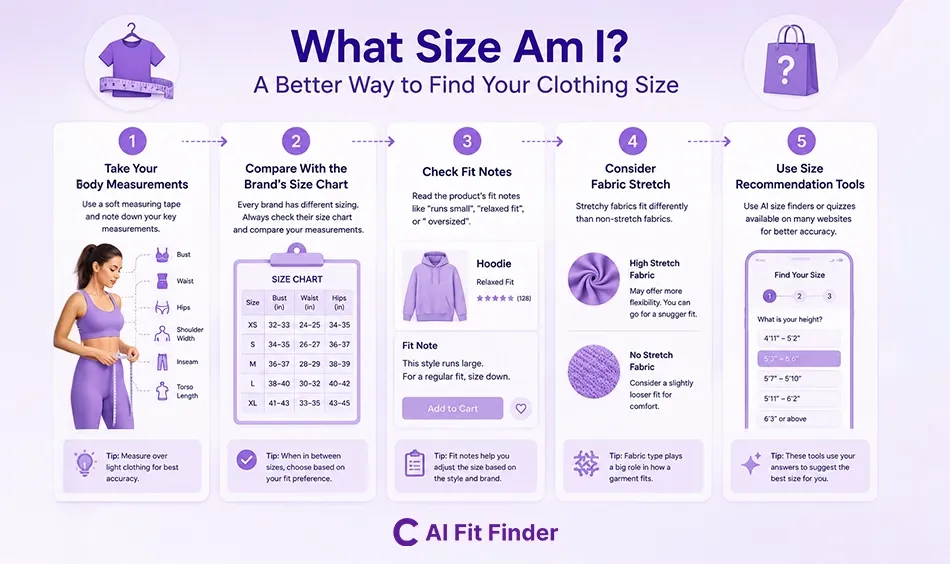
Here is a better process.
Step 1: Take Your Body Measurements
Start with the key measurements:
- Chest or bust
- Waist
- Hips
- Inseam
- Shoulders
- Torso length if needed
Write them down and update them regularly.
Step 2: Compare With the Brand’s Size Chart
Do not assume your usual size will work across every brand. Compare your measurements with the size chart for the exact product or brand you are buying from.
Step 3: Check Fit Notes
Look for product descriptions such as:
- Slim fit
- Relaxed fit
- Oversized fit
- True to size
- Runs small
- Runs large
- Size up if between sizes
- Size down for a closer fit
These notes help explain how the product is intended to fit.
Step 4: Consider Fabric Stretch
Fabric affects how a garment feels. Stretchy fabric allows more flexibility. Structured or non-stretch fabric requires more precise sizing. For example, stretch jeans may fit comfortably even if they are close to your body measurements. Rigid denim may feel tight if you do not allow enough room.
Step 5: Use Size Recommendation Tools
Size recommendation tools can make online sizing easier. Instead of forcing shoppers to interpret size charts alone, these tools can suggest the best size based on inputs such as height, weight, body measurements, fit preference, and product-specific size data. For fashion ecommerce stores, tools like AI Fit Finder help shoppers make more confident size decisions before checkout.
Finding the right clothing size online becomes easier when shoppers combine body measurements, size charts, fabric details, and fit notes. Our guide on how to find your perfect clothing size online explains a practical step-by-step approach to choosing the right size with more confidence.
Why Clothes May Not Fit Even When the Size Is Right
Sometimes shoppers choose the correct size based on the chart, but the clothing still does not fit well. This happens because size is only one part of fit.
Fabric Behavior
Fabric changes how clothing feels on the body. A stretchy fabric may feel comfortable in a smaller size. A stiff fabric may feel tight even when the measurements appear correct.
Important fabric factors include:
- Stretch
- Thickness
- Drape
- Softness
- Structure
- Breathability
- Recovery after stretching
Garment Cut
The cut of the garment affects fit. For example, two dresses in the same size can fit differently if one is bodycon and the other is A-line. Two shirts in the same size can feel different if one is slim fit and the other is relaxed fit.
Brand Sizing
Brand sizing is not standardized across the fashion industry. A shopper may be a medium in one brand and a large in another. This can make online shopping confusing, especially when customers buy from a new store.
Body Proportions
A garment may match one measurement but not another.
For example:
- A dress may fit the waist but feel tight at the bust.
- Jeans may fit the hips, but gap at the waist.
- A jacket may fit the chest but feel tight at the shoulders.
- Pants may fit the waist but be too short.
This is why full body measurements are more useful than weight alone. Even when shoppers choose the correct size from a chart, the final fit can still feel wrong because of fabric, cut, body proportions, and brand sizing differences. Our guide on why clothes don’t fit even when the size is right explains these fit issues in more detail.
Why This Matters for Online Shoppers
Understanding that clothing size depends on body measurements can help shoppers make better buying decisions.
Better Measurements Reduce Guesswork
When shoppers know their measurements, they do not have to guess based on weight or usual size. This makes online shopping more predictable.
Better Size Selection Reduces Returns
Wrong-size orders are one of the most common reasons shoppers return apparel and footwear. By using accurate measurements, shoppers can reduce the chance of buying items that do not fit.
Better Fit Confidence Improves Online Shopping
Sizing uncertainty creates stress. When shoppers understand their measurements and know how to use size charts, they feel more confident. This confidence makes online shopping easier and more enjoyable.
Why This Matters for Fashion Ecommerce Stores
This topic is not only important for shoppers. It is also important for online fashion brands and Shopify stores. If a store provides poor sizing guidance, customers are more likely to hesitate, choose the wrong size, return products, or avoid buying again.
Weight-Based Sizing Creates Poor Recommendations
If a store asks only for weight, size guidance may be inaccurate. Weight does not explain body shape, measurements, or fit preference. This can lead to poor recommendations and customer dissatisfaction.
Measurement-Based Guidance Improves Size Accuracy
Better sizing starts with better data. When stores use body measurements and product-specific size data, they can provide more accurate guidance. This improves the customer’s chance of choosing the right size.
Better Sizing Guidance Can Improve Conversions
Shoppers are more likely to buy when they feel confident about the size. If a customer is unsure, they may leave the product page or abandon the cart. Clear sizing guidance helps remove that hesitation.
Better Fit Accuracy Can Reduce Returns
Returns reduce profit. When customers choose the wrong size, the store may lose money through shipping, restocking, customer support, and refund processing. Better fit accuracy helps reduce avoidable size-related returns.
AI Size Recommendation Tools Can Support Better Decisions
AI-powered size recommendation tools can help ecommerce stores move beyond static charts. AI Fit Finder helps Shopify fashion stores provide personalized size recommendations using shopper inputs and product-specific size data. This helps customers choose sizes with more confidence before checkout.
For stores selling apparel, footwear, or size-sensitive products, this can improve the buying experience and support better long-term customer trust.
For Shopify fashion stores, measurement-based sizing can be easier to implement with the right tool. The AI Fit Finder Shopify app helps merchants show personalized size recommendations on product pages, helping shoppers choose the right size with more confidence before checkout.
Common Mistakes People Make When Choosing Clothing Size
Many shoppers choose the wrong size because they rely on incomplete information. Here are the most common mistakes.
Choosing Size Based Only on Weight
This is one of the biggest sizing mistakes. Weight does not show chest, waist, hips, shoulders, inseam, or body shape. It may give a rough estimate, but it should not be used as the main sizing method.
Assuming One Size Works Across All Brands
Your size can change from brand to brand. A shopper may wear medium in one brand and large in another. This does not mean their body changed. It means the sizing system changed.
Ignoring Body Shape
Body shape affects fit. A shopper with wider hips may need a different size in bottoms than in tops. A shopper with broad shoulders may need to size up in jackets even if their waist measurement suggests a smaller size.
Not Measuring Regularly
Body measurements can change over time due to lifestyle, age, fitness, health, or natural body changes. It is helpful to update measurements regularly, especially before buying fitted clothing online.
Ignoring Fabric and Fit Notes
Fabric and fit notes can change the sizing decision. A non-stretch fitted dress may require a different size than a relaxed stretch dress. Ignoring these details can lead to a poor fit even when the size chart seems correct.
Quick Clothing Size Checklist
Before choosing a clothing size online, use this checklist:
- Measure your chest or bust.
- Measure your waist.
- Measure your hips.
- Check your inseam for pants.
- Compare your measurements with the brand’s size chart.
- Read product fit notes.
- Check whether the fabric has stretch.
- Look at model size references.
- Read customer reviews about fit.
- Use a size recommendation tool if available.
This process gives a much better sizing result than relying on weight alone. If your store is ready to move from weight-based sizing guesswork to personalized fit guidance, you can compare available plans on the AI Fit Finder pricing page and choose the option that fits your Shopify store’s needs.
FAQ About Clothing Size Depends on Body Measurements
1. What is the 3-3-3 rule for clothing?
The 3-3-3 rule is a wardrobe method where you choose 3 tops, 3 bottoms, and 3 pairs of shoes to create multiple outfits. It helps simplify styling, but it does not determine clothing size.
2. Will I go down a size if I lose 10 pounds?
You may go down a size after losing 10 pounds, but it is not guaranteed. Clothing size depends on body measurements, not weight alone. Measure your waist, hips, chest, and compare them with the brand’s size chart.
3. Why is size 0 so big now?
Size 0 may feel bigger because of vanity sizing and inconsistent brand sizing. Some brands label larger garment measurements with smaller size numbers, so body measurements are more reliable than size labels.
4. Why do I weigh more, but my clothes still fit?
You may weigh more but still fit into the same clothes because weight does not always change body measurements. Muscle, water retention, posture, and body composition can affect weight without changing clothing size.
5. What two colors should not be worn together?
There is no strict rule. Some bright or clashing colors can be harder to style, but fashion depends on contrast, skin tone, occasion, and personal style. Neutral colors usually help balance bold shades.
6. What makes a woman look wealthy?
Well-fitted clothing, clean lines, quality fabrics, polished shoes, simple accessories, and a neat appearance can create a premium look. Fit matters more than brand names.
7. Which body part loses fat first?
Fat loss varies by genetics, hormones, age, and body composition. Some people notice changes in the face or waist first, while others see changes in arms, hips, or legs.
Conclusion
Clothing size depends on body measurements, not weight alone. Weight can give a general idea of body size, but it cannot show chest, waist, hips, shoulders, inseam, torso length, body shape, or fit preference. Two people can weigh the same and still wear different sizes because their bodies are shaped differently.
To find the right size, shoppers should measure their body, compare those measurements with the brand’s clothing size chart, check fit notes, consider fabric stretch, and use size recommendation tools when available.
For online fashion stores, better measurement-based sizing guidance can improve customer confidence, reduce wrong-size orders, lower returns, and create a better shopping experience. The right size is not about weight. It is about how the garment fits your actual body.