
Many Shopify fashion stores attract visitors but struggle to turn traffic into sales. Ads drive clicks, social media generates interest, and product pages receive views, yet conversions remain lower than expected.
This happens because fashion shoppers behave differently from buyers in many other categories. They think about fit, sizing, fabric feel, return risk, and trust before purchasing. If these concerns are not addressed clearly, visitors leave without buying.
A low Shopify conversion rate does not always mean you need more traffic. In many cases, it means your store needs fewer barriers between interest and purchase.
In this guide, you’ll learn:
- What the Shopify conversion rate means for fashion brands
- What a strong conversion rate looks like
- Why fashion stores lose buyers before checkout
- Proven ways to improve Shopify conversion rate
- How size confidence impacts sales
- Common mistakes that reduce conversions
- Metrics to track weekly
This guide is built for Shopify fashion store owners who want more revenue from existing traffic.
What Is Shopify Conversion Rate?
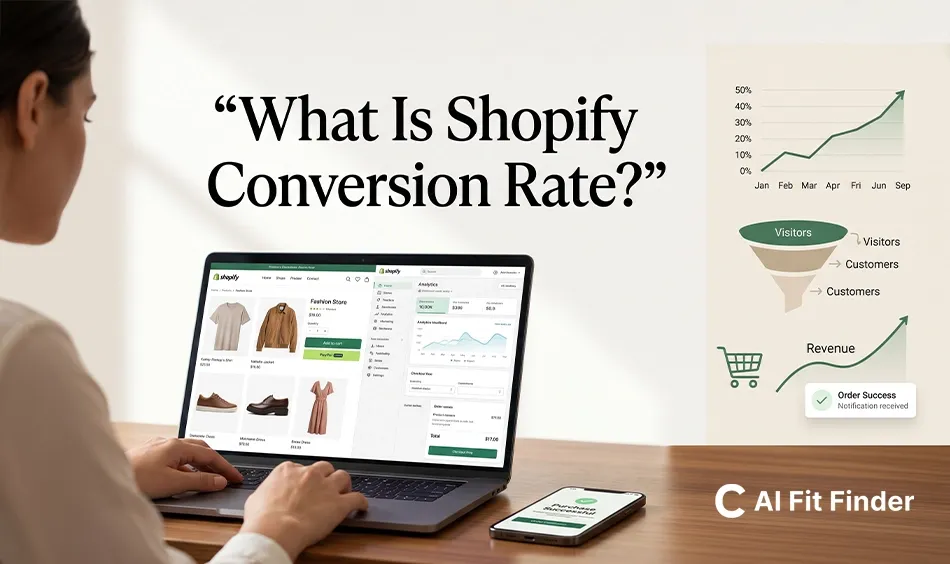
Shopify conversion rate is the percentage of visitors who complete a purchase.
Formula
Conversion Rate = Orders ÷ Visitors × 100
If 1,000 visitors come to your store and 25 buy, your conversion rate is 2.5%.
Why It Matters
Conversion rate affects nearly every growth metric:
- Revenue efficiency
- Return on ad spend
- Profitability
- Customer acquisition sustainability
- Cash flow growth
If traffic increases but conversion does not, growth becomes expensive.
What Is a Good Shopify Conversion Rate for Fashion Stores?
Conversion rates vary based on pricing, audience quality, device type, product trust, and brand strength.
| Store Stage | Typical Performance |
| New Store | Lower |
| Average Store | Moderate |
| Optimized Store | Strong |
| Leading Brand | Very Strong |
For fashion stores, conversion rates can be lower than in some other niches because shoppers need more confidence before buying. That means even a small improvement can create a major revenue increase.
Why Fashion Stores Often Convert Lower Than Other Niches
Fashion ecommerce has unique buying friction.
Size Uncertainty
Customers wonder:
- Will this fit?
- Should I size up?
- Is this brand true to size?
If they are unsure, many leave.
Fit Concerns
Even correctly sized labels can fit differently depending on cut, fabric, or style.
Return Anxiety
Shoppers often think:
- What if I need to return it?
- Will the process be difficult?
Visual Dependence
Fashion buying depends heavily on photos, styling, and presentation.
Mobile Shopping Friction
Many shoppers browse fashion on mobile. If pages are slow or cluttered, conversions drop quickly.
One major reason fashion stores struggle with conversions is fit uncertainty. As explained in our guide on why clothes don’t fit even when the size is right, even shoppers who choose the correct size may still worry about fit differences across products.
Biggest Reasons Shopify Visitors Don’t Buy
Understanding lost conversions helps prioritize fixes.
Weak Product Pages
Pages with poor images or vague descriptions reduce trust.
Unclear Sizing Information
Static charts without guidance create hesitation.
Hidden Costs
Unexpected shipping fees or taxes stop checkout momentum.
Lack of Reviews
Without social proof, first-time buyers hesitate.
Slow Speed
Even short delays can reduce conversions.
Complicated Checkout
Too many fields or steps increase abandonment.
Many stores rely on static charts, but understanding size chart limitations in Shopify helps explain why shoppers still leave without buying.
Proven Ways to Increase Shopify Conversion Rate for Fashion Stores
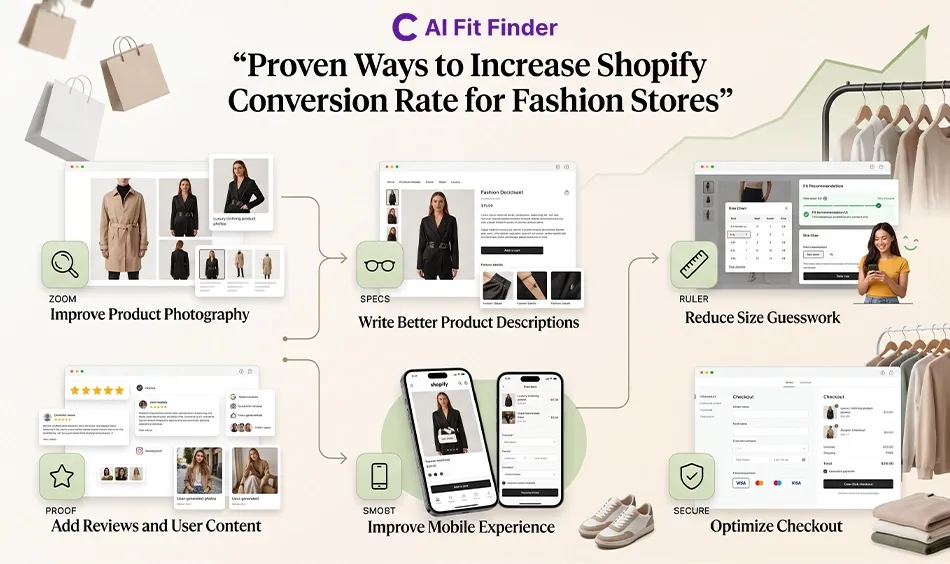
1. Improve Product Photography
Photos often make the sale before text does.
Use:
- Front, side, and back views
- Zoom images
- Fabric texture shots
- Lifestyle images
- Model photos in real settings
Customers need to imagine ownership.
Why It Works
Better visuals reduce uncertainty and build confidence.
2. Write Better Product Descriptions
Many stores describe style but ignore decision-making details.
Include:
- Fit type (slim, relaxed, oversized)
- Fabric feel
- Stretch level
- Length notes
- Care instructions
- Styling suggestions
Instead of:
“Premium cotton shirt”
Use:
“Relaxed-fit cotton shirt with light stretch and breathable feel for daily wear.”
3. Reduce Size Guesswork
Sizing confusion is one of the biggest conversion blockers in fashion.
Use:
- Fit notes
- Model height and size worn
- Body reference examples
- Smart size recommendations
This directly helps improve Shopify’s conversion rate.
4. Add Reviews and User Content
Reviews are critical for first-time buyers.
Best review content includes:
- Fit feedback
- Fabric quality
- Delivery experience
- Customer photos
Why It Works
Customers trust other buyers more than brand claims.
5. Improve Mobile Experience
Many fashion buyers shop from mobile devices.
Focus on:
- Fast loading pages
- Sticky Add to Cart button
- Clear size selector
- Easy scrolling images
- Minimal clutter
Mobile Rule
If buying feels difficult on mobile, conversions drop fast.
6. Optimize Checkout
Checkout should feel simple and safe.
Use:
- Guest checkout
- Express payment methods
- Clear delivery times
- Transparent costs
- Fewer steps
Checkout friction kills purchase intent late in the funnel.
Helping customers understand sizing before purchase can remove friction. A simple guide on how to find your perfect clothing size online can improve confidence and support faster buying decisions.
How Size Accuracy Increases Shopify Conversion Rate
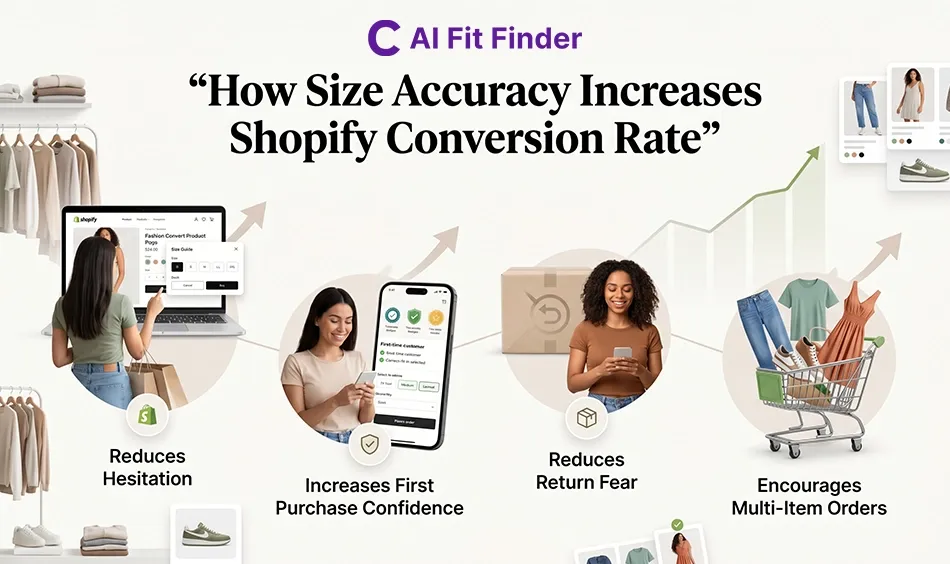
This is one of the most overlooked growth levers.
Reduces Hesitation
When shoppers feel sure about fit, they buy faster.
Increases First Purchase Confidence
New customers need reassurance.
Reduces Return Fear
Many visitors hesitate because they expect sizing problems.
Encourages Multi-Item Orders
Customers may buy more than one product when they trust sizing. For fashion stores, size confidence often matters more than discounts.
Improving conversion is closely tied to reducing returns. Brands that reduce size-related returns in fashion ecommerce often build trust, drive stronger repeat purchases, and improve first-order conversion rates.
Shopify Product Page CRO Checklist for Fashion Brands
| Element | Impact |
| Reviews | High |
| Size Guidance | High |
| Product Images | High |
| Mobile UX | High |
| Trust Signals | High |
| Speed | High |
| Clear Copy | Medium |
Use this checklist product by product.
Shopify Checkout Optimization for Better Conversion
Traffic and product pages matter, but checkout closes the sale.
Transparent Costs
Show shipping thresholds and delivery estimates early.
Payment Flexibility
Offer:
- Cards
- Wallets
- Fast-pay options
Simpler Forms
Ask only what is necessary.
Guest Checkout
Do not force account creation.
Progress Clarity
Customers should know how close they are to completing a purchase.
How to Increase Conversion Rate Without More Traffic
Many stores assume growth means more traffic. Not always. You can grow faster by improving existing traffic value.
Focus Areas
- Better product pages
- Better sizing clarity
- Faster checkout
- Review trust signals
- Email recovery flows
- Higher AOV strategies
This is often more profitable than buying more clicks.
Metrics to Track Weekly
Strong stores track conversion data regularly.
Conversion Rate
Overall purchase percentage.
Add-to-Cart Rate
Measures product page effectiveness.
Checkout Completion Rate
Measures checkout efficiency.
Bounce Rate
Shows a landing page mismatch or poor UX.
Revenue Per Visitor
One of the strongest growth metrics.
Common Mistakes That Hurt Shopify Conversion Rate
Copying Generic Templates
What works for electronics may fail in fashion.
Too Many Popups
Aggressive offers create friction.
Poor Size Experience
Confusing size charts reduces confidence.
Weak Trust Signals
No reviews or unclear policies create doubt.
Discount Dependence
Discounts can create short-term sales but not lasting conversion strength.
Tools That Help Improve Shopify Conversion Rate
Heatmaps
Show where users click or stop.
Session Recordings
Reveal real friction points.
Review Tools
Build social proof.
Size Recommendation Tools
Help reduce sizing uncertainty.
A/B Testing Tools
Test headlines, layouts, offers, and buttons.
Why Discounts Alone Don’t Fix Low Conversion
Many stores respond to weak conversions with sales promotions.
That may create temporary spikes, but it does not solve:
- Poor trust
- Weak product pages
- Sizing hesitation
- Slow checkout
- Mobile friction
If the experience is weak, discounts only mask the problem. Confidence converts better than price cuts.
Mini Scenario: Before vs After Optimization
Before
- Strong traffic
- Low product trust
- Poor size clarity
- Weak checkout flow
After
- Better photos
- Clear fit guidance
- Reviews added
- Faster checkout
Result: Higher conversion without more traffic.
Frequently Asked Questions
- What is a good conversion rate for Shopify?
A good conversion rate for Shopify often falls between 2% and 3% for many stores. High-performing stores may achieve 3% to 5% or more, depending on niche, traffic quality, pricing, and customer trust. For fashion stores, strong product pages, clear sizing, and smooth checkout can improve results.
- Is a 2.5% conversion rate good?
Yes, a 2.5% conversion rate is generally considered solid for many Shopify stores. It often sits around or above average for ecommerce. If your traffic quality is strong and margins are healthy, 2.5% can be a good base to improve from.
- What does the conversion rate mean on Shopify?
The conversion rate on Shopify is the percentage of website visitors who complete a purchase. It shows how effectively your store turns traffic into customers.
Formula:
Conversion Rate = Orders ÷ Visitors × 100
For example, if 100 visitors come to your store and 3 place an order, your conversion rate is 3%.
- How much does Shopify charge for currency conversion?
Shopify payments may include a currency conversion fee when selling in multiple currencies. The exact fee depends on your plan, country, and payment setup. Charges can vary, so it is best to check the latest pricing inside your Shopify Payments settings or official Shopify pricing pages.
- Is a 3% conversion rate good?
Yes, a 3% conversion rate is considered strong for many Shopify stores. Reaching 3% often means your store has effective traffic sources, good product pages, trust signals, and a smoother checkout process. For fashion brands, 3% can be a strong benchmark.
Conclusion
Most Shopify fashion stores do not need more visitors first. They need more confidence built into the buying journey. When customers trust your brand, understand the product, feel sure about sizing, and experience a smooth checkout, conversions rise naturally.
To increase Shopify conversion rate, focus on:
- Better product presentation
- Strong trust signals
- Clear size guidance
- Mobile-first UX
- Frictionless checkout
Traffic gets attention. Confidence gets sales.