
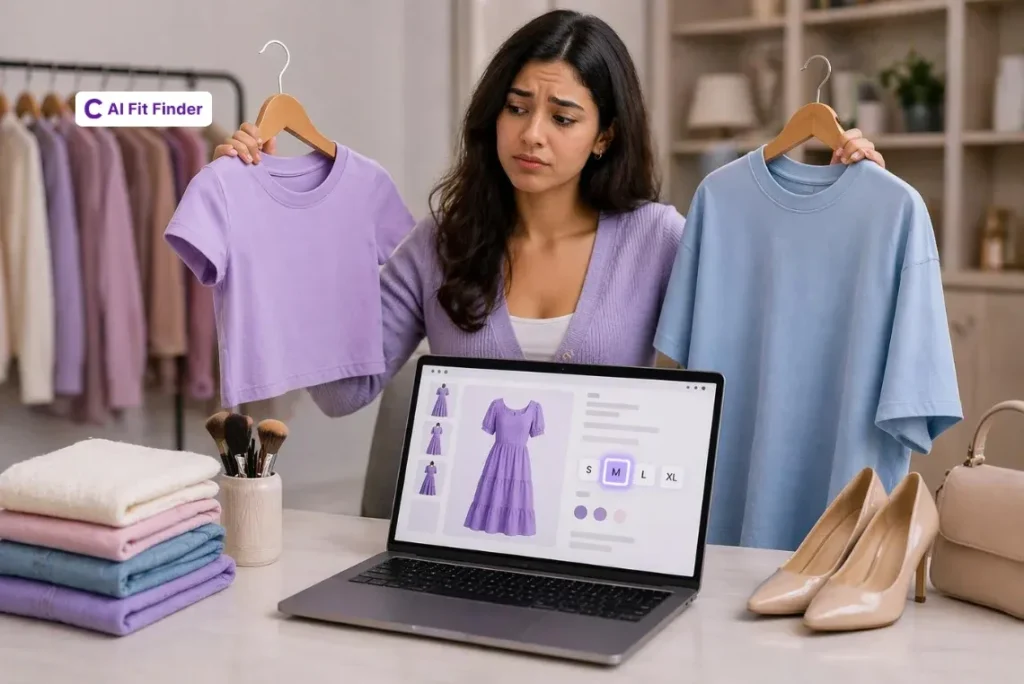
Returns are one of the biggest challenges in fashion ecommerce, especially for Shopify stores. Unlike physical retail, customers cannot try products before purchasing. This creates uncertainty around fit, leading to incorrect size selection and a high volume of returns. Over time, these returns affect profitability, operations, and customer experience. That’s why reducing size-related returns has become a priority for growing fashion brands.
In this guide, you’ll learn:
- Why returns in Shopify stores are higher in fashion ecommerce
- The main reasons customers return products are due to sizing issues
- How size accuracy directly impacts returns and profitability
- Practical strategies to reduce size-related returns
- The difference between size charts and guided size recommendations
- Tools that help improve sizing decisions and reduce return rates
- Key metrics to track and improve your return performance
This guide will help you understand how to reduce returns by improving size accuracy and making better sizing decisions for your Shopify store.
What Are Returns in Shopify and Why They Matter
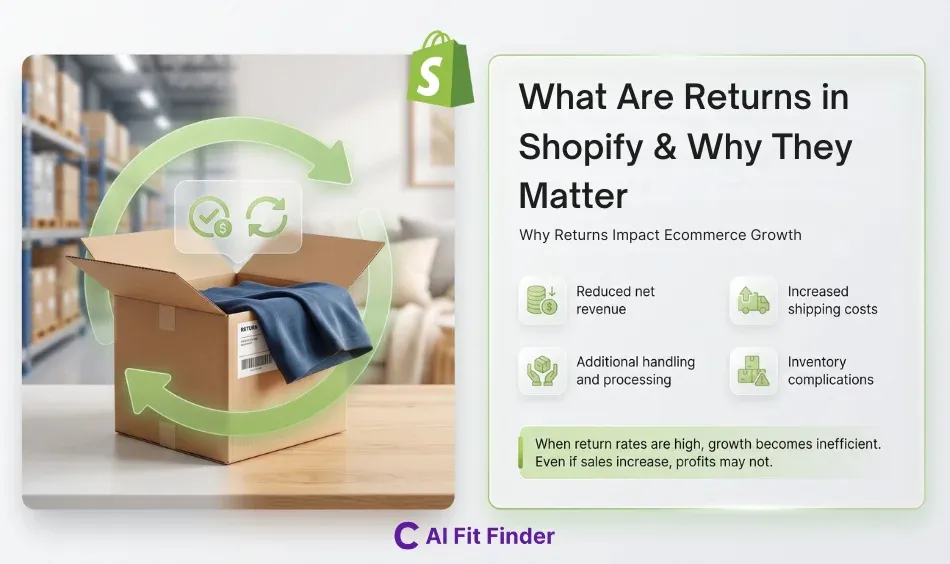
Returns in Shopify refer to products that customers send back after purchase, usually for a refund or exchange.
Why Returns Impact Ecommerce Growth
Returns affect multiple areas of your business:
- Reduced net revenue
- Increased shipping costs
- Additional handling and processing
- Inventory complications
When return rates are high, growth becomes inefficient. Even if sales increase, profits may not.
Fashion Ecommerce Return Rate Benchmarks
Understanding industry benchmarks helps put things into perspective.
| Industry | Return Rate |
| Ecommerce Average | 15%–25% |
| Fashion Ecommerce | 20%–40% |
| High Return Stores | 40%+ |
Fashion has one of the highest return rates among all ecommerce categories.
Why Fashion Has Higher Returns
- Fit uncertainty
- Size inconsistency
- Fabric differences
- Style expectations
These factors make sizing one of the biggest challenges.
Why Size-Related Returns Are So High in Fashion Ecommerce
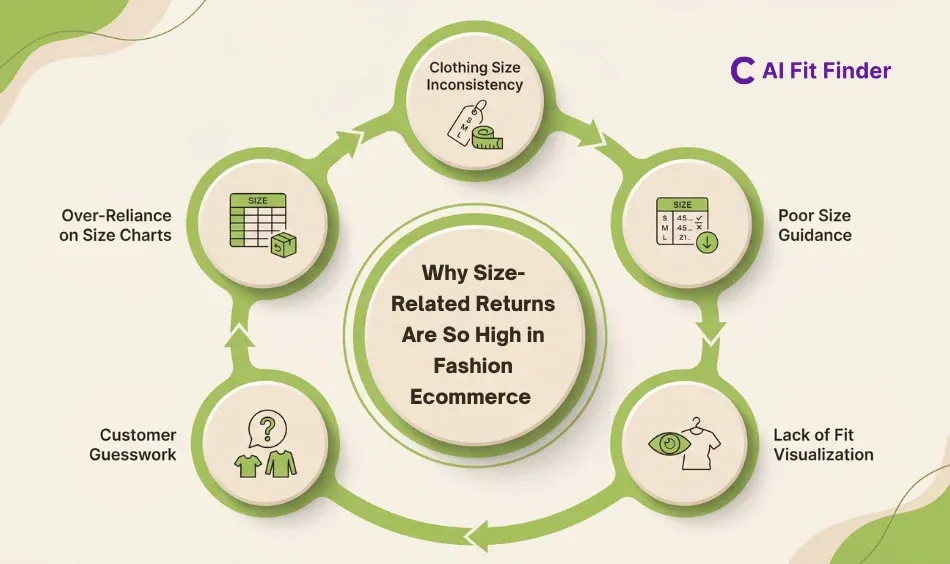
Clothing Size Inconsistency
One of the main reasons for returns is inconsistent sizing across brands.
A customer may wear:
- Medium in one brand
- Large in another
This inconsistency creates confusion and increases incorrect purchases.
Poor Size Guidance
Many stores rely only on size charts.
However, size charts:
- Require interpretation
- Do not guide decisions
- Often confuse customers
Without guidance, customers guess.
Lack of Fit Visualization
Customers cannot try clothes online.
They depend on:
- Images
- Descriptions
- Reviews
If these are not clear, confidence drops.
Customer Guesswork
When information is unclear, customers rely on guesswork.
This leads to:
- Wrong size selection
- Increased returns
Over-Reliance on Size Charts
Size charts provide data, but not direction.
They do not answer questions like:
- Should I size up?
- Will this feel tight?
This gap leads to errors.
One of the biggest drivers of returns is clothing size inconsistency, where the same size label varies across brands and categories. This makes it difficult for customers to rely on their usual size, increasing the chances of incorrect purchases.
The Real Cost of Returns in Shopify Stores
Returns affect more than just refunds.
Reverse Logistics Costs
Every return involves:
- Shipping costs
- Packaging
- Processing
These costs add up quickly.
Lost Revenue
Returned products delay revenue realization. Some products may not be resold at full price.
Inventory Disruption
Returns create inventory challenges:
- Delayed restocking
- Incorrect stock levels
Customer Dissatisfaction
A poor fit experience can reduce trust. Customers may not return for future purchases.
How Size Accuracy Impacts Returns
Improving size accuracy is one of the most effective ways to reduce returns.
Reduces Wrong Size Selection
Accurate size guidance helps customers choose correctly the first time.
Improves Customer Confidence
When customers trust sizing, they make faster decisions.
Reduces Return Rate
Better fit leads to fewer returns and exchanges.
Strategies to Reduce Returns in Shopify Fashion Stores
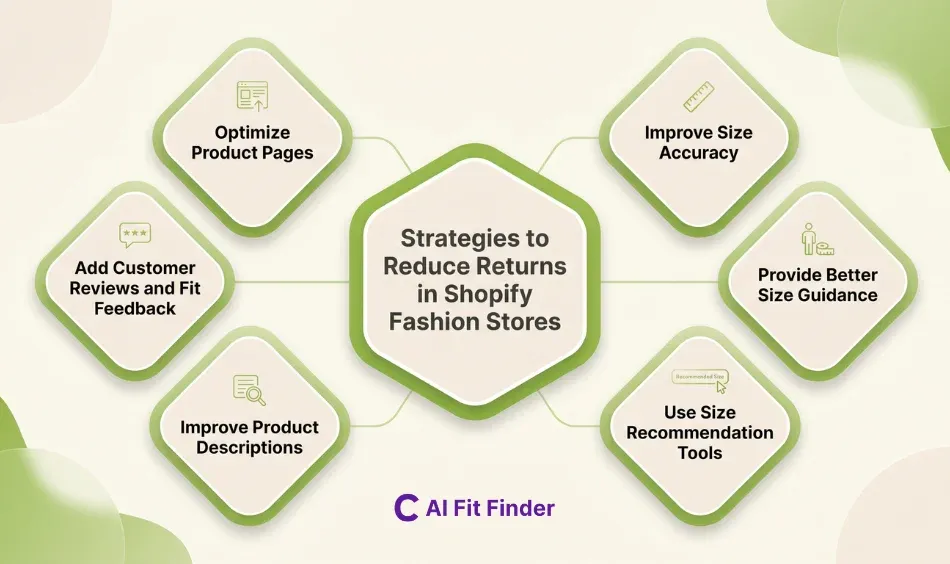
Improve Size Accuracy
Focus on:
- Product-specific sizing
- Consistent measurement standards
Avoid using generic size labels.
Provide Better Size Guidance
Go beyond charts.
Include:
- Fit descriptions
- Sizing suggestions
- Contextual guidance
Use Size Recommendation Tools
Modern stores use tools that:
- Suggest sizes based on inputs
- reduce guesswork
- improve accuracy
Improve Product Descriptions
Describe:
- Fabric type
- Stretch level
- Fit style
This helps customers make better decisions.
Add Customer Reviews and Fit Feedback
Customer reviews provide real-world insights.
Shoppers trust:
- “runs small”
- “true to size.”
- “loose fit”
Optimize Product Pages
Improve:
- Images
- Clarity
- Layout
A better presentation improves confidence.
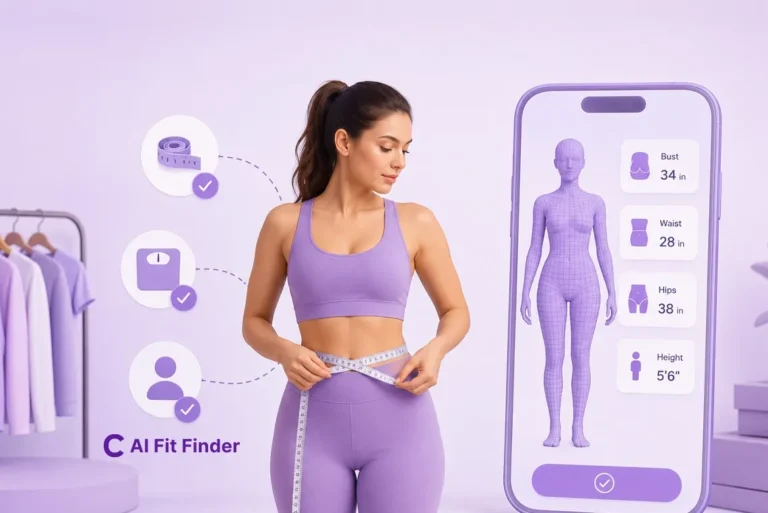
Helping customers understand their own measurements can significantly improve size selection. A simple guide on how to know your body size for clothes can reduce guesswork and improve purchase accuracy.
Size Chart vs Smart Size Recommendation
| Factor | Size Chart | Smart Recommendation |
| Accuracy | Medium | Higher |
| Effort | High | Low |
| Decision Support | Low | High |
| Returns Impact | Higher | Lower |
Smart recommendations provide direction, not just data.
How Reducing Returns Improves Shopify Performance
Improves Profit Margins
Fewer returns mean lower operational costs.
Increases Customer Lifetime Value
Satisfied customers are more likely to return.
Boosts Repeat Purchases
A good first experience leads to repeat buying behavior.
Metrics to Track Returns in Shopify
Return Rate
Percentage of orders returned.
Size-Related Return Rate
Tracks returns caused by sizing issues.
Refund Rate
Measures how often refunds are issued.
Repeat Purchase Rate
Indicates customer retention.
Common Mistakes That Increase Returns
Reducing returns is not just about adding more information. It is about removing friction and improving decision-making at the right stage.
Many Shopify fashion stores repeat the same mistakes that lead to high return rates.
Relying Only on Size Charts
Size charts provide measurements, but they do not guide customers.
Most shoppers:
- Do not understand measurement ranges
- Do not compare properly
- Still feel unsure about fit
Without context, size charts often increase confusion instead of solving it. Modern stores are moving toward guided sizing rather than static charts.
Poor Product Descriptions
Product descriptions often focus on style but ignore fit.
Missing details like:
- Fabric stretch
- Fit type (slim, relaxed, oversized)
- Model size reference
make it harder for customers to visualize how the product will feel. Clear and structured product information reduces uncertainty and improves size selection.
Ignoring Customer Feedback
Customer reviews contain valuable sizing insights.
Common feedback like:
- “Runs small”
- “Fits true to size.”
- “loose around the waist.”
is often ignored.
High-performing stores actively use this feedback to:
- Refine product descriptions
- Improve size guidance
- Identify sizing issues early
Inconsistent Sizing Across Products
Many stores use generic sizing across different products.
However:
- Different fabrics behave differently
- Different cuts fit differently,
- Different categories require different sizing logic
This inconsistency leads to incorrect expectations and higher returns. Product-level sizing is becoming more important than brand-level sizing.
Lack of Visual Fit Context
Customers rely heavily on visuals to make decisions.
If your product page lacks:
- Model height and size
- Multiple body-type references
- Real-life fit images
Customers struggle to understand the fit. Adding visual context improves confidence and reduces return risk.
No Pre-Purchase Guidance
Many stores only react after returns happen. But the real issue occurs before purchase.
If customers are not guided properly:
- They guess sizes
- They hesitate
- They return products later
Providing clear guidance during the decision stage is key to reducing returns.
Tools That Help Reduce Returns
Reducing returns is no longer just about policies. It depends on how well you use data, automation, and customer guidance tools across your store.
Size Recommendation Tools
Size recommendation tools help customers choose the correct size based on inputs like height, weight, body shape, and fit preference.
Modern tools now use:
- Behavior-based logic
- Product-level sizing rules
- Real-time recommendations on product pages
This reduces guesswork and improves first-time purchase accuracy, especially for new visitors who do not have prior data.
Analytics Tools
Analytics tools help you understand why returns are happening, not just how many.
You can track:
- Size-related return reasons
- Product-level return rates
- Customer behavior before purchase
Many Shopify stores now combine analytics with return data to identify patterns such as:
- Specific products with high return rates
- Sizing issues in certain categories
- Mismatch between product description and actual fit
These insights help you fix the root cause instead of reacting after returns happen.
Product Optimization Tools
Product optimization tools improve how sizing and fit information is presented to customers.
They help you:
- Display better product images (multiple angles, model references)
- Highlight fit details clearly
- Add structured size and fabric information
Recent improvements include:
- Visual fit indicators (tight, regular, loose)
- Model size references
- Interactive product content
These elements reduce uncertainty and help customers make confident decisions.
Return Management Tools
Return management tools streamline the return process and provide useful data.
They allow you to:
- Automate return workflows
- Collect return reasons
- Analyze return trends
More importantly, they help convert return data into insights that improve:
- Sizing strategy
- Product descriptions
- Inventory planning
Personalization & AI Tools
Many Shopify stores are now using AI-driven tools to personalize the shopping experience.
These tools:
- Adapt recommendations based on user behavior
- Suggest sizes dynamically
- Improve accuracy over time
This shift from static sizing to guided decisions is one of the biggest changes in reducing returns.
Some Shopify brands are going beyond basic sizing tools and using virtual fit room apps to help customers visualize fit before purchase. This approach reduces uncertainty and improves both conversion and return rates.
Frequently Asked Questions
- How can returns be reduced?
Returns can be reduced by improving size accuracy, providing clear product descriptions, and offering better fit guidance. Adding customer reviews, showing model size references, and using size recommendation tools also help customers choose the right product the first time.
- Can you turn off returns on Shopify?
You cannot completely turn off returns on Shopify, but you can control your return policy. Store owners can set conditions such as return windows, eligibility criteria, and non-returnable items to manage returns effectively.
- How to decrease sales returns?
To decrease sales returns, focus on preventing incorrect purchases. This includes improving size guidance, using accurate product images, describing fabric and fit clearly, and reducing customer guesswork during the buying process.
- How to reduce customer returns?
Customer returns can be reduced by improving the overall shopping experience. Providing clear sizing information, transparent policies, and better product details helps customers make confident decisions and reduces the likelihood of returns.
- What is the 80/20 rule in ecommerce?
The 80/20 rule in ecommerce means that around 80% of results come from 20% of actions. For returns, this often means a small number of products or issues (like sizing) are responsible for most returns. Identifying and fixing these can significantly improve performance.
Conclusion
Returns are not just a post-purchase problem. They start before the customer clicks “buy.”
If customers are unsure about size, they either:
- Abandon the purchase
- Or return the product later
Reducing returns requires:
- Better size accuracy
- Clearer guidance
- Improved customer confidence
Shopify stores that focus on preventing returns rather than managing them achieve:
- Higher profitability
- Better customer experience
- Stronger long-term growth
Because the best return strategy is simple:
👉 Help customers choose the right size the first time.