
Size charts play a major role in helping parents choose the right size for their children. Yet children’s clothing remains one of the most returned categories in online shopping. Parents deal with rapid growth changes, inconsistent brand sizing, and size confusion that leads to wrong orders. These mistakes increase return rates, reduce profit margins, and slow down business growth. To solve this, children’s clothing stores must improve sizing accuracy, provide clear guidance, and reduce guesswork at the product page level.
This detailed guide explains why returns are more common in kidswear, how size tools solve this problem, and the steps every online store can take to reduce returns and improve customer satisfaction.
Why Children’s Clothing Has the Highest Return Rates
Children’s clothing is unique. Kids grow quickly, each brand follows different measurements, and parents often guess sizes while shopping online. This creates uncertainty and leads to high return rates.
Rapid Growth Makes Sizing Hard for Parents
Children grow faster than adults. A size that fits today may not fit next month. Parents often order one size up or buy based on age alone. This increases wrong-size orders because growth patterns differ by child.
Parents want clear sizing support that helps them pick the right fit for their child’s current height and build.
Inconsistent Sizing Across Brands and Age Groups
One brand’s “Age 5–6” may fit like another brand’s “Age 4–5.” Some brands follow height-based sizing, and others follow age-based standards. This creates confusion when parents shop across multiple stores.
A clear, consistent size system reduces confusion and supports more accurate buying decisions.
Low Confidence in Online Fabric and Fit
Parents care about comfort more than style for kids. They want soft fabric, enough stretch, and a good fit for daily use. But they cannot feel fabric or judge stretch while shopping online. This uncertainty leads to hesitation and wrong guesses.
Clear fit notes like “light stretch,” “relaxed fit,” or “snug fit” help parents understand how the clothes will feel.
High Return Costs for Kidswear Stores
Kidswear products often have lower price points, but return costs remain high. Shipping, handling, repacking, and storing the product again can eat up profit margins.
Preventing returns is far more cost-effective than processing them.
Proven Ways to Reduce Returns in Children’s Clothing E-commerce
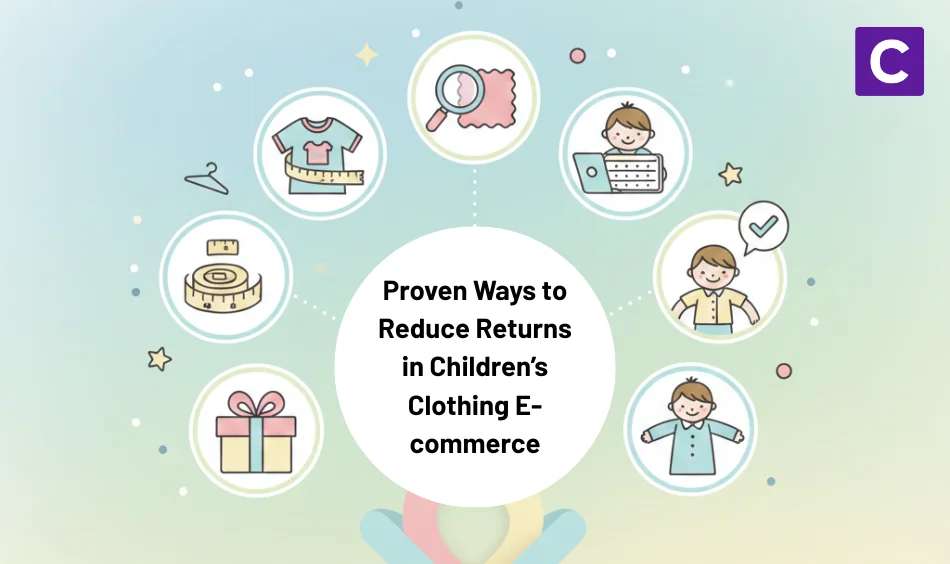
Returns decrease when parents receive accurate and reliable sizing support. Below are practical steps to minimize size-related returns.
Improve Size Accuracy With a Detailed Kids Clothing Size Chart
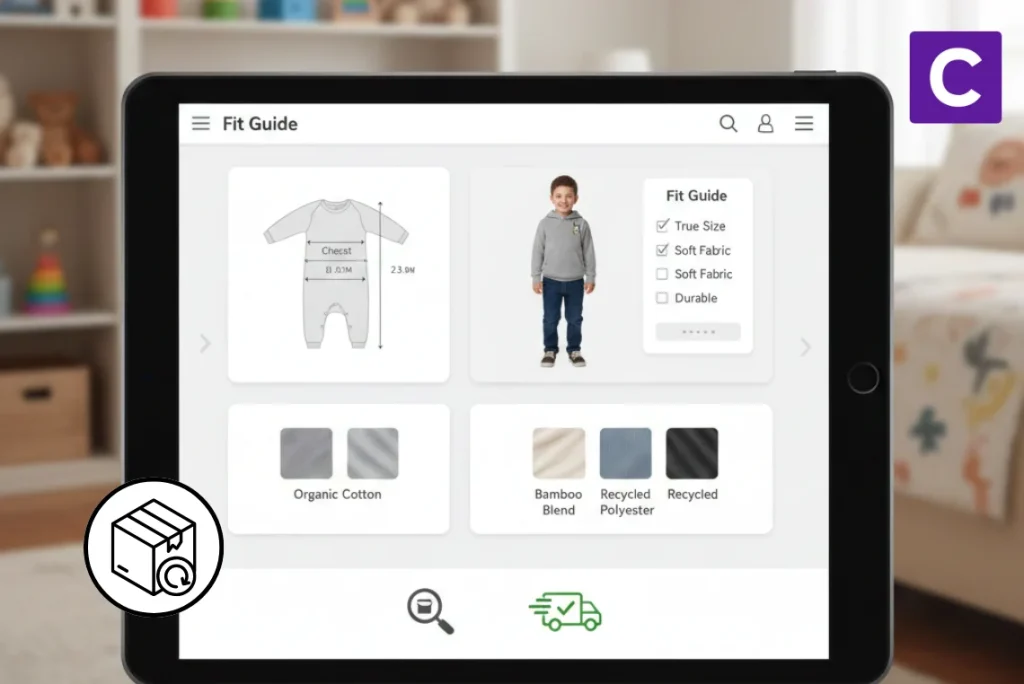
A well-structured kids’ clothing size chart must include:
- height range
- weight range
- chest
- waist
- age reference
- garment measurements
Parents rely on height and weight more than any other metric. Including both improves accuracy and reduces confusion.
Add small notes like:
- “If between sizes, choose the larger size.”
- “Includes 1–2 cm growth allowance.”
These simple instructions improve decision-making.
Use Model or Child Reference Photos
Parents understand fit better when they see real children wearing the product. These photos should include:
- child height
- child age
- size worn in photo
This visual reference helps parents compare proportions and choose more confidently.
Add Clear Fabric and Fit Descriptions
Parents want to know:
- Does the fabric stretch?
- Is the fit regular, loose, or slim?
- Will the child be comfortable at school or at play?
Fit notes reduce uncertainty and lower return risk.
Reduce Guesswork With AI-Based Size Tools
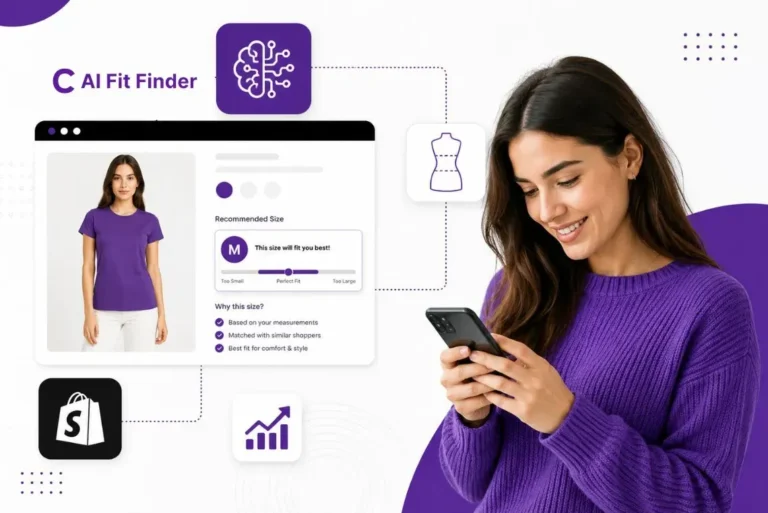
An AI sizing tool for kids helps solve the biggest problem—growth variation. These tools use logic based on:
- body structure
- height and weight
- age
- brand-specific sizing
- product fit type
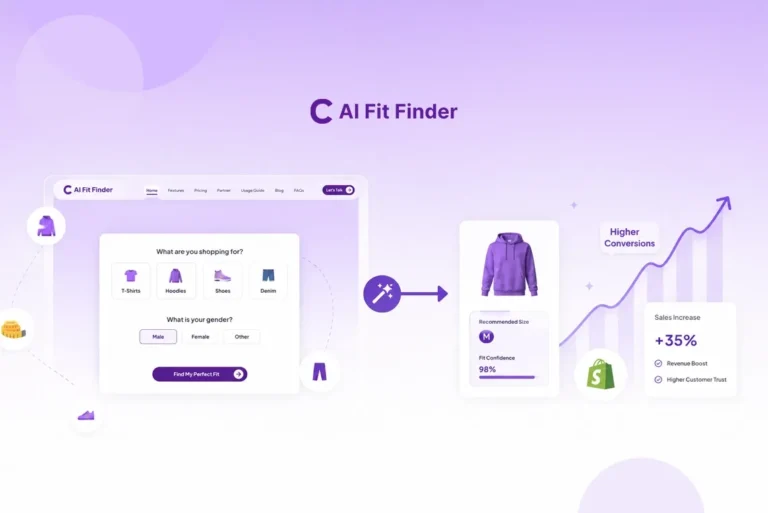
AI tools adjust size recommendations for each child. This reduces wrong-size orders more effectively than a plain size chart.
Parents can get accurate size suggestions instantly by using a smart AI size chart Shopify app that improves fit clarity and reduces wrong-size orders.
Offer Size Filters for Age, Height, and Weight
Adding filters such as “Age 3–4,” “Height 100–110 cm,” or “Weight 18–20 kg” increases accuracy and improves product-page engagement.
Parents can instantly find products that match their child’s needs.
Add Measurement Instructions for Parents
Parents often measure incorrectly. Simple guidance reduces mistakes. Add visuals showing:
- How to measure height
- Where to measure the chest
- How to measure waist
This is a small addition that leads to fewer returns.
How AI Fit Tools Reduce Kidswear Returns More Than Size Charts
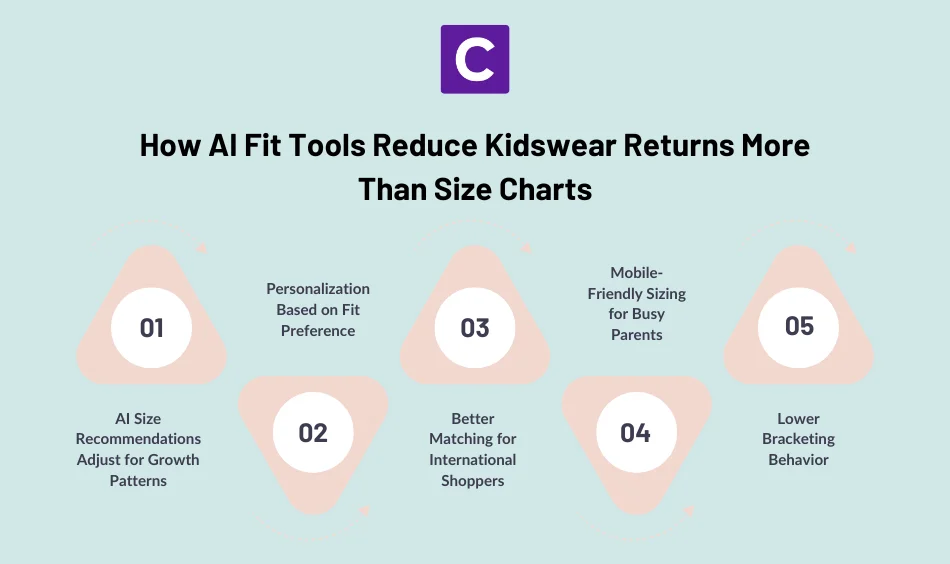
Traditional size charts show static data. AI tools provide personalized size suggestions that adjust to each child. This results in higher accuracy and fewer returns.
AI Size Recommendations Adjust for Growth Patterns
AI tools consider near-future growth. If a child is close to the next size range, AI suggestions account for that. This prevents ordering clothes that will soon be too small.
Personalization Based on Fit Preference
Some children need relaxed fits for comfort. Others need snug fits for uniforms. AI sizing tools support these differences.
Parents can select:
- tight
- regular
- loose
This simple input changes the size accuracy dramatically.
Better Matching for International Shoppers
Kidswear sizing differs across countries. AI adjusts sizes for:
- US
- UK
- EU
- Asian sizing
Parents do not need to search for conversions, which reduces confusion.
Mobile-Friendly Sizing for Busy Parents
Most parents shop from smartphones. AI tools show size suggestions with one tap. Fast access improves product-page performance and increases conversions.
Lower Bracketing Behavior
Bracketing happens when parents order multiple sizes “just in case.” AI tools reduce this by giving confident, accurate size suggestions.
Right size → Fewer returns → Higher profit margins.
Traditional Size Charts vs AI Sizing Tools
| Feature | Traditional Size Charts | AI Sizing Tools |
| Body Shape Support | Limited | Yes |
| Growth Adjustment | No | Yes |
| Fit Preference | No | Yes |
| Mobile Experience | Poor | Strong |
| International Sizing | Basic | Smart Conversion |
| Personalization | None | High |
| Return Reduction | Low | Strong |
| Accuracy | Moderate | High |
| Learning Ability | None | Adapts Over Time |
AI tools solve the challenges that cause size-related returns in children’s clothing. They deliver clarity and reduce mistakes at the source.
Why Shopify Kidswear Stores Should Adopt AI Fit Finder
Shopify powers thousands of kidswear brands. These stores compete on trust, quality, and fit. AI Fit Finder supports them with tools designed for children’s clothing.
Supports Large Catalogs With Multiple Size Rules
Kidswear includes:
- tops
- bottoms
- sleepwear
- sets
- ethnic wear
- seasonal clothing
AI Fit Finder supports each category with flexible size chart settings.
Designed for Multi-Region Stores
The app handles US, UK, EU, and Asian charts with ease. Parents from any region receive accurate suggestions without confusion.
Easy to Install With No Coding Needed
AI Fit Finder works with Shopify themes and requires no development work. Stores can set up custom charts and AI recommendations in minutes.
Proven Return Reduction for Kids Fashion Brands
Stores using AI Fit Finder report:
- fewer size complaints
- lower return rates
- higher conversion rates
- stronger buyer confidence
Parents trust stores that make sizing simple.
AI Fit Finder helps children’s clothing stores reduce returns by improving size accuracy with clear charts, AI-based suggestions, and mobile-friendly tools. The app supports age-based, height-based, and regional sizing, helping parents select the right size faster. Kidswear brands use AI Fit Finder to cut wrong-size orders, reduce bracketing, and increase conversions. Contact us to add the sizing tool to your Shopify store.
FAQs About Reducing Returns Clothing Store
1. Why are children’s clothing returns so common?
Kids grow fast, sizing varies across brands, and parents often guess sizes. This leads to wrong orders and higher return rates.
2. Do AI sizing tools work for different age groups?
Yes. AI tools support size prediction based on age, height, weight, and body structure.
3. What measurements do parents need for better accuracy?
Height, weight, chest, and waist measurements help deliver the best size suggestions.
4. Can AI tools reduce bracketing behavior?
Yes. Accurate AI suggestions reduce the need to order multiple sizes “just in case.”
5. Do size tools support international kidswear shoppers?
Yes. They offer smart conversions for US, UK, EU, and Asian sizes.
6. Is AI Fit Finder useful for small kids ‘ wear brands?
Yes. Even small stores benefit from fewer returns, higher conversion rates, and increased trust.
Conclusion
Returns hurt children’s clothing stores more than most other categories. Parents struggle with growth variations, inconsistent sizing, and online fit uncertainty. Clear sizing guidance reduces this friction and improves buying decisions.
AI sizing tools deliver the strongest results. They adjust for growth, personalize fit, support global shoppers, and reduce mistakes. Kidswear stores that adopt AI sizing see higher conversions, fewer returns, and stronger trust from parents.
Smart sizing is the next step for online kidswear stores seeking long-term growth and enhanced customer satisfaction.