
Vanity sizing conversion rate impact is rarely discussed openly in ecommerce strategy meetings. Yet for Shopify apparel brands, it may be one of the most expensive hidden problems affecting revenue.
Most merchants focus on traffic growth, ad optimization, and checkout improvements. These areas matter. But many fashion stores overlook a critical friction point that happens much earlier in the buying journey: size selection.
When shoppers feel unsure about fit, they hesitate. When they hesitate, conversion rates drop. And when conversion rates drop, revenue suffers, even if traffic remains strong.
Vanity sizing, which manipulates size labels for emotional appeal, plays a significant role in this hesitation. In physical stores, shoppers could try on multiple sizes. Online, size labels carry more weight. When labels do not reflect predictable measurements, trust weakens.
This article explains how vanity sizing impacts Shopify conversion rates, why size confusion reduces purchasing confidence, and how apparel brands can improve performance by focusing on size accuracy instead of perception-based labeling.
Understanding Shopify Conversion Rate in Apparel
Before analyzing the impact of vanity sizing, it is important to understand what the Shopify conversion rate means.
What Is Shopify Conversion Rate?
Shopify conversion rate is calculated as:
Conversion Rate = (Orders ÷ Sessions) × 100
If a store receives 10,000 visitors and makes 200 sales, its conversion rate is 2%.
For fashion ecommerce, average conversion rates typically range between 1.5% and 3%, depending on traffic quality and brand positioning.
Small improvements in conversion rate can significantly impact revenue. Increasing conversion from 1.8% to 2.2% may appear minor, but it represents a substantial revenue increase at scale.
Why Apparel Stores Struggle More Than Other Niches
Fashion ecommerce faces unique challenges:
- Fit dependency
- Personal comfort considerations
- Size variability across brands
- Higher return anxiety
Unlike electronics or accessories, apparel purchases require confidence in fit. That confidence is heavily influenced by size labels and guidance.
When size labels feel inconsistent, conversion rates suffer.
The Psychological Impact of Vanity Sizing on Buying Decisions
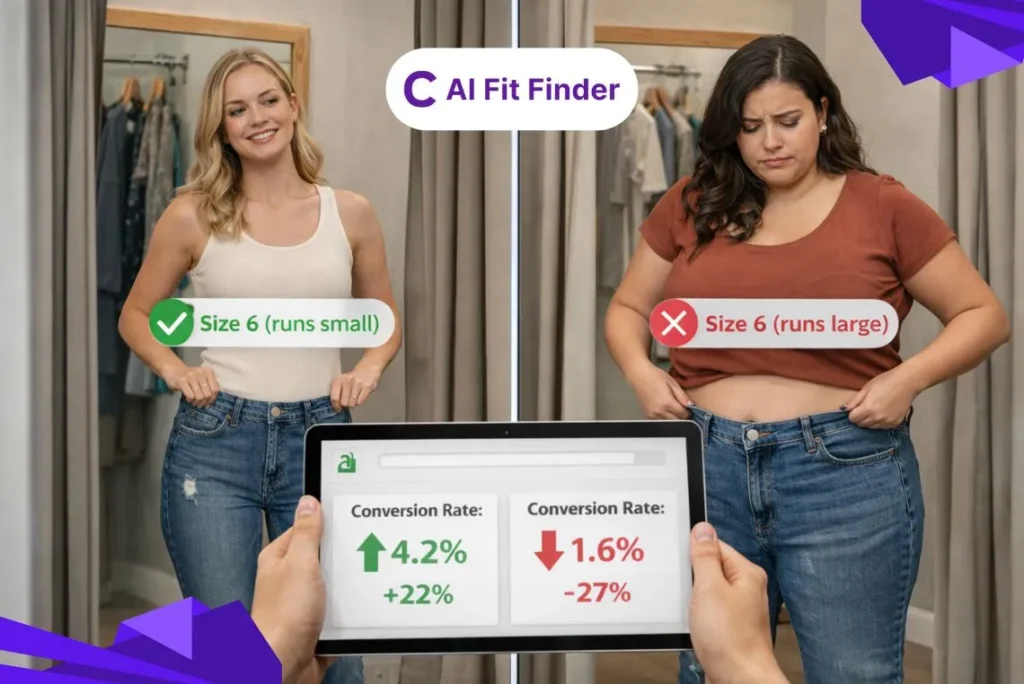
Vanity sizing is the practice of labeling garments with smaller sizes than traditional measurements would indicate. A shopper who once wore a size 8 may now fit into a size 6 without any change in body measurements.
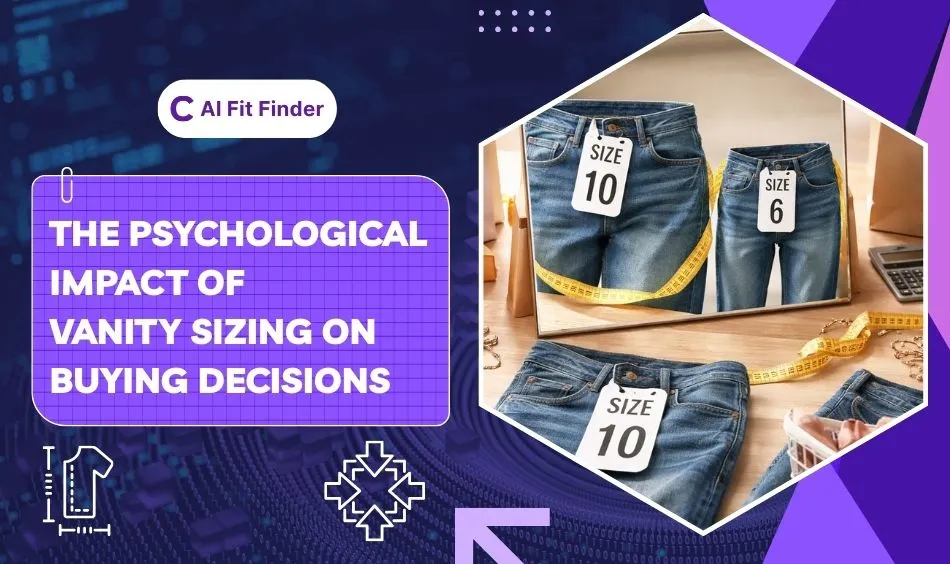
While this strategy once boosted emotional satisfaction in retail stores, ecommerce changes the psychology.
The “Size Doubt” Moment
Every apparel product page includes a moment of decision: selecting a size.
At this stage, shoppers ask:
- Does this brand run small or large?
- Should I size up or down?
- Will this fit like my last purchase?
If size labels feel unreliable, hesitation begins.
That hesitation reduces add-to-cart behavior.
The Expectation Gap
Vanity sizing creates an expectation gap between label and fit. When a garment arrives and fits differently than expected, disappointment follows.
Even before delivery, the possibility of a mismatch influences conversion behavior. Shoppers mentally calculate return hassle before committing to checkout.
This psychological friction directly impacts Shopify conversion rate sizing performance.
How Vanity Sizing Reduces Conversion Rates
Vanity sizing affects conversion at multiple funnel stages.
Lower Add-to-Cart Rates
If shoppers feel unsure at the size selector stage, many do not proceed.
High product views combined with low add-to-cart rates often indicate sizing friction.
Higher Cart Abandonment
Even after adding items to the cart, doubt resurfaces. Shoppers reconsider:
- What if it doesn’t fit?
- What if I have to return it?
These questions increase cart abandonment.
Reduced First-Time Buyer Conversions
First-time visitors lack brand sizing history. Vanity sizing increases uncertainty because shoppers cannot rely on their usual size.
New customers are more likely to delay purchases when sizing feels unpredictable.
Impact on Repeat Purchases
Poor sizing experiences reduce trust. A shopper who returns an item due to an unexpected fit becomes more cautious next time. Some do not return at all.
This reduces repeat purchase conversion rates.
Vanity sizing does not just create confusion; it also increases return volume. If you want a deeper breakdown of how sizing inconsistencies drive higher return costs, read our detailed analysis on how vanity sizing increases fashion returns and the financial impact it creates for apparel brands.
The Revenue Math Behind Vanity Sizing

Let’s consider a Shopify fashion store:
- 50,000 monthly visitors
- 1.8% conversion rate
- $80 average order value
Monthly revenue:
50,000 × 1.8% × $80 = $72,000
If improved size accuracy increases conversion to 2.2%:
50,000 × 2.2% × $80 = $88,000
That is a $16,000 monthly increase without increasing traffic.
Vanity sizing conversion rate impact is not theoretical. Even small improvements in size confidence create meaningful revenue gains.
Vanity Sizing vs Size Accuracy — Conversion Impact
Below is a clear comparison of how each approach influences Shopify performance.
| Factor | Vanity Sizing | Size Accuracy |
| Add-to-cart confidence | Low | High |
| Cart abandonment | Higher | Lower |
| Conversion consistency | Unstable | Predictable |
| Return impact on future conversions | Negative | Positive |
| Repeat purchase behavior | Declines | Increases |
| Revenue stability | Weak | Strong |
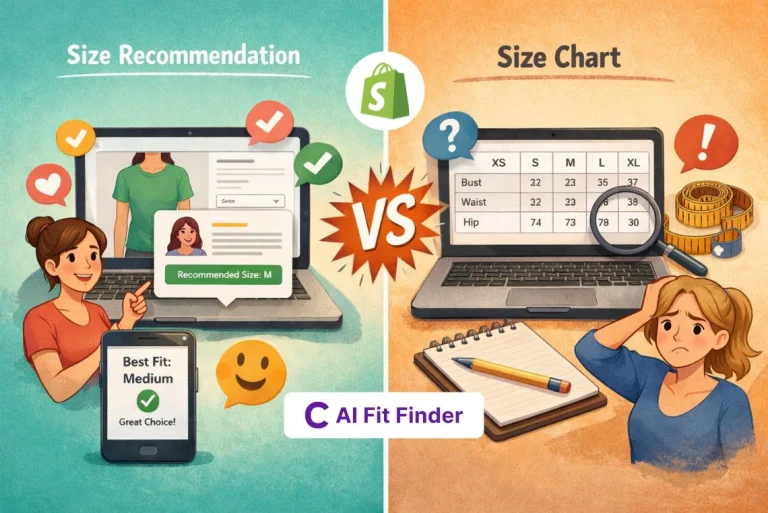
This comparison illustrates that size accuracy supports conversion rate optimization more effectively than perception-based labeling.
Why Traditional CRO Tactics Fail Without Fixing Sizing
Many Shopify brands invest in:
- Faster page load times
- Better product images
- Discount campaigns
- Trust badges
These tactics help, but they cannot solve fit anxiety.
Discounts Do Not Remove Size Doubt
Discounts increase clicks but not confidence. A shopper unsure about fit remains hesitant even at a lower price.
Faster Checkout Does Not Fix Fit Anxiety
Checkout optimization improves speed, but sizing hesitation happens before checkout.
Better Images Do Not Replace Size Clarity
Photos show style, not fit accuracy. Without clear guidance, visuals cannot eliminate uncertainty.
Fashion CRO Shopify strategies must address sizing directly to meaningfully improve conversion.
Vanity Sizing and Mobile Conversion Rates
Mobile traffic dominates fashion ecommerce. Mobile shoppers:
- Scroll quickly
- Spend less time reading size charts
- Expect instant clarity
Vanity sizing amplifies mobile friction because:
- Charts are harder to read
- Labels carry more decision weight
- Measuring is unlikely during mobile browsing
If size labels feel unreliable, mobile shoppers exit quickly.
Mobile sizing clarity is critical for improving Shopify conversion rate sizing performance.
Data Signals That Vanity Sizing Is Hurting Your Store
Merchants can identify sizing friction through analytics patterns.
Common signals include:
- High product views but low add-to-cart rates
- Elevated cart abandonment on apparel products
- High return rates marked “didn’t fit.”
- Low repeat purchase rate among return customers
These metrics often indicate that size confusion, rather than pricing or traffic quality, is suppressing conversions.
How Size Accuracy Improves Shopify Conversion Rate
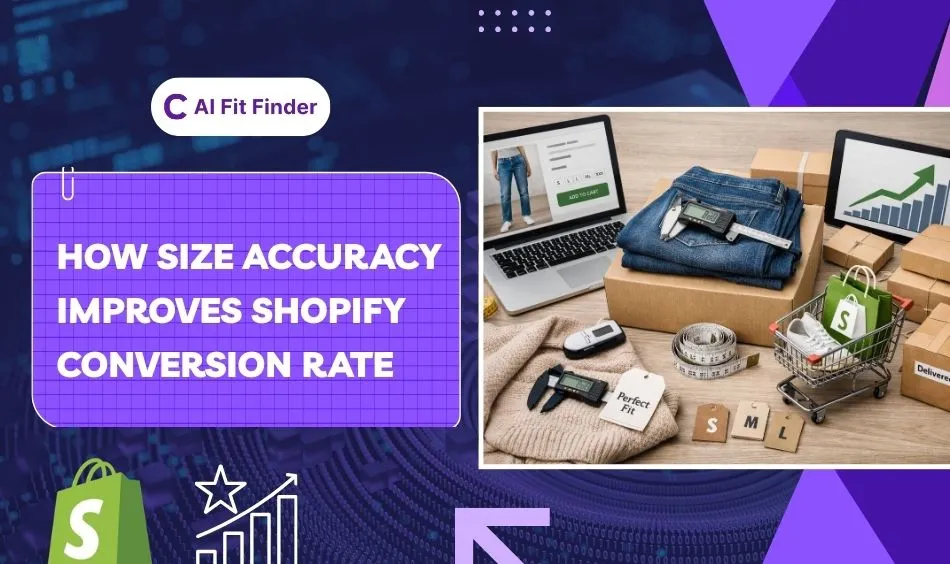
Improving size accuracy reduces decision friction and increases purchasing confidence.
Clear Fit Descriptions
Describing garments as:
- Slim fit
- Relaxed fit
- True to size
- Runs small
helps shoppers visualize outcomes.
Consistent Labeling Across Collections
Predictable sizing builds long-term trust. When shoppers learn a brand’s fit behavior, decision time decreases.
Smart Size Guidance Tools
Modern size guidance systems reduce guesswork by:
- Incorporating body inputs
- Accounting for fabric stretch
- Adjusting for brand-specific sizing behavior
This improves conversion consistency.
Reduced Bracketing Behavior
Bracketing ordering multiple sizes to try at home increases returns and operational costs. Clear size guidance reduces this behavior.
Why Shopify Brands Must Treat Sizing as a CRO Lever
Sizing is not merely a support feature. It is a core revenue lever.
Improving size accuracy:
- Increases add-to-cart rates
- Lowers cart abandonment
- Reduces returns
- Improves repeat purchases
Brands that treat sizing as part of a conversion strategy outperform those that rely solely on traffic growth.
Improving size accuracy is one of the most practical ways to improve Shopify conversion rate without increasing ad spend. By reducing hesitation at the size selection stage, brands can unlock consistent revenue growth through better size confidence.
The Future of Fashion CRO: Data-Driven Size Confidence
The future of ecommerce sizing focuses on:
- Behavioral insights
- Fit transparency
- Predictive recommendations
As competition intensifies, trust becomes the strongest differentiator. Size accuracy builds that trust.
Vanity sizing conversion rate suppression becomes increasingly visible as brands analyze performance data more closely.
Frequently Asked Questions About Shopify Conversion Rates
1. How much has vanity sizing changed?
Vanity sizing has shifted significantly over the past few decades. In many cases, a size that was labeled as an 8 in the 1980s may now be labeled as a 4 or 6, even if the garment measurements are similar. This gradual relabeling has made size numbers less reliable across brands and time periods.
2. What are vanity sizing measurements?
Vanity sizing refers to the discrepancy between the size label and the garment’s actual physical dimensions. For example, a dress labeled as size 6 may measure closer to what was previously considered size 8. The measurement itself has not changed dramatically; only the number on the label has.
3. Is vanity sizing a marketing tactic?
Yes, vanity sizing is widely considered a marketing tactic. Brands adopted it to make shoppers feel more confident by fitting into smaller size labels. While this strategy may have worked in physical retail, it often creates confusion and higher return rates in ecommerce.
4. Is vanity sizing deceptive?
It can be perceived as deceptive in online shopping. Because customers cannot try items on before purchasing, inconsistent or misleading size labels can feel confusing and frustrating. This can reduce trust and increase returns, especially in fashion ecommerce.
5. What is the 70/20/10 rule in marketing?
The 70/20/10 rule in marketing suggests allocating:
- 70% of the budget to proven strategies
- 20% to emerging or experimental tactics
- 10% to high-risk, innovative ideas
While unrelated directly to vanity sizing, this framework is often used to guide ecommerce growth strategies and resource allocation.
Final Thoughts
Vanity sizing may provide emotional appeal, but ecommerce performance depends on predictability. Trust drives conversion. Conversion drives revenue.
Shopify apparel brands that prioritize size accuracy over label manipulation create smoother buying journeys. They reduce hesitation, increase conversions, and strengthen long-term customer relationships.
In online fashion, the brands that win are not those with the smallest labels, but those with the clearest fit.