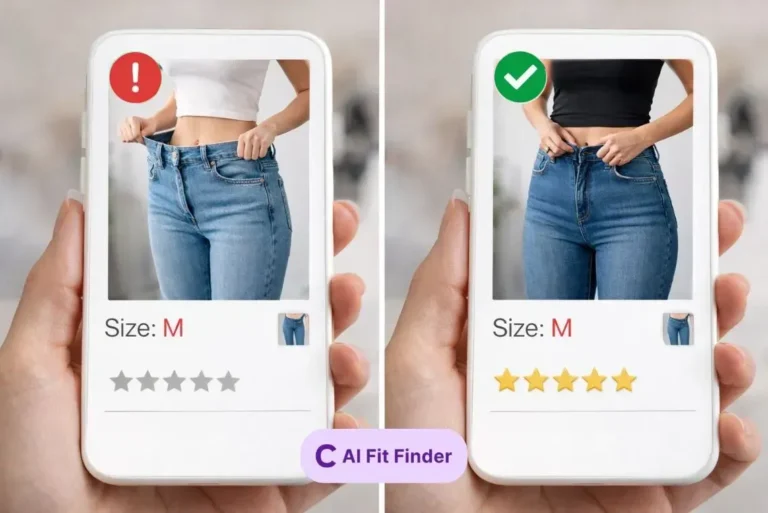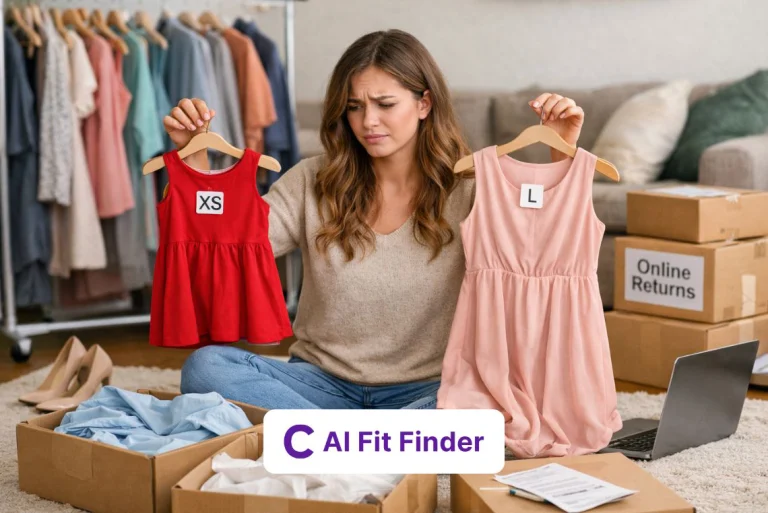

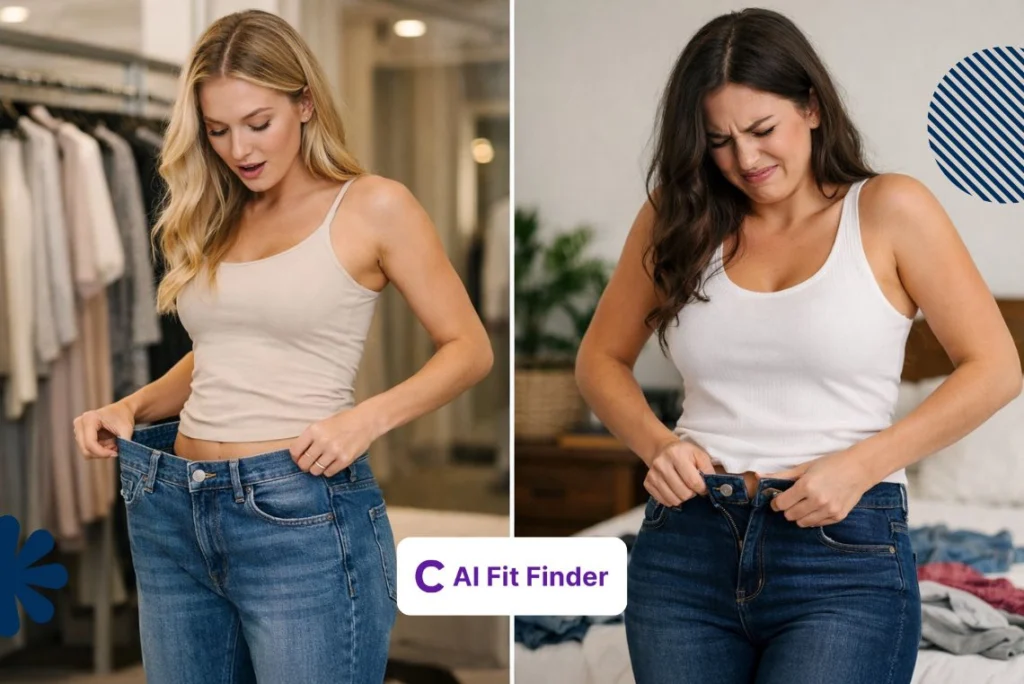
Vanity sizing return rates have become one of the most underestimated problems in fashion ecommerce. While vanity sizing may seem harmless or even beneficial, from a branding perspective, it quietly creates confusion that leads to higher returns, lower trust, and long-term revenue loss.
In physical retail, vanity sizing once worked as a psychological tool. Shoppers could try garments on, adjust sizes, and leave feeling good about fitting into a smaller size. Online shopping changed that dynamic entirely. Today, shoppers rely on size labels, charts, and descriptions to make a decision they cannot physically verify.
When those labels no longer reflect reality, the consequences show up where it hurts most: returns.
This article explains why vanity sizing increases fashion return rates, how it disrupts shopper expectations, and what apparel brands, especially Shopify merchants, can do to reduce size confusion returns without sacrificing customer experience.
Understanding Fashion Return Rates in Ecommerce
Fashion ecommerce consistently has higher return rates than most other online categories. Unlike electronics or home goods, apparel purchases depend on fit, comfort, and personal preference.
Industry data shows that fashion return rates often range between 20% and 40%, with size and fit issues cited as the top reasons. While many factors contribute to returns, sizing confusion remains the most common and most preventable cause.
Returns are not just an operational inconvenience. They impact:
- Profit margins
- Logistics and inventory planning
- Customer satisfaction
- Long-term conversion rates
When shoppers return items due to fit issues, they become more cautious buyers. Over time, this behavior reduces lifetime value and repeat purchases.
Vanity sizing accelerates this problem by creating false expectations before the order is ever placed.
What Vanity Sizing Does to Shopper Expectations
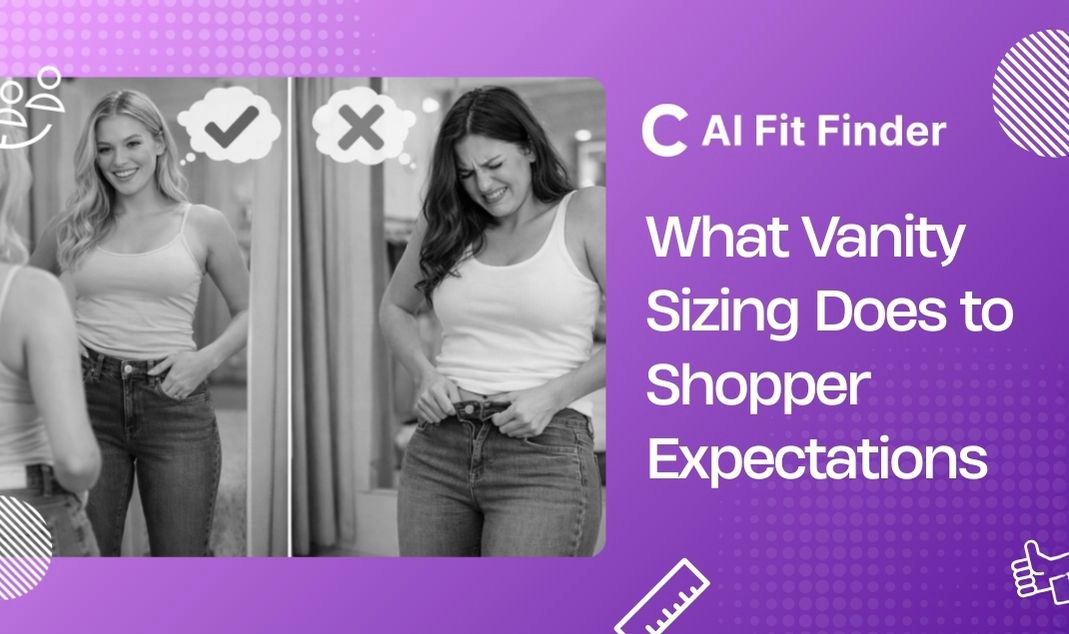
Vanity sizing works by labeling garments with smaller sizes than their actual measurements would traditionally indicate. A shopper who once wore a size 8 may now fit into a labeled size 6 or 4—even though their body has not changed.
This manipulation alters how shoppers interpret size labels.
How Label Manipulation Changes Buyer Assumptions
Online shoppers build mental size memory. They remember what size they typically wear and use that information to make quick decisions. Vanity sizing disrupts this memory.
When shoppers see a familiar size label, they assume:
- Similar fit to past purchases
- Consistency across brands
- Minimal risk of returns
Vanity sizing breaks these assumptions. The result is disappointment when the product arrives and does not fit as expected.
The Gap Between Label and Real Fit
The larger the gap between the label and actual garment dimensions, the more likely a return becomes. Shoppers do not feel misled because of the size number itself; they feel misled because the fit does not match expectations.
This mismatch is one of the strongest drivers of size confusion returns.
To understand why return rates rise so sharply, it’s important to first understand what vanity sizing is and how it reshapes shopper expectations in online fashion.
The Direct Link Between Vanity Sizing and Return Rates

Returns data consistently show that “didn’t fit as expected” is the most common reason for apparel returns. Vanity sizing plays a direct role in this outcome.
Why “Didn’t Fit as Expected” Dominates Return Reasons
When a shopper chooses a size based on a label that has been altered for emotional appeal, the fit outcome becomes unpredictable. Even when a size chart is available, shoppers often trust their past experiences more than measurements.
If vanity sizing causes the garment to fit tighter or looser than expected, the result is dissatisfaction and a return.
Vanity Sizing vs Measurement-Based Fit
Measurement-based fit focuses on accuracy. Vanity sizing focuses on perception. In e-commerce, accuracy wins.
Shoppers who receive a garment that matches their expectations, even if the label is larger, are far less likely to return it. Those who receive a surprise fit are far more likely to send it back.
Multiple studies and ecommerce benchmarks show that vanity sizing increases fashion return rates, especially when shoppers rely on size labels instead of accurate fit guidance.
Vanity Sizing vs Accurate Sizing Impact on Return Rates
| Factor | Vanity Sizing | Accurate Size Guidance |
| Label consistency | Low | High |
| Shopper confidence | Low | High |
| Likelihood of returns | High | Low |
| Cart abandonment | Higher | Lower |
| Repeat purchase behavior | Declines | Improves |
| Brand trust | Weakens | Strengthens |
| E-commerce suitability | Poor | Strong |
This comparison highlights why vanity sizing return rates are consistently higher than those for brands focused on size accuracy.
How Vanity Sizing Increases Returns Across the Funnel
Vanity sizing affects returns long before the order is placed. Its influence spans the entire buying journey.
Product Page Stage
On product pages, shoppers pause at size selection. When sizing feels uncertain, they may:
- Order multiple sizes
- Choose a size based on guesswork
- Leave the page entirely
Bracketing behavior, ordering multiple sizes with the intent to return some, directly increases return volume.
Cart and Checkout Stage
Even after adding items to the cart, size doubt resurfaces. Shoppers ask themselves:
- “What if this doesn’t fit?”
- “Should I have sized up?”
This hesitation leads to cart abandonment or delayed decisions. When shoppers do complete the purchase, the uncertainty increases the likelihood of a return.
Post-Delivery Stage
When the garment arrives, the moment of truth occurs. If the fit does not align with expectations created by the label, disappointment follows. Returns become the default solution.
Vanity Sizing Creates a Return Feedback Loop
Returns caused by vanity sizing do not just affect a single transaction. They create a long-term feedback loop:
- Shopper orders based on the label
- Fit does not match expectations
- Shopper returns the item
- Trust decreases
- The shopper becomes more cautious or stops buying
Over time, this loop reduces conversion rates, increases hesitation, and damages brand loyalty.
Why Size Charts Don’t Fix Vanity Sizing Return Rates
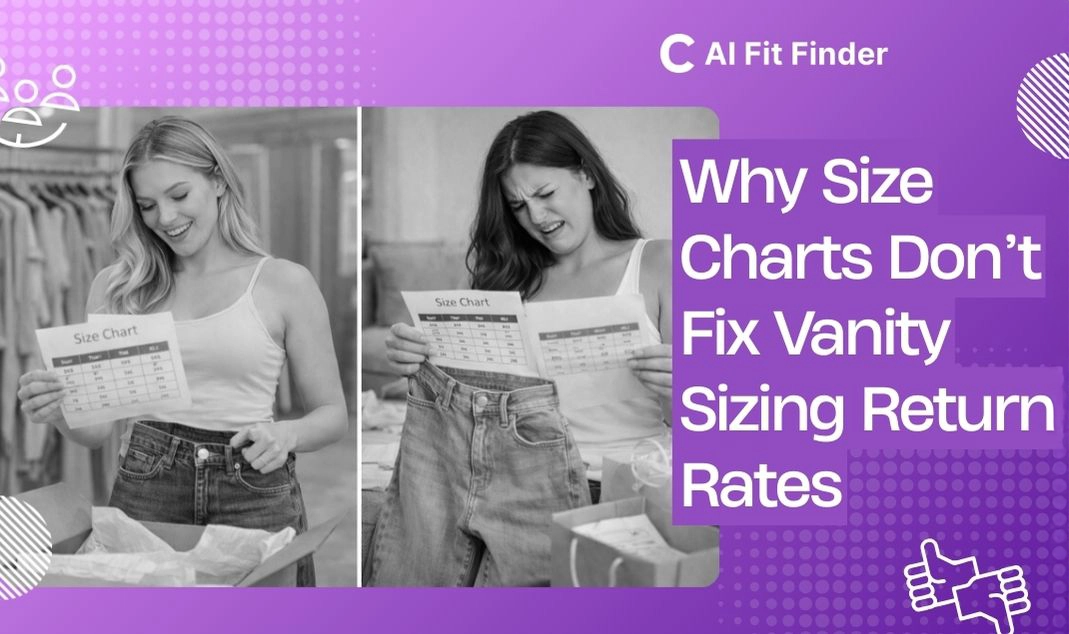
Many brands rely on size charts to compensate for vanity sizing. While charts help, they rarely solve the problem completely.
Charts Assume Accurate Self-Measurement
Most shoppers do not measure themselves carefully. Small errors lead to incorrect size selection, especially when charts are complex or hard to read on mobile.
Charts Don’t Explain Fit Behavior
Size charts show numbers but do not explain:
- How the fabric stretches
- Whether the cut is slim or relaxed
- How the garment behaves when worn
Vanity sizing undermines chart reliability because shoppers no longer trust labels or measurements fully.
Why Shopify Apparel Brands Are Hit Hardest
Shopify hosts a large number of direct-to-consumer apparel brands. These brands often:
- Sell internationally
- Rely on mobile traffic
- Compete heavily on experience
Vanity sizing creates more damage in this environment because shoppers expect clarity and speed. When sizing feels confusing, they move to competitors instantly.
How Reducing Vanity Sizing Can Lower Return Rates
Brands that move away from vanity sizing see measurable improvements in return performance.
Shift From Labels to Fit Transparency
Clear fit descriptions help shoppers visualize the outcome:
- Runs small or large
- Slim or relaxed cut
- Stretch level
Transparency builds trust faster than flattering labels.
Brand-Specific Size Logic
Consistency across collections reduces confusion. When shoppers learn how a brand fits, they make faster, more confident decisions.
How Size Recommendation Tools Reduce Vanity Sizing Returns
Modern size recommendation tools reduce reliance on labels altogether. Instead of forcing shoppers to interpret charts or guess, these tools guide decisions using:
- Body inputs
- Fit preferences
- Brand-specific behavior
This approach reduces size confusion returns and improves confidence at the point of purchase.
When Vanity Sizing Still Exists, How Brands Can Minimize Damage
Some brands cannot eliminate vanity sizing overnight. In these cases, mitigation strategies help:
- Pair labels with clear fit guidance
- Educate shoppers on how the brand fits
- Offer guidance rather than raw data
Key Takeaways for Fashion E-commerce Brands
Vanity sizing return rates are not accidental. They are the predictable result of misleading size labels in a channel that demands accuracy.
Brands that prioritize fit clarity over perception tricks benefit from:
- Lower return rates
- Higher conversion rates
- Stronger repeat purchase behavior
Frequently Asked Questions About Vanity Sizing
1. What are the effects of vanity sizing?
Vanity sizing creates confusion by disconnecting size labels from actual garment measurements. In ecommerce, this leads to lower size confidence, higher return rates, cart abandonment, and reduced trust. Over time, it also increases operational costs and lowers customer lifetime value for fashion brands.
2. Why do brands use vanity sizing?
Brands use vanity sizing as a psychological marketing tactic. Smaller-sized labels can make shoppers feel more confident and positive about a purchase, especially in physical retail. However, while this may drive short-term sales, it often causes long-term issues in online shopping where fit accuracy matters more than perception.
3. How does vanity sizing impact clothing waste?
Vanity sizing contributes significantly to clothing waste by increasing returns. Returned garments often require repackaging, resale at a discount, or disposal. Higher return volumes also increase carbon emissions from reverse logistics, making vanity sizing a sustainability issue as well as a business problem.
4. What is the 3-3-3 rule for clothing?
The 3-3-3 rule is a styling guideline suggesting you build outfits using:
- 3 tops
- 3 bottoms
- 3 pairs of shoes
It promotes simplicity and versatility in wardrobes. This rule is unrelated to vanity sizing but often appears in fashion-related searches due to overlapping terminology.
5. What are the pros and cons of vanity sizing?
Pros:
- Short-term emotional appeal for shoppers
- Can increase in-store satisfaction
Cons:
- Higher return rates in e-commerce
- Size confusion across brands
- Lower trust and repeat purchases
- Increased costs from returns and waste
For online fashion brands, the cons typically outweigh the benefits.
6. Are 32 jeans actually 32 inches?
Not always. While jean sizes are often intended to represent waist measurements in inches, vanity sizing and brand-specific sizing rules mean a “32” waist can vary significantly. This inconsistency is one reason shoppers experience fit issues and returns when buying jeans online.
7. Why is Gen Z fashion so baggy?
Gen Z fashion trends favor oversized and relaxed silhouettes due to influences from streetwear, comfort-first styling, and cultural shifts away from body-conforming fashion. This trend also reduces reliance on precise sizing, but it does not eliminate the need for accurate size guidance, especially in e-commerce.
Final Thoughts: Why Vanity Sizing Return Rates Matter More Than Ever
Vanity sizing may feel like a minor detail, but its impact on e-commerce performance is significant. In online fashion, trust is built through accuracy, not perception.
Brands that move beyond vanity sizing and invest in size clarity reduce returns, improve conversions, and build lasting customer relationships.
In today’s competitive landscape, the brands that win are not those with the smallest labels, but those with the clearest fit.