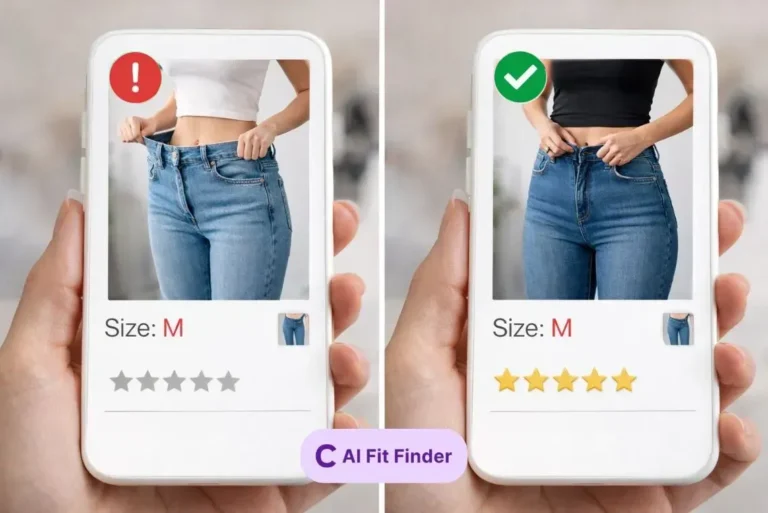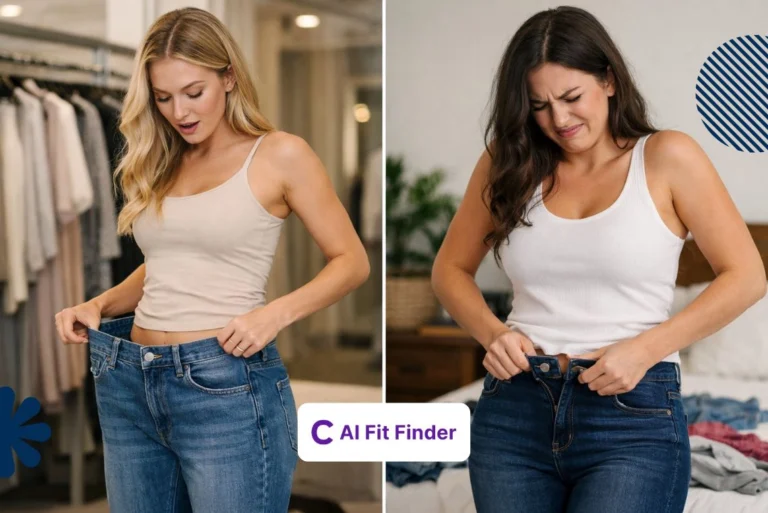

Clothing sizes are inconsistent because there is no universal sizing standard, brands use different fit models, regional measurement systems vary, and vanity sizing has reshaped labels over time.
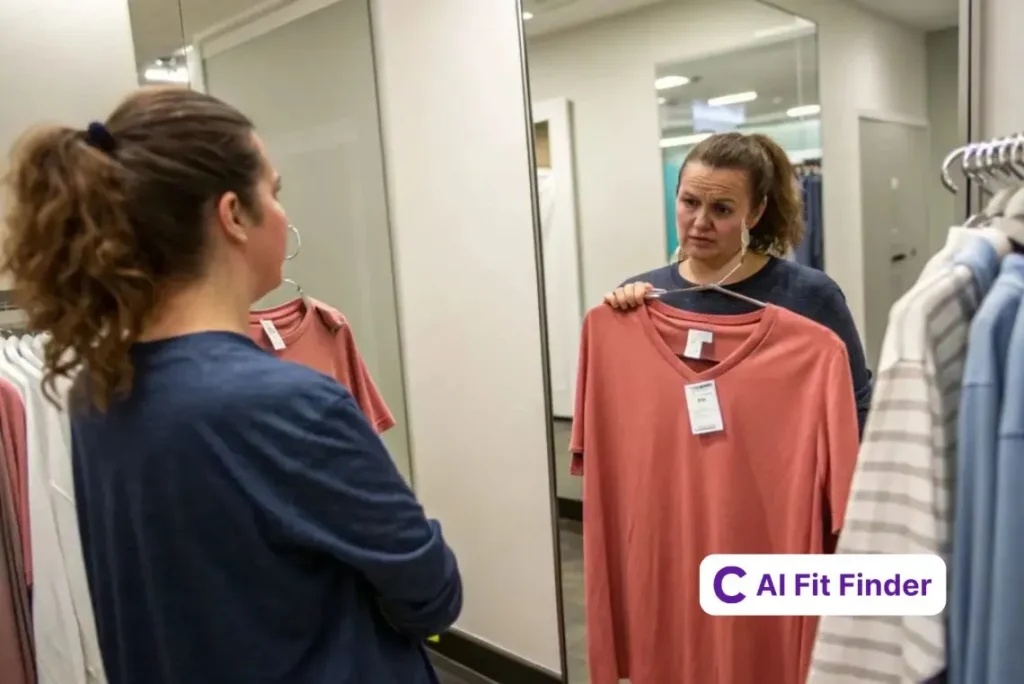
If you have ever tried on a size medium in one store and needed a large or small in another, you have experienced clothing size inconsistency firsthand. For shoppers, it feels frustrating. For online fashion brands, it creates measurable business problems.
Clothing size inconsistency is not random. It is the result of historical decisions, marketing strategies, production variations, and regional differences. While this issue existed in physical retail, ecommerce has amplified its impact. When shoppers cannot try garments on, inconsistent sizing directly affects trust, conversion rates, and return volumes.
This guide explains why clothing sizes are so inconsistent across brands, how the problem developed, and why it matters more than ever in online fashion.
The Short Answer: There Is No Universal Clothing Size Standard
The primary reason clothing sizes are inconsistent is simple: no global authority regulates apparel sizing.
Unlike industries that follow strict measurement standards, fashion brands define their own sizing systems. Each company creates:
- Its own base size block
- Its own fit philosophy
- Its own grading rules
- Its own target demographic model
That means a size 8 at one brand may be designed around completely different body measurements than a size 8 at another.
Over time, this independence has led to widespread clothing size inconsistency across the industry.
The History of Clothing Size Inconsistency
To understand why clothing sizes vary so widely, it helps to look at history.
Early Attempts at Standardization
In the 1940s and 1950s, the United States attempted to standardize women’s clothing sizes using body measurement surveys. The goal was to create a universal sizing framework.
However, these standards quickly failed because:
- Body shapes vary significantly
- Fashion trends evolve
- Brands target different audiences
- Manufacturing techniques differ
As fashion became more competitive, brands began adjusting sizes to fit marketing goals.
The Rise of Vanity Sizing in Fashion
One major contributor to clothing size inconsistency is vanity sizing in fashion.
Vanity sizing is the practice of labeling garments with smaller size numbers than traditional measurements would suggest. Over the decades, brands gradually reduced the number of labels while keeping similar garment dimensions.
For example:
A size 8 in the 1980s may now be labeled as a size 4 or 6.
This strategy aimed to make shoppers feel better about fitting into a smaller size. While it may have influenced in-store psychology, it increased long-term confusion across brands.
As more companies adopted similar tactics, consistency declined further.
One major reason why clothing sizes are so inconsistent is the rise of what is vanity sizing in modern fashion retail. Over time, brands have adjusted size labels for marketing purposes, which has contributed significantly to cross-brand size confusion and online shopping hesitation.
Key Reasons Clothing Sizes Differ Across Brands
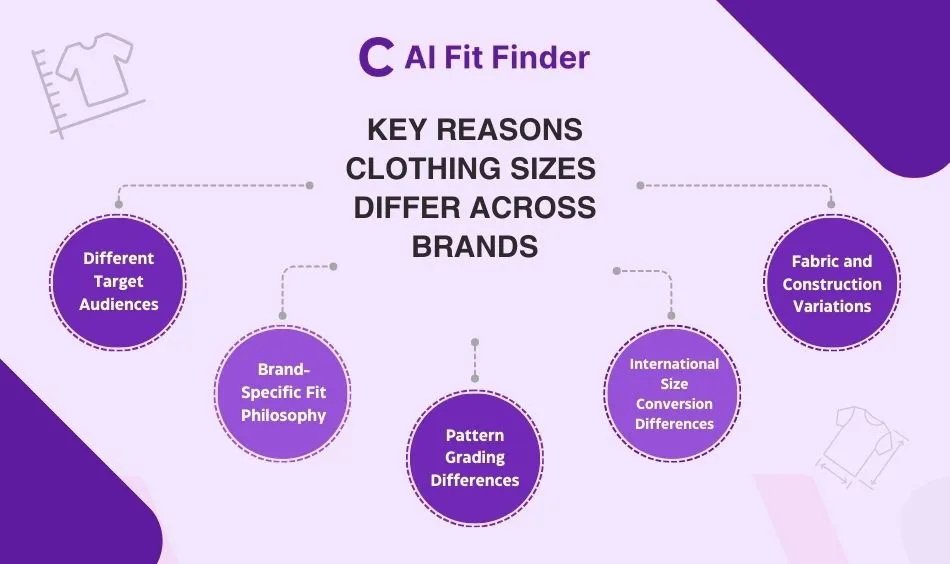
Clothing size inconsistency is caused by multiple structural factors.
1. Different Target Audiences
Brands design clothing for different customer profiles. A fast-fashion brand targeting younger shoppers may create slimmer fits. A luxury brand may design for a different body structure.
Each brand’s target demographic influences:
- Bust-to-waist ratios
- Hip grading
- Shoulder width
- Length proportions
This leads to different fit interpretations even under the same size label.
2. Brand-Specific Fit Philosophy
Not all brands interpret “medium” or “size 10” the same way.
Some focus on:
- Slim silhouettes
- Tailored fits
- Structured garments
Others prioritize:
- Relaxed styles
- Oversized designs
- Stretch fabrics
Even without vanity sizing, these philosophical differences create noticeable size variation.
3. Pattern Grading Differences
Pattern grading is the process of scaling a base garment up or down to create additional sizes.
Different brands use different grading rules. For example:
- Some increase hip measurement more aggressively
- Others prioritize waist growth
- Sleeve length adjustments vary
Small grading differences compound across sizes, resulting in larger inconsistencies.
4. International Size Conversion Differences
Global ecommerce increases complexity.
A size 10 in the US does not match:
- UK sizing
- EU sizing
- Asian sizing
Even when conversion charts exist, they are approximations.
Regional body averages and manufacturing practices further influence size standards.
This is one reason why clothing sizes are so inconsistent in international online shopping.
5. Fabric and Construction Variations
Garment materials affect perceived fit.
Structured fabrics:
- Have limited stretch
- Fit tightly to measurements
Stretch fabrics:
- Allow flexibility
- Adapt to body shape
Two dresses with identical measurements may feel very different depending on the fabric composition.
Why Women’s Clothing Sizes Are More Inconsistent
Women’s clothing sizes are especially inconsistent due to:
- Greater body shape diversity
- More rapid trend changes
- Stronger vanity sizing influence
- More complex pattern construction
Men’s sizing often relies on clearer measurements, such as waist inches or chest width. Women’s sizing relies more heavily on numeric labels, which are more vulnerable to manipulation and variation.
How Clothing Size Inconsistency Impacts Online Shopping

In physical stores, shoppers can try multiple sizes. Online, they must rely on labels and charts.
Clothing size inconsistency creates three major ecommerce challenges.
1. Size Confusion in Ecommerce
Shoppers often ask:
- Does this brand run small?
- Should I size up or down?
- Will this fit like my last purchase?
When answers are unclear, hesitation increases.
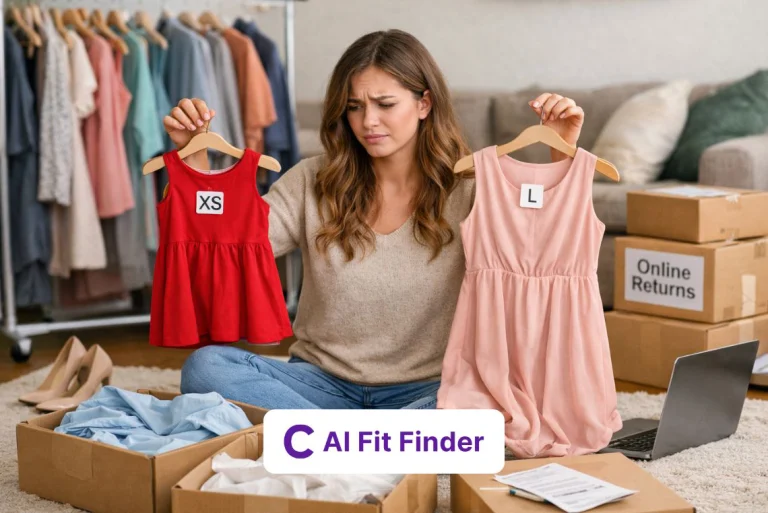
2. Increased Return Rates
“Didn’t fit as expected” remains one of the top reasons for apparel returns.
Size confusion in online shopping leads to:
- Wrong-size orders
- Bracketing behavior (ordering multiple sizes)
- Return shipping costs
- Inventory processing delays
Return-heavy categories struggle with profit margins.
Clothing size inconsistency does more than confuse shoppers. It also contributes to higher return volumes. If you want a deeper breakdown of how sizing inconsistency increases returns, our detailed analysis explains the financial impact on fashion ecommerce brands.
3. Lower Conversion Rates
Clothing size inconsistency reduces conversion rates because:
- Buyers hesitate at the size selector
- Cart abandonment increases
- First-time shoppers lack confidence
When shoppers doubt fit, they delay purchases.
For ecommerce brands, size inconsistency directly impacts revenue.
Clothing Size Inconsistency vs Size Accuracy
Below is a comparison illustrating how inconsistency contrasts with size accuracy strategies.
| Factor | Inconsistent Sizing | Accurate Size Guidance |
| Shopper confidence | Low | High |
| Cart abandonment | Higher | Lower |
| Return rates | Higher | Lower |
| Repeat purchase rate | Reduced | Improved |
| Brand trust | Weakens | Strengthens |
| Ecommerce performance | Unstable | Predictable |
Brands that invest in size clarity experience more stable performance metrics.
Why Clothing Sizes Change Over Time
Clothing sizes have shifted for several reasons:
- Average body measurements evolve
- Competitive vanity sizing pressures
- Fashion trends favor looser or tighter silhouettes
- Brands reposition their target demographics
As brands continuously adjust sizing to match trends or marketing goals, long-term consistency declines.
Why Size Charts Alone Do Not Solve the Problem
Many brands attempt to fix clothing size inconsistency by providing size charts. While helpful, charts have limitations.
Size charts:
- Assume accurate self-measurement
- Do not explain fabric behavior
- Cannot account for body shape variation
- Often performs poorly on mobile
Charts provide information, but not always decision guidance.
Without context, shoppers still hesitate.
How Fashion Brands Can Reduce Size Confusion
Although total industry standardization is unlikely, brands can reduce confusion.
Transparent Fit Descriptions
Explaining whether garments:
- Run small
- Fit true to size
- Have stretch
- Are oversized
adds clarity.
Consistent Labeling Practices
Maintaining predictable sizing across collections builds long-term trust.
Clear International Conversions
Providing localized sizing information reduces cross-border confusion.
Size Recommendation Technology
Modern size recommendation tools use:
- Body data inputs
- Fit preference questions
- Brand-specific sizing logic
These systems reduce reliance on labels alone.
To address clothing size inconsistency, many brands now rely on Shopify virtual fit room apps and size recommendation tools. These technologies help shoppers choose the right size before checkout, reducing hesitation and improving overall ecommerce performance.
What Shoppers Can Do to Handle Size Inconsistency
Consumers can reduce sizing errors by:
- Measuring accurately
- Comparing brand-specific charts
- Reading fit reviews
- Checking fabric composition
- Using fit recommendation tools
Awareness improves decision-making.
Frequently Asked Questions
1. What is the 3-3-3 rule for clothes?
The 3-3-3 rule for clothes is a minimalist styling concept. It suggests creating multiple outfits using just three tops, three bottoms, and three pairs of shoes. The idea is to maximize versatility while keeping a wardrobe simple and functional. It is often associated with capsule wardrobes and sustainable fashion habits.
2. Why is Gen Z fashion so baggy?
Gen Z fashion trends lean toward oversized and baggy clothing for comfort, self-expression, and cultural influence. Streetwear, 1990s and early 2000s styles, and relaxed silhouettes have become popular again. Baggy clothing also moves away from body-focused fashion standards, which appeals to younger consumers seeking inclusivity and comfort.
3. Is a 32 waist actually 32 inches?
Not always. In theory, a 32 waist means the garment is designed for a 32-inch waist measurement. However, due to vanity sizing and brand-specific grading, the actual waistband measurement may differ slightly. Some brands add ease or stretch, which can make the fit feel larger or smaller than the labeled size.
4. What is the rule of 7 in clothing?
The rule of 7 in clothing refers to a styling guideline that suggests wearing no more than seven visible accessories or focal items at once. This includes clothing pieces, jewelry, shoes, and bags. The rule helps maintain balance in an outfit and prevents over-accessorizing.
5. How many clothes does the average woman own?
Estimates vary, but research suggests the average woman owns between 100 and 150 clothing items. This number depends on lifestyle, climate, and shopping habits. Many people wear only a small portion of their wardrobe regularly, which has fueled interest in capsule wardrobes and sustainable fashion practices.
Final Thoughts
Clothing sizes are inconsistent across brands because fashion lacks universal standards, brands target different body types, and vanity sizing has reshaped labeling practices over time.
While this inconsistency may seem like a minor inconvenience, it has real consequences in ecommerce. Size confusion increases hesitation, return rates, and lost revenue.
For online fashion brands, solving size inconsistency is not about changing labels. It is about improving clarity, transparency, and guidance.
In the digital age, shoppers do not care about fitting into a smaller number. They care about predictability and comfort.
Brands that prioritize size accuracy over marketing perception build stronger trust, reduce returns, and improve long-term ecommerce performance.