
Fashion ecommerce has grown rapidly, but so have return rates. For many Shopify apparel stores, returns quietly drain profits, increase operational costs, and slow down growth. While discounts, fast shipping, and great visuals help attract buyers, they do little to fix the most common reason for fashion returns: incorrect sizing.
To reduce returns in Shopify apparel stores, brands must address size confidence before checkout. Shoppers hesitate when they are unsure about fit. That hesitation leads to wrong-size orders, bracketing behavior, and post-purchase disappointment. Over time, this hurts conversion rates and customer trust.
This is where Shopify virtual fit room apps come in. These tools help shoppers choose the right size with confidence, reducing guesswork and minimizing size-related returns. In this guide, we’ll explore how virtual fit room apps work, why they are effective, and how Shopify fashion brands use them to reduce returns and improve long-term profitability.
Why Apparel Stores Struggle to Reduce Returns on Shopify
Fashion has one of the highest return rates in e-commerce. Unlike electronics or home goods, clothing must fit the body comfortably. Without a physical try-on, shoppers rely on size guidance to make a decision.
Size Uncertainty Is the Biggest Return Trigger
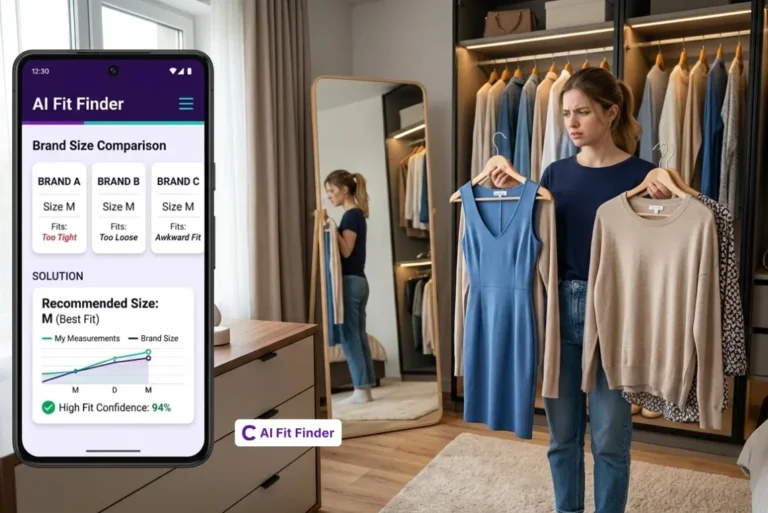
Across the fashion industry, “too small” or “too large” remains the top reason for returns. Shoppers often like the product but feel unsure about sizing. Even experienced buyers struggle when brand sizing varies.
When size confidence is low:
- Shoppers guess a size
- Order multiple sizes
- Return what doesn’t fit
This cycle increases return volume and reduces margins.
Static Size Charts Don’t Match Real-World Shopping Behavior
Traditional size charts show measurements, but they don’t explain how a garment fits on different body types. Many shoppers:
- Skip charts on mobile
- Misread measurements
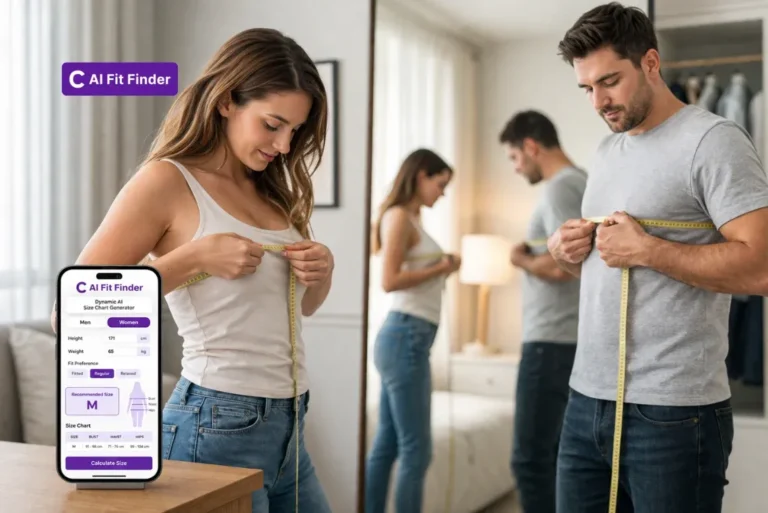
- Don’t know how to measure correctly
As a result, charts alone rarely help reduce fashion returns on Shopify.
Bracketing Behavior Increases Return Costs
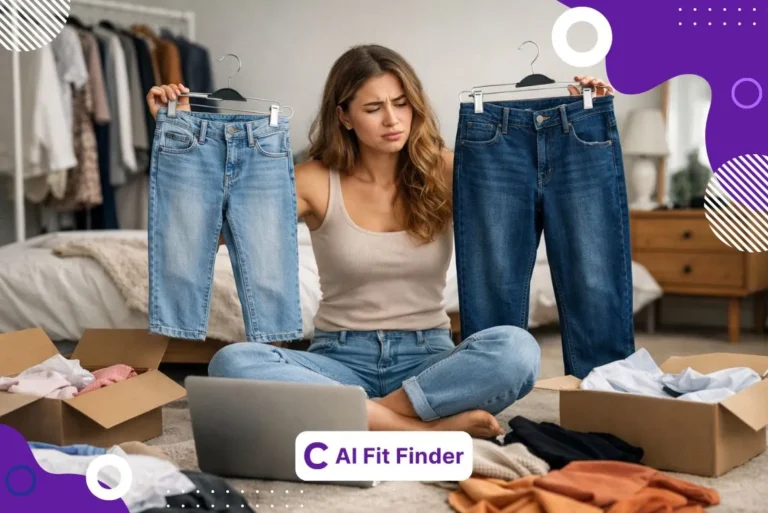
Bracketing happens when shoppers order two or more sizes of the same item. While this may help the buyer, it creates major logistical costs for merchants. Virtual fit room apps aim to reduce this behavior by improving confidence before purchase.
What Are Shopify Virtual Fit Room Apps?
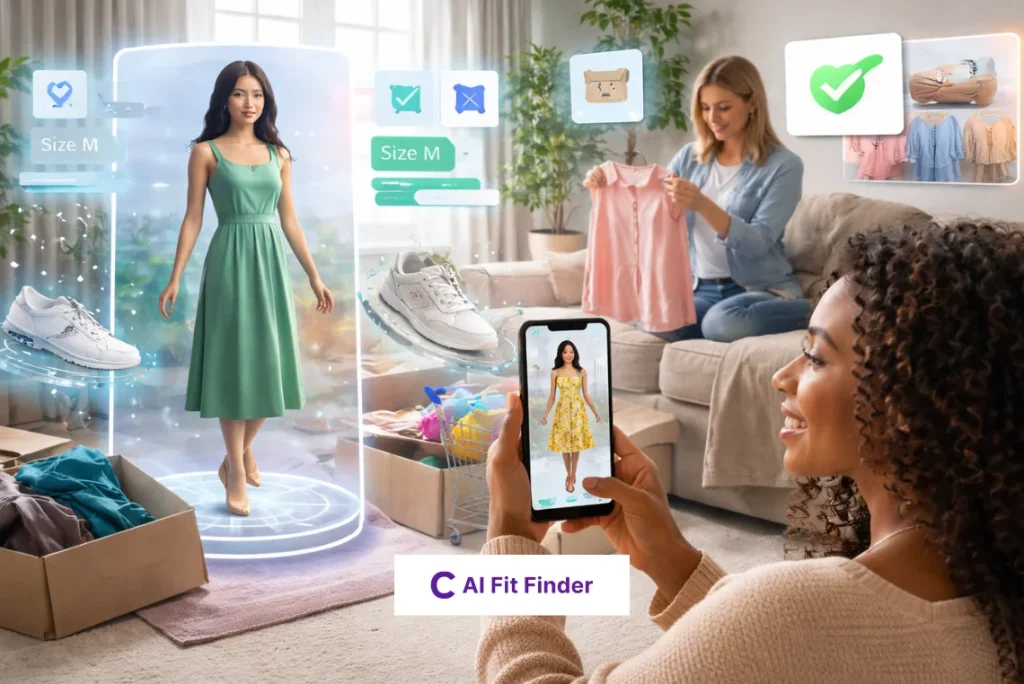
A Shopify virtual fit room app is a sizing solution designed to help shoppers choose the most suitable size before checkout. Instead of relying only on static charts, these apps use size recommendation logic, measurements, and sometimes AI models to guide buyers.
Virtual fit room apps typically include:
- Interactive size guidance
- Brand-specific sizing logic
- Support for global size conversions
- Mobile-friendly interfaces
Their purpose is simple: reduce size errors and help shoppers buy confidently.
Virtual fit room apps do more than reduce returns; they also improve how shoppers choose sizes in the first place. If you want a deeper understanding of how these tools work behind the scenes, our guide on Shopify virtual fit room apps explains how size recommendation and measurement logic help shoppers make confident decisions before checkout.
How Shopify Virtual Fit Room Apps Reduce Returns
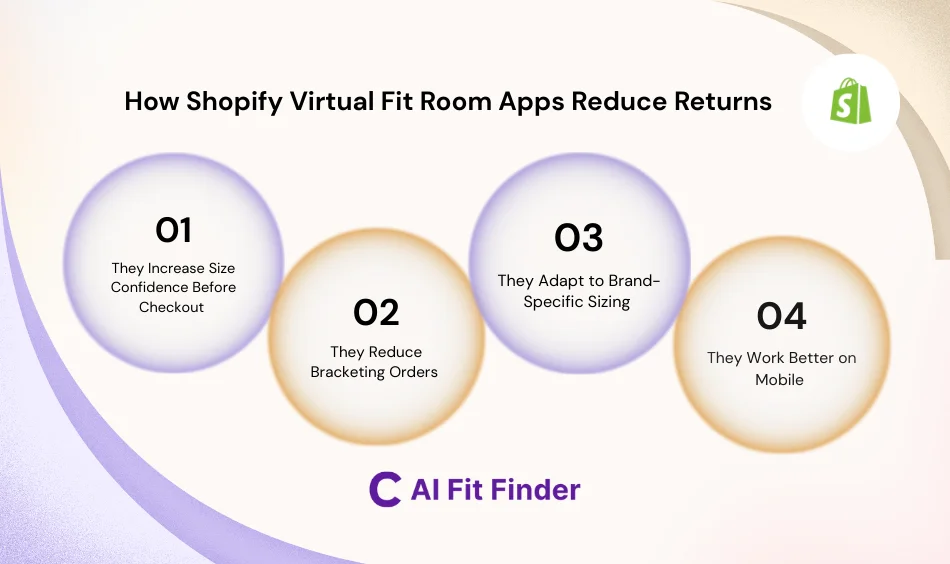
Virtual fit room apps reduce returns by improving decision-making at the most critical moment: size selection.
They Increase Size Confidence Before Checkout
When shoppers feel confident about sizing, they are less likely to regret the purchase. Clear size recommendations reduce doubt and hesitation, which leads to fewer wrong-size orders.
They Reduce Bracketing Orders
By suggesting a single best-fit size, virtual fit room apps discourage shoppers from ordering multiple sizes “just in case.” This directly reduces outbound shipping and return processing.
They Adapt to Brand-Specific Sizing
Every brand fits differently. A virtual fit room app accounts for brand-level sizing behavior, which is something generic size charts cannot do. This improves accuracy and reduces mismatch.
They Work Better on Mobile
Mobile shoppers often skip size charts due to poor usability. Virtual fit room apps present size guidance in a simple, tap-friendly format, making it easier to choose correctly on smaller screens.
The Business Impact of Reducing Apparel Returns
Reducing returns isn’t just about logistics. It affects nearly every business metric.
Lower Reverse Logistics Costs
Every return costs money: shipping, restocking, handling, and refunds. Fewer returns mean lower operational expenses.
Improved Profit Margins
Returned items often lose resale value or require repackaging. Reducing returns protects margins and inventory value.
Higher Customer Lifetime Value
Customers who receive the right size are more likely to return and buy again. Poor sizing experiences reduce repeat purchases.
Metrics Shopify Merchants Should Track for Return Reduction
To understand whether sizing improvements are working, merchants should track:
- Return rate by product
- Return reason (size-related vs other)
- Repeat purchases after returns
- Conversion rate before and after sizing changes
These metrics help measure the real impact of virtual fit room apps.
Virtual Fit Room Apps vs Other Return Reduction Methods
| Method | Return Reduction Impact | Effort Level | Scalability |
| Better product photos | Low | Medium | Limited |
| Manual size chart updates | Low–Medium | High | Low |
| Flexible return policies | No reduction | Low | High |
| Shopify virtual fit room apps | High | Low | High |
Virtual fit room apps offer the most scalable and effective way to reduce returns in Shopify apparel stores.
How Fashion Brands Use Fit Technology to Reduce Returns
Helping First-Time Buyers
New customers are the most uncertain about sizing. Virtual fit room apps provide guidance that helps convert first-time visitors with fewer mistakes.
Supporting International Shoppers
Global shoppers face confusing size conversions. Virtual fit room apps automatically adjust size recommendations by region, reducing errors.
Managing Large Product Catalogs
Brands with hundreds of SKUs benefit from scalable sizing rules that apply across collections without manual updates.
Common Myths About Reducing Returns with Fit Apps
Many merchants hesitate due to outdated assumptions.
- Returns are unavoidable in fashion → Many size-related returns are preventable
- Fit tools are only for large brands → Many Shopify apps support small stores
- Setup is complex → Most modern tools require minimal configuration
How AI Fit Finder Helps Reduce Returns on Shopify
AI Fit Finder helps fashion brands reduce size-related returns by offering:
- Smart size recommendations
- Mobile-ready sizing interfaces
- Support for US, UK, EU, and Asian sizes
- Scalable sizing rules across large catalogs
Brands use AI Fit Finder to improve size clarity, reduce wrong-size orders, and protect margins without adding friction to the buying journey.
FAQs About Clothing Size Measurement & Virtual Fit Tools
- Is there an app that measures clothing size?
Yes. Clothing size measurement apps help shoppers find the right size online using body measurements, size recommendation logic, or AI-based predictions. On Shopify, virtual fit room and size recommendation apps guide shoppers toward the most accurate size without needing a physical try-on.
- What size is the Shopify app icon?
The standard Shopify app icon size is 1200 × 1200 pixels. This square format ensures the app icon displays clearly across the Shopify App Store, admin dashboard, and marketing placements.
- What are virtual fitting rooms?
Virtual fitting rooms are digital tools used in online fashion stores to help shoppers choose the correct clothing size. They use measurements, fit preferences, or AI models to predict how garments will fit, reducing size guesswork and return rates.
- What is the 3-3-3 rule for clothing?
The 3-3-3 rule for clothing is a wardrobe styling concept where outfits are created using three tops, three bottoms, and three pairs of shoes. It helps simplify outfit planning but does not relate to sizing, measurements, or fit accuracy.
- How can shoppers get accurate clothing measurements?
Accurate clothing measurements require a soft measuring tape and correct posture. Shoppers should measure key areas such as bust, waist, and hips while standing naturally. Following brand-specific measurement guides and comparing results with size charts or fit tools improves accuracy.
Conclusion: Reducing Returns Starts With Better Fit Confidence
Returns are not just a post-purchase problem. They begin with uncertainty during size selection. For Shopify apparel stores, improving fit confidence is one of the most effective ways to reduce returns, increase conversions, and build long-term trust.
Shopify virtual fit room apps help brands solve sizing issues at scale. By guiding shoppers before checkout, these tools reduce bracketing, lower return costs, and improve profitability. For fashion ecommerce brands focused on sustainable growth, investing in fit technology is no longer optional.