
Buying clothes online sounds simple until you face the most common problem: “What size should I choose?”
You might wear a medium in one brand, a large in another, and sometimes even a small, depending on the product. This confusion often leads to wrong purchases, returns, and frustration.
Knowing your body size for clothes is the most reliable way to avoid this problem. Instead of guessing based on labels, understanding your actual measurements helps you choose the right size confidently across different brands.
Quick Answer:
To know your body size for clothes, measure your bust (or chest), waist, and hips using a measuring tape, then compare these measurements with a brand’s size chart. You can also estimate your size using height, weight, and fit preference when shopping online.
This guide explains step by step how to find your body size accurately, even without a measuring tape, and how to use that information for online shopping.
Why Knowing Your Body Size Matters
Avoid Wrong Size Orders
When you rely only on labels like S, M, or L, you are guessing. Body measurements remove that guesswork.
Reduce Returns
Incorrect sizing is one of the biggest reasons for clothing returns. Knowing your size helps reduce trial-and-error purchases.
Improve Online Shopping Confidence
When you understand your body size, you can shop faster and more confidently without second-guessing every purchase.
Choosing the wrong size is one of the biggest reasons for product returns in fashion ecommerce. When shoppers are unsure about their size, they often order incorrectly or return items after trying them. Learn more about how clothing size inconsistency increases online returns and its impact on online stores.
Step-by-Step: How to Know Your Body Size for Clothes
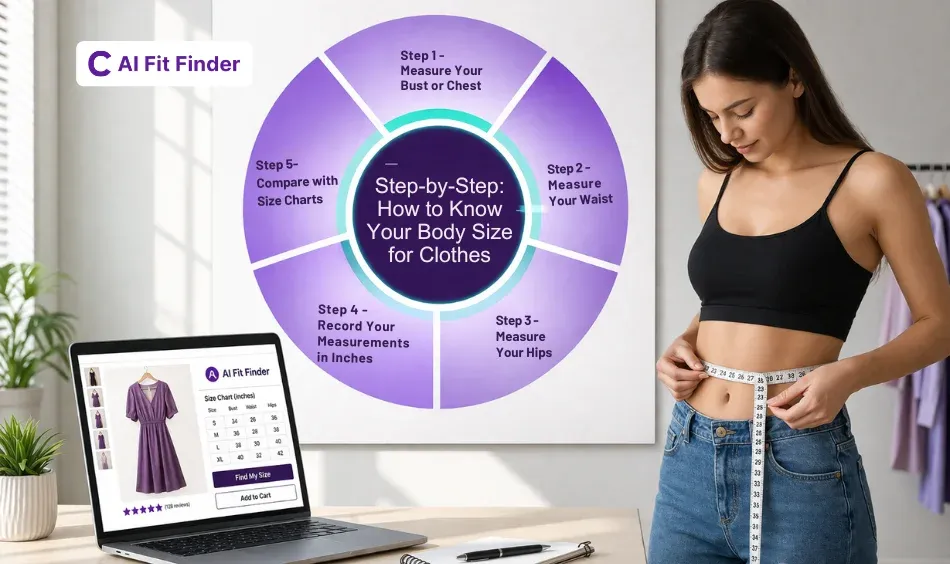
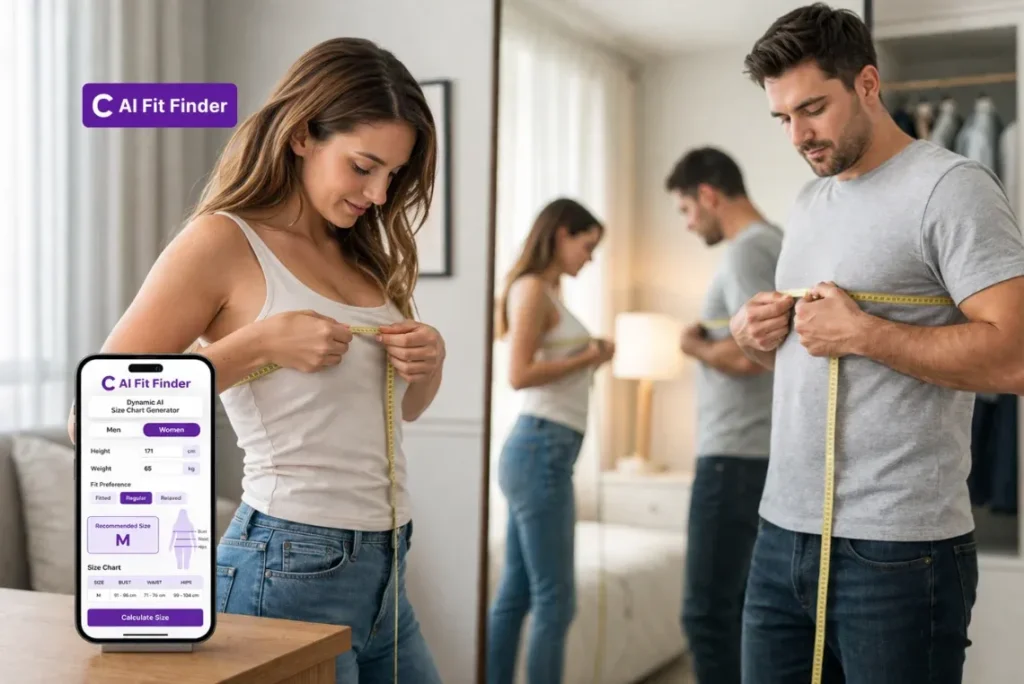
Step 1 – Measure Your Bust or Chest
- Stand straight and relaxed
- Wrap the measuring tape around the fullest part of your bust or chest
- Keep the tape level and not too tight
This measurement is especially important for tops, dresses, and jackets.
Step 2 – Measure Your Waist
- Find your natural waistline (usually just above your belly button)
- Wrap the tape around your waist
- Keep it snug but not tight
Avoid sucking in your stomach, as this will give inaccurate results.
Step 3 – Measure Your Hips
- Measure around the widest part of your hips
- Stand with feet together for accuracy
This is crucial for pants, skirts, and fitted dresses.
Step 4 – Record Your Measurements in Inches
Most online size charts use inches (or centimeters).
Example:
- Bust: 36 inches
- Waist: 28 inches
- Hips: 38 inches
Keeping these numbers saved helps with future purchases.
Step 5 – Compare with Size Charts
Each brand has its own size chart. Use your measurements to match the closest size.
Important: Do not assume your size is the same across all brands.
Even if you know your body measurements, you may still face issues while shopping online. This happens because different brands follow different sizing standards. To understand this better, read our detailed guide on why clothing sizes are so inconsistent and why the same size fits differently across brands.
How to Know Your Body Size Without a Measuring Tape
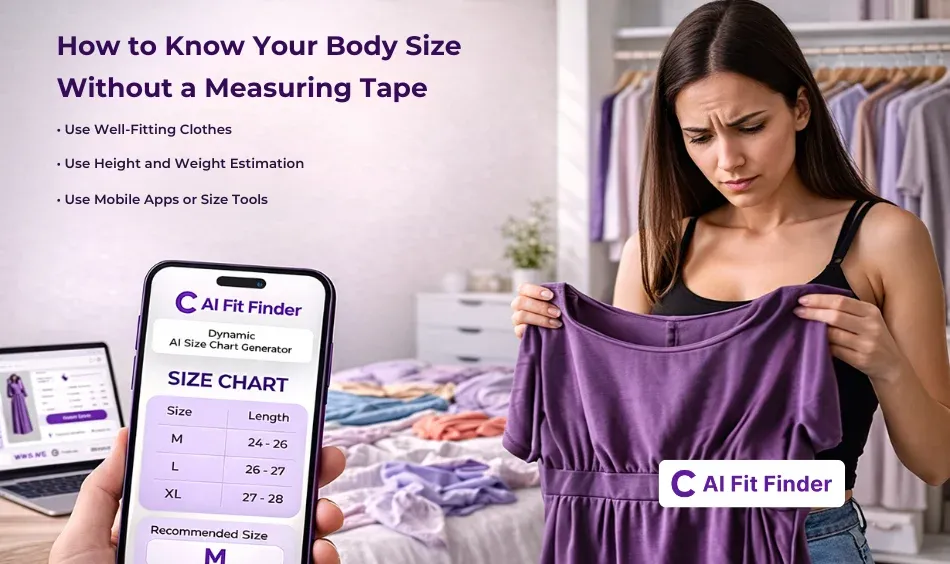
Not everyone has a measuring tape at home. Here are alternative methods:
Use Well-Fitting Clothes
Take a piece of clothing that fits you well and:
- Lay it flat
- Measure it using a ruler or scale
- Compare it with the size charts
Use Height and Weight Estimation
Many online tools estimate size based on:
- Height
- Weight
- Body shape
While not perfect, this gives a starting point.
Use Mobile Apps or Size Tools
Some tools allow you to input:
- Height
- Weight
- Fit preference
and suggest a size instantly.
How to Know Your Body Size for Clothes Online
Online shopping requires a slightly different approach.
Read Size Charts Carefully
Always check:
- Bust/Chest
- Waist
- Hips
Avoid relying only on “Small / Medium / Large”.
Check Fit Descriptions
Look for details like:
- Slim fit
- Relaxed fit
- Oversized
These indicate how the garment is designed.
Read Customer Reviews
Reviews often include:
- “runs small”
- “true to size.”
- “Order one size up.”
This real feedback is very helpful.
Understand Fabric Type
Fabric affects fit:
- Stretch fabrics = flexible
- Non-stretch fabrics = more structured
This can change how a garment feels on your body.
Women vs Men: How Body Size Measurement Differs
Women’s Measurements
Women’s sizing usually includes:
- Bust
- Waist
- Hips
More variation in body shapes leads to more sizing complexity.
Men’s Measurements
Men’s sizing typically focuses on:
- Chest
- Waist
- Inseam
This makes sizing slightly more standardized.
Why Women Face More Size Confusion
Women’s clothing varies more due to:
- Fashion trends
- Fit styles
- Design variations
This makes accurate measurement even more important.
Sizing challenges are even more noticeable in women’s fashion due to variations in fit, fabric, and design. Many shoppers struggle to find consistent sizing across brands. To explore this in detail, read our article on why women’s clothing sizes are so inconsistent and how it impacts online shopping.
Common Mistakes When Finding Your Body Size
Measuring Too Tight or Too Loose
This leads to incorrect sizing.
Ignoring Brand Differences
Each brand fits differently. Always check their chart.
Not Checking Fabric
Stretch vs non-stretch changes fit.
Assuming Same Size Everywhere
This is one of the biggest mistakes in online shopping.
Body Size vs Clothing Size: What’s the Difference?
This is where most people get confused.
- Body size = your actual measurements
- Clothing size = brand’s label
Because brands define sizes differently, clothing size is not always reliable. Your body measurements are the most accurate reference.
Body Measurements to Clothing Size Chart
| Body Measurement (inches) | Typical Size |
| 32–34 Bust | XS |
| 34–36 Bust | S |
| 36–38 Bust | M |
| 38–40 Bust | L |
| 40–42 Bust | XL |
⚠ Note: This varies by brand. Always check specific charts.
Latest Trends in Finding Your Body Size (2024–2025)
AI-Based Size Recommendation
Modern tools analyze:
- Height
- Weight
- Body shape
to suggest accurate sizes.
Virtual Fit Technology
Some platforms allow virtual try-on experiences. This reduces guesswork.
Mobile-First Size Guidance
Brands now simplify size selection for mobile users with quick recommendations.
How Size Inconsistency Affects Your Body Size Accuracy
Even if you know your body size, clothing sizes can still vary.
This happens because:
- Brands use different sizing systems
- Vanity sizing changes labels
- Fabrics affect fit
That’s why combining measurement + brand context is important.
Best Way to Find Your Perfect Fit (Modern Approach)
The most effective method is combining:
- Your body measurements
- Brand size charts
- Fit descriptions
- Size recommendation tools
This reduces errors and improves confidence.
Frequently Asked Questions
- How do I figure out my clothing size?
To figure out your clothing size, measure your bust (or chest), waist, and hips using a measuring tape. Then compare these measurements with the brand’s size chart. Since sizes vary across brands, using your body measurements is the most accurate way to choose the right size when shopping online.
- What is a 32-28-32 body shape?
A 32-28-32 body shape refers to body measurements in inches: 32-inch bust, 28-inch waist, and 32-inch hips. This proportion is generally considered a straight or rectangular body shape, where the bust and hips are similar in size with a slightly defined waist.
- What is the 3-3-3 rule for clothing?
The 3-3-3 rule for clothing is a simple styling method where you create outfits using three tops, three bottoms, and three pairs of shoes. It helps build a versatile wardrobe and reduces decision fatigue while dressing.
- What is a 34-26-36 body shape?
A 34-26-36 body shape means 34-inch bust, 26-inch waist, and 36-inch hips. This is commonly associated with an hourglass or pear-leaning body shape, where the waist is well-defined and the hips are slightly wider than the bust.
- Is size 40 M or L?
Size 40 usually falls between Medium (M) and Large (L), depending on the brand and region. In many sizing systems, size 40 is considered Medium for men’s clothing and may vary between Medium and Large in women’s clothing. Always check the brand’s size chart for an accurate fit.
Final Thoughts
Knowing your body size for clothes is one of the most important steps in improving your shopping experience. Instead of relying on labels, using accurate measurements gives you control and confidence.
In today’s online shopping world, where trying clothes before buying is not possible, understanding your body size helps you:
- Choose better
- Reduce returns
- Avoid frustration
Clothing sizes may vary, but your measurements stay consistent. And that consistency is the key to finding the right fit every time.