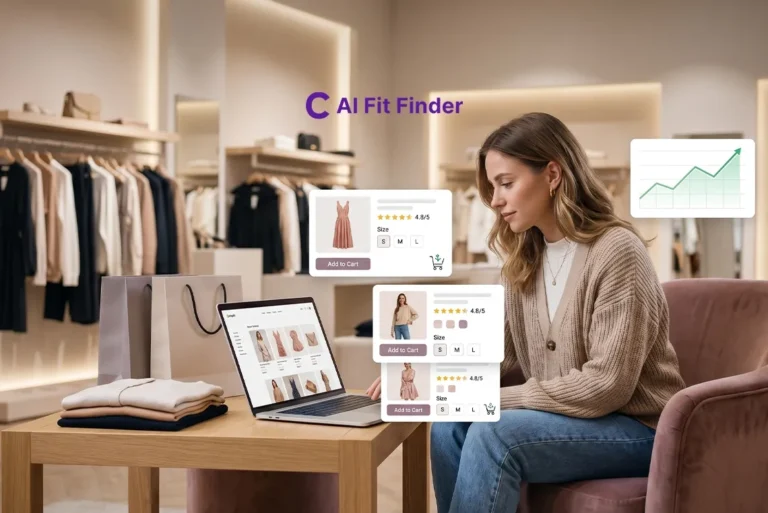

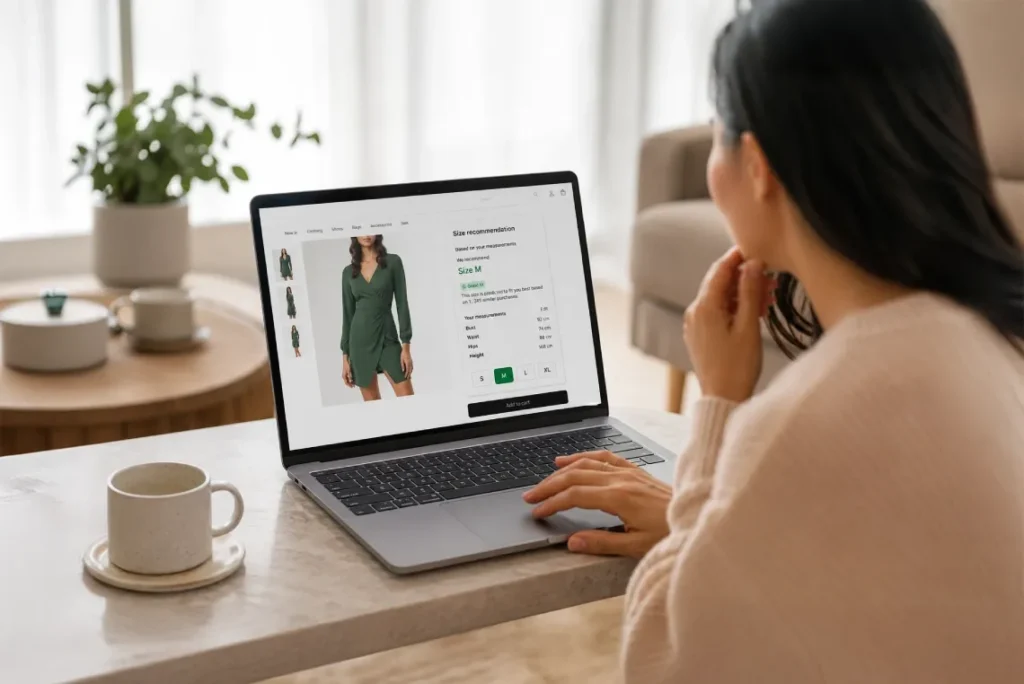
Size recommendations impact ecommerce conversions by reducing uncertainty during the buying process. When customers feel confident they are choosing the right size, they are more likely to complete their purchase and less likely to return the product.
Why Do Customers Hesitate Before Buying Apparel Online?
Customers hesitate because they are unsure if the product will fit correctly. Unlike other products, apparel and footwear introduce risk:
- Sizing varies by brand
- Fit depends on body type
- Product images don’t show exact fit
This uncertainty leads to:
- Abandoned carts
- Delayed decisions
- Lower conversion rates
Even when demand exists, hesitation can prevent sales from happening.
How Does Size Uncertainty Affect Conversion Rates?
Size uncertainty creates friction at the most critical point in the buying journey, right before checkout.
When customers are unsure:
- They leave to “think about it.”
- They compare other stores
- They postpone the purchase
Patterns observed:
- Higher uncertainty leads to lower conversions
- Clear guidance increases checkout completion
- Reduced friction improves overall performance
Most conversion issues don’t start at checkout. They start earlier, when product selection doesn’t align with real customer expectations, which is why many sellers use platforms like Sell The Trend to identify products that already match buyer intent before focusing on conversion optimization.
How Do Size Recommendations Improve Buyer Confidence?

Size recommendations improve buyer confidence by giving personalized guidance that removes guesswork.
Instead of asking:
- “Will this fit me?”
Customers are told:
- “This is your best size.”
This shift:
- Reduces hesitation
- Speeds up decision-making
- Increases trust in the purchase
Tools like AI Fit Finder help merchants provide accurate size suggestions based on shopper inputs like height, weight, and fit preference, directly on product pages.
The impact:
- More confident buyers
- Faster purchases
- Higher conversion rates
Why Do High-Demand Products Still Fail to Convert?
High-demand products fail to convert when the buying experience introduces friction or uncertainty.
Even when a product has:
- Strong interest
- Consistent traffic
- Clear positioning
It can still underperform if:
- Customers lack confidence
- Information is unclear
- Decisions feel risky
Many sellers start by narrowing down which niches and product categories are worth entering, often using curated category breakdowns to identify consistent opportunities before optimizing for conversions.
But demand alone is not enough.
Conversion depends on:
- Clarity
- trust
- and confidence
How Do Size Recommendations Reduce Returns?
Size recommendations reduce returns by helping customers choose the correct size before purchasing.
Without guidance:
- Customers guess
- Orders don’t fit
- Returns increase
With accurate recommendations:
- Customers make informed decisions
- Fit improves
- Return rates decrease
Patterns observed:
- Better sizing = fewer returns
- Fewer returns = higher profitability
- Improved experience = stronger customer loyalty
Pro Tip: Reducing returns is just as important as increasing conversions.
What Happens When You Combine Demand With Confidence?
Combining product demand with buyer confidence creates a system where traffic converts more efficiently and returns decrease.
Here’s how it works:
| Layer | Role |
| Product Demand | Brings in high-intent shoppers |
| Size Confidence | Helps them complete the purchase |
Without demand:
- There are no buyers
Without confidence:
- Buyers don’t convert
Together:
- You maximize both conversions and profitability
Frequently Asked Questions
1. Do size recommendation tools really increase conversions?
Yes. They reduce hesitation and help customers make faster, more confident decisions.
2. Are size-related returns a big issue in ecommerce?
Yes. Apparel and footwear stores often face high return rates due to sizing issues.
3. Can size tools work across all products?
They are most effective for apparel and footwear, where fit matters most.
4. Do customers trust AI-based recommendations?
Yes, especially when the process is simple and the results are clear.
5. Should I focus on conversions or returns first?
Both matter. Improving confidence helps increase conversions and reduce returns simultaneously.
Wrapping Up
Conversions don’t just come from demand.
They come from confidence.
When you combine high-demand products with clear, personalized guidance, you remove friction from the buying process and turn more visitors into customers.