
Trust is the foundation of online fashion commerce. When shoppers cannot touch, try on, or physically assess clothing before buying, they rely heavily on size labels and fit guidance. If sizing feels unreliable, trust breaks. And when trust breaks, conversions fall, return rates rise, and repeat purchases decline.
This brings us to a critical question for ecommerce brands:
Vanity sizing vs size accuracy — what truly builds long-term trust online?
For decades, vanity sizing influenced retail strategies. Smaller labels made customers feel good. But ecommerce changed the rules. Today, predictability matters more than perception. Online shoppers want clarity, not flattery.
This article explores the difference between vanity sizing and size accuracy, how each impacts shopper confidence, and why fashion brands, especially Shopify merchants, must rethink their sizing approach.
Understanding the Trust Problem in Online Fashion
In physical stores, shoppers can try on multiple sizes. They adjust until something feels right. Even if labels vary, the fitting room solves the uncertainty.
Online shopping removes that safety net.
Shoppers must rely on:
- Size labels
- Size charts
- Fit descriptions
- Brand consistency
When those elements fail, hesitation begins.
Size confusion is not a minor inconvenience. It directly affects:
- Add-to-cart behavior
- Checkout completion
- Return rates
- Customer lifetime value
The debate between vanity sizing and size accuracy is not about fashion philosophy. It is about trust, revenue stability, and long-term brand strength.
What Is Vanity Sizing in Fashion?
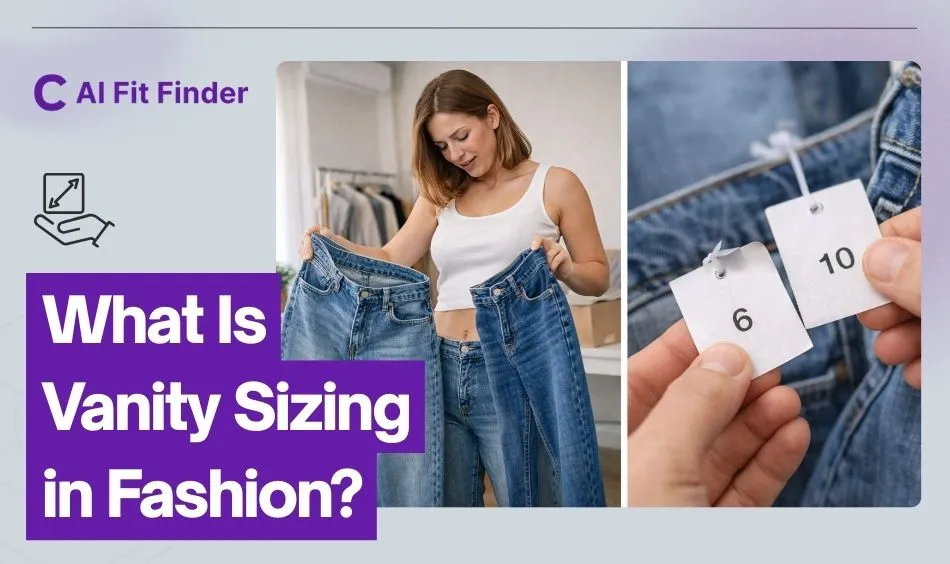
Vanity sizing is the practice of labeling garments with smaller size numbers than traditional measurement standards would indicate. A dress that once measured as a size 8 might now be labeled as a size 6 or 4.
The garment dimensions may stay similar. The label changes.
Why Vanity Sizing Emerged
Vanity sizing developed as a psychological marketing tactic. Retailers discovered that customers felt more confident and satisfied when they fit into a smaller size.
It worked particularly well in physical retail because:
- Shoppers could try items on immediately
- Emotional satisfaction occurred at purchase
- Fit problems could be corrected in-store
Why Vanity Sizing Struggles Online
In ecommerce, labels carry more weight because shoppers cannot verify fit before buying.
If a size label does not reflect consistent measurements, shoppers experience:
- Doubt during selection
- Surprise upon delivery
- Dissatisfaction post-purchase
This is where fashion sizing problems escalate from a branding choice into a performance issue.
To understand this comparison clearly, it’s important to first understand what is vanity sizing and how it reshaped clothing labels over time.
What Is Size Accuracy in Ecommerce?
Size accuracy focuses on consistency and predictability. Instead of manipulating labels for emotional appeal, size accuracy prioritizes clear measurement standards and reliable fit guidance.
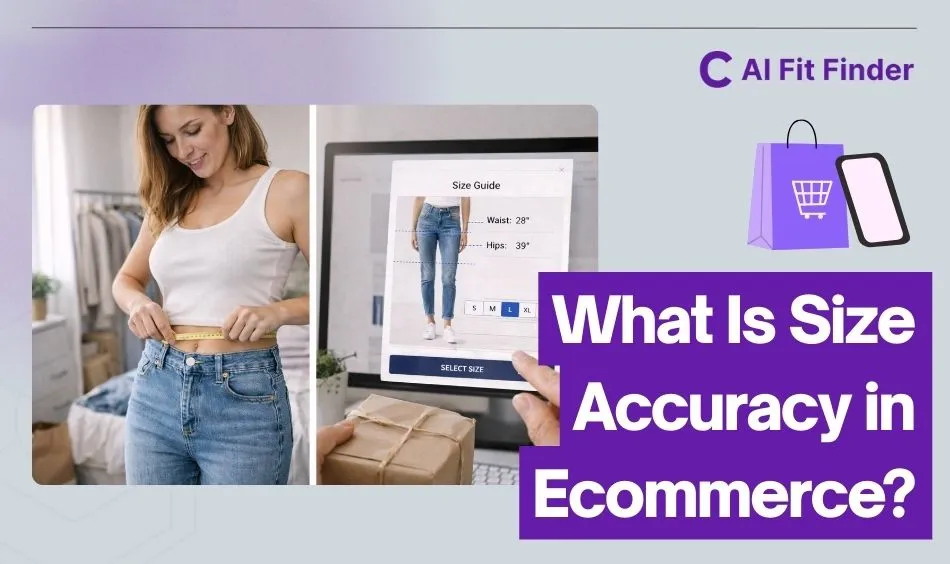
The Core Principles of Size Accuracy
Size accuracy means:
- Labels reflect actual garment dimensions
- Measurements remain consistent across collections
- Fit descriptions provide clarity
- Size guidance supports decision-making
Why Accuracy Matters More Online
Online shoppers prioritize:
- Predictable outcomes
- Fewer returns
- Faster decisions
Size accuracy reduces cognitive effort. When shoppers trust the sizing system, they move through the funnel more confidently.
Vanity Sizing vs Size Accuracy — Key Differences
Below is a direct comparison between vanity sizing and size accuracy in ecommerce.
| Factor | Vanity Sizing | Size Accuracy |
| Primary goal | Emotional appeal | Fit reliability |
| Label consistency | Low | High |
| Shopper confidence | Short-term boost | Long-term stability |
| Return rate impact | Higher | Lower |
| Conversion stability | Volatile | Predictable |
| Repeat purchase behavior | Declines after a poor fit | Increases with consistency |
| Brand trust over time | Weakens | Strengthens |
| Ecommerce suitability | Poor | Strong |
This comparison highlights a key reality: vanity sizing may create momentary satisfaction, but size accuracy builds lasting trust.
How Vanity Sizing Impacts Online Trust
The Expectation Gap
Trust breaks when expectation and reality do not match.
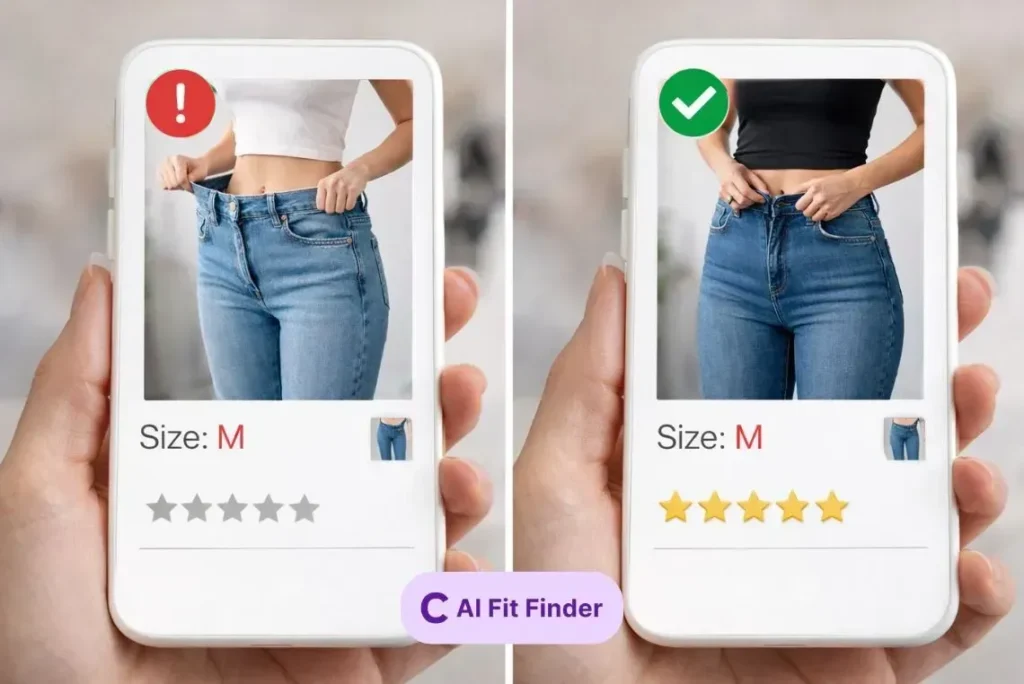
If a shopper consistently wears a “Medium” but receives a garment that fits as a “Small,” frustration follows. Even if the garment is well-made, the disappointment stays.
The expectation gap drives:
- Returns
- Negative reviews
- Reduced repeat purchases
Emotional vs Practical Satisfaction
Vanity sizing may create emotional satisfaction at the moment of checkout. But ecommerce decisions are practical. Shoppers value convenience and predictability more than flattering labels.
Once a shopper experiences a misfit due to label inconsistency, emotional appeal loses power.
How Size Accuracy Builds Long-Term Trust
Trust in ecommerce grows from reliability. When a shopper orders the same size multiple times and receives a consistent fit, confidence strengthens.
Predictable Fit Experience
Predictability reduces:
- Decision time
- Comparison shopping
- Cart hesitation
When shoppers know what to expect, they purchase faster.
Reduced Return Anxiety
Size accuracy lowers the fear of returns. Shoppers are less likely to question their selection at checkout. This improves conversion rates and stabilizes revenue.
The Revenue Impact: Conversion and Returns
Sizing decisions influence two of the most critical ecommerce metrics:
- Conversion rate
- Return rate
Vanity sizing increases volatility in both.
When size labels feel inconsistent:
- Shoppers hesitate before adding to the cart
- Cart abandonment increases
- Returns rise after delivery
Size accuracy stabilizes performance. It supports predictable conversion behavior and reduces operational waste.
Even a small improvement in conversion rate can significantly impact revenue over time. And lowering return rates improves margins immediately.
Research shows that vanity sizing increases fashion return rates, especially when shoppers rely on size labels instead of consistent fit guidance.
Why Shopify Apparel Brands Must Choose Carefully
Shopify hosts thousands of direct-to-consumer apparel brands. Competition is intense. Shoppers compare multiple stores within minutes.
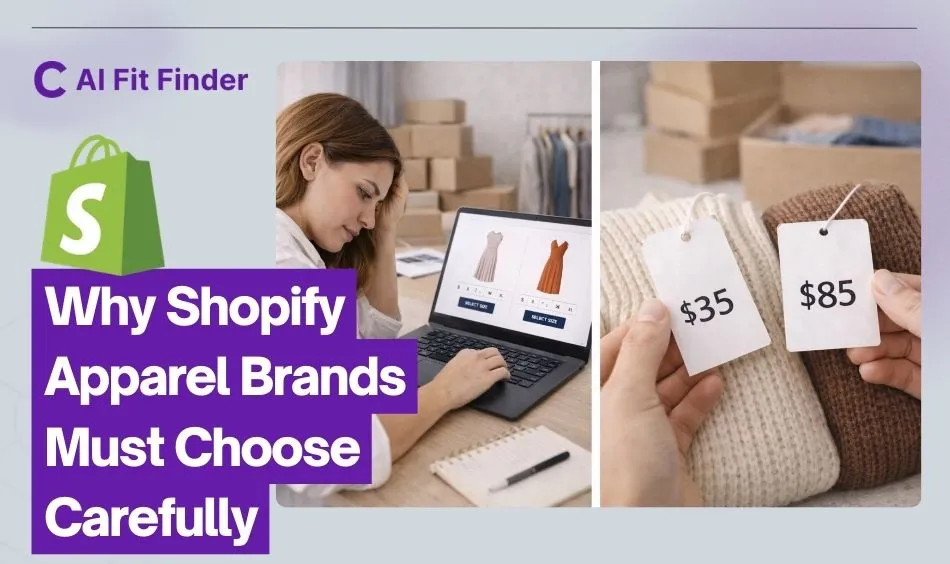
In this environment:
- Confusing sizing equals lost sales
- Inconsistent labels equal lost trust
- High return rates equal shrinking margins
Mobile commerce further amplifies the problem. Mobile shoppers:
- Spend less time reading charts
- Expect instant clarity
- Abandon faster when confused
Vanity sizing, which once relied on in-store psychology, struggles to survive in this fast-paced digital ecosystem.
The Psychology of Trust in Online Fashion
Trust forms when customers experience consistency.
In sizing, trust depends on:
- Transparency
- Clear guidance
- Predictable results
When a brand prioritizes size accuracy, it communicates respect for the shopper’s time and expectations.
Trust reduces friction. Friction slows conversion.
Brands that reduce friction at the size selection stage gain a structural advantage over competitors.
Can Brands Transition from Vanity Sizing to Accuracy?
Many brands worry that abandoning vanity sizing will hurt sales. In reality, shoppers care more about fit than label size.
Transition strategies include:
- Improving measurement clarity
- Adding detailed fit descriptions
- Offering guidance for “between sizes.”
- Educating customers about fit behavior
Brands do not need to change labels overnight. They can layer accurate guidance on top of existing systems.
The Role of Smart Size Guidance
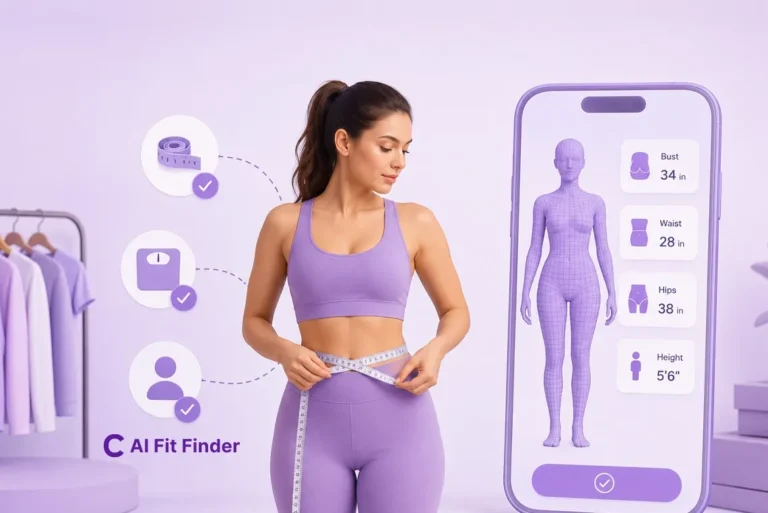
Modern size guidance tools reduce reliance on labels entirely. Instead of asking shoppers to interpret charts, these systems guide decisions using:
- Body inputs
- Fit preferences
- Brand-specific logic
This reduces decision fatigue and improves accuracy.
Rather than choosing between vanity sizing and size accuracy, brands can strengthen size accuracy with smarter guidance systems.
The Sustainability Angle
High return rates increase:
- Packaging waste
- Reverse shipping emissions
- Unsellable inventory
Vanity sizing contributes to these sustainability challenges. Size accuracy reduces unnecessary returns and supports more responsible operations.
In an era where consumers value sustainability, predictable sizing becomes part of brand responsibility.
What Shoppers Actually Want
Surveys consistently show that shoppers value:
- Clear fit information
- Consistent sizing
- Easy returns (but fewer reasons to use them)
They do not prioritize flattering labels as much as brands once assumed.
Comfort and confidence matter more than a smaller number on a tag.
When Does Vanity Sizing Still Appeal?
Vanity sizing may still offer short-term benefits in:
- Physical retail
- Trend-driven impulse buying
But online fashion depends on repeat purchases and lifetime value. Long-term performance outweighs short-term emotional gains.
Key Takeaways for Ecommerce Brands
Vanity sizing and size accuracy represent two different philosophies.
Vanity sizing focuses on perception.
Size accuracy focuses on predictability.
In ecommerce:
- Predictability builds trust
- Trust improves conversions
- Conversions reduce reliance on discounts
- Reduced returns improve margins
Fashion brands that prioritize accurate sizing systems position themselves for sustainable growth.
Frequently Asked Questions
1. Is vanity sizing real?
Yes, vanity sizing is real and widely documented in the fashion industry. It refers to labeling clothing with smaller size numbers than traditional measurement standards would indicate. Brands use it to make shoppers feel better about fitting into smaller sizes, but this often creates confusion in online shopping.
2. What is the 3-3-3 rule for clothes?
The 3-3-3 rule is a wardrobe styling method where you build outfits using three tops, three bottoms, and three pairs of shoes. It promotes simplicity and versatility. This rule is unrelated to vanity sizing but often appears in fashion-related searches.
3. What are the pros and cons of vanity sizing?
Pros:
- Can increase short-term emotional satisfaction
- May encourage impulse purchases in physical stores
Cons:
- Creates size confusion online
- Increases fashion return rates
- Reduces trust over time
- Causes inconsistent sizing across brands
For ecommerce brands, the disadvantages typically outweigh the benefits.
4. Will a size 32 fit a 34 waist?
Usually not. A size 32 is typically designed for a 32-inch waist. However, vanity sizing and brand-specific variations mean that actual fit can vary. Some brands may label garments smaller or larger than the true measurement, so checking garment dimensions is always recommended.
5. Is a 32 waist actually 32 inches?
Not always. While waist sizes are intended to represent inches, many brands adjust measurements slightly for fit style or marketing reasons. Vanity sizing can cause a labeled 32 to measure slightly larger or smaller, depending on the brand.
6. Do size 27 jeans mean a 27-inch waist?
In most cases, yes. Jeans labeled as size 27 typically correspond to a 27-inch waist measurement. However, fit can vary based on brand, cut, rise, and fabric stretch. This is why relying only on the number can sometimes lead to sizing mistakes.
7. Why does Gen Z like baggy clothes?
Gen Z fashion trends favor baggy and oversized clothing due to cultural influences from streetwear, comfort-focused styling, and a shift away from body-conforming fashion norms. Oversized styles also reduce pressure around precise sizing, but accurate fit guidance remains important in ecommerce.
Final Thoughts
Online fashion commerce rewards clarity. Shoppers want reliability, not surprise. While vanity sizing may create temporary emotional satisfaction, size accuracy creates repeat customers.
Trust in ecommerce is fragile. It grows slowly and breaks quickly.
Brands that invest in accurate sizing systems and transparent guidance build stronger foundations. In the long run, the brands that win are not those with the smallest labels, but those with the clearest fit.