
Dress size conversion is one of the most confusing parts of online fashion shopping. A shopper who wears a size 8 in the US may suddenly see size 12 in the UK, size 40 in the EU, or a completely different label in Asian sizing. This confusion leads to hesitation, wrong purchases, and high return rates.
Unlike electronics or accessories, dresses depend on fit, proportions, and comfort. When size conversion feels unclear, shoppers delay decisions or abandon purchases entirely. That is why understanding dress size conversion is essential for anyone shopping internationally or managing a fashion e-commerce store.
This guide explains how dress size conversion works across the US, UK, EU, and Asian sizing systems. It also covers common mistakes, provides real-world examples, and explains how shoppers can choose the right size with greater confidence.
Why Dress Size Conversion Is So Confusing
Dress sizing systems were developed independently across regions. There is no global sizing standard, which is why conversion charts exist. However, charts alone do not always solve the problem.
No Universal Sizing Standard
Each country uses its own grading rules. A US size 6 does not equal a UK size 6 or an EU size 36 in a consistent way. These systems evolved based on local body measurement averages and fashion norms.
Brand-Specific Differences
Even within the same country, brands size differently. One brand’s US size 8 may fit like another brand’s US size 6. This inconsistency increases confusion when shoppers rely only on conversion charts.
Fit Preferences and Body Shapes
Two people with the same measurements may prefer different fits. Some like a relaxed look, while others prefer a fitted style. Conversion charts do not account for these preferences.
Understanding Major Dress Sizing Systems
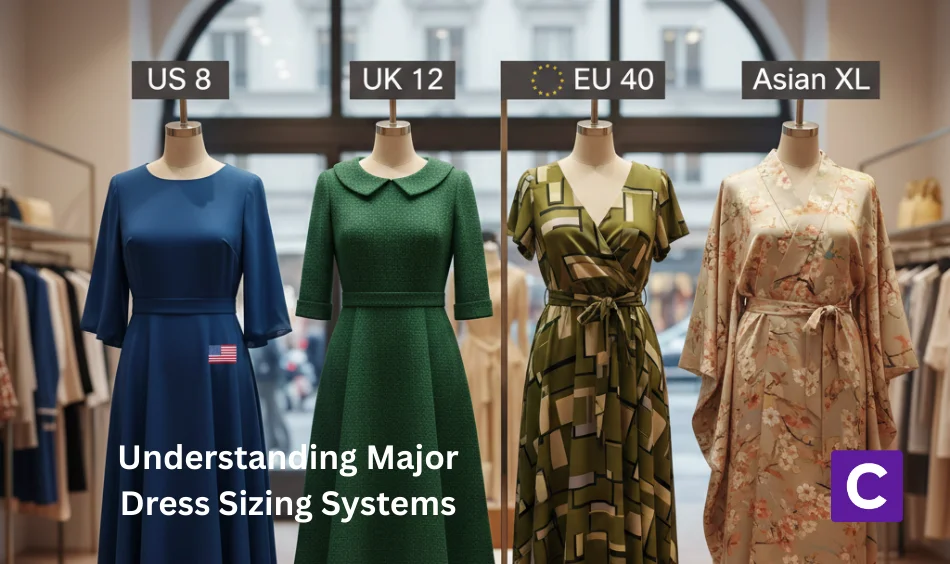
Before using a dress size conversion chart, it helps to understand how each sizing system works.
US Dress Sizing
US sizing usually uses even numbers such as 2, 4, 6, and 8. It is not measurement-based. Instead, it reflects brand grading rules. This makes US sizing flexible but inconsistent.
UK Dress Sizing
UK sizes are generally four numbers higher than US sizes. A UK size 10 often equals a US size 6. UK sizing tends to feel slightly smaller than US sizing.
EU Dress Sizing
EU sizes are based more closely on body measurements. They often appear larger numerically, such as 38, 40, or 42. EU sizing tends to be more structured but still varies by brand.
Asian Dress Sizing
Asian sizing usually runs smaller than Western sizing. Height, shoulder width, and body proportions differ, which affects grading. Many shoppers need to size up when buying from Asian brands.
Dress Size Conversion Chart for Women
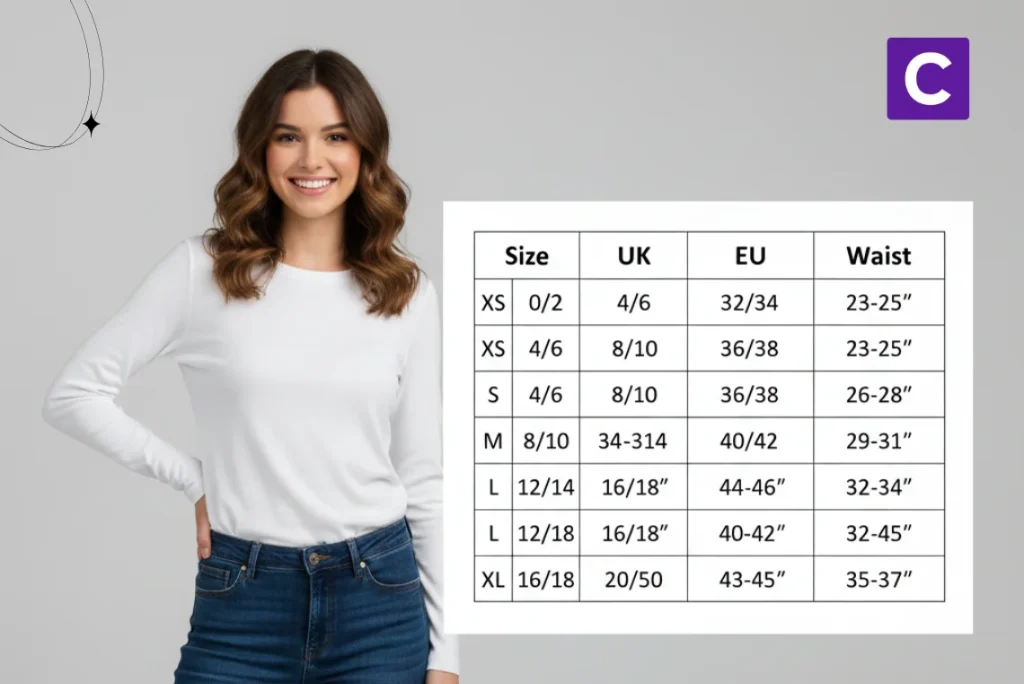
Below is a general dress size conversion chart. Always remember that this is a reference guide, not a guarantee.
| US Size | UK Size | EU Size | AUS Size | Asia Size |
| 2 | 6 | 34 | 6 | XS |
| 4 | 8 | 36 | 8 | S |
| 6 | 10 | 38 | 10 | M |
| 8 | 12 | 40 | 12 | L |
| 10 | 14 | 42 | 14 | XL |
| 12 | 16 | 44 | 16 | XXL |
Important: Fabric type, cut, and brand fit rules can shift sizing up or down.
Dress Size Conversion for Men
Men’s dress sizing works differently from women’s sizing. It often relies on chest, waist, or alpha sizing rather than numeric labels.
| US Size | UK Size | EU Size | AUS Size | Asia Size | Chest (inches) |
| XS | XS | 44 | XS | S | 34–36 |
| S | S | 46 | S | M | 36–38 |
| M | M | 48 | M | L | 38–40 |
| L | L | 50 | L | XL | 40–42 |
| XL | XL | 52 | XL | XXL | 42–44 |
| XXL | XXL | 54 | XXL | 3XL | 44–46 |
Why Men’s Conversion Is Different
Men’s dress sizing focuses more on measurements like chest width or waist size. This can make conversion slightly more predictable but still inconsistent across brands.
Men’s Dress Size Conversion Overview
- US and UK men’s sizing are often similar
- EU sizing usually appears larger numerically
- Asian men’s sizing often runs smaller
Men should still compare body measurements rather than rely only on conversion charts.
US to UK Dress Size Conversion
This is one of the most common conversion questions.
US to UK Dress Size Conversion
A general rule is to add 4 sizes when converting from US to UK.
| US Size | UK Size | Conversion Rule |
| 6 | 10 | Add 4 sizes |
| 8 | 12 | Add 4 sizes |
| 10 | 14 | Add 4 sizes |
| 12 | 16 | Add 4 sizes |
UK Size to US (Dress Conversion Chart)
Subtract 4 sizes when converting from UK to US.
| UK Size | US Size | Conversion Rule |
| 12 | 8 | Subtract 4 sizes |
| 14 | 10 | Subtract 4 sizes |
| 16 | 12 | Subtract 4 sizes |
⚠️ This rule works in many cases but may fail for fitted or structured dresses, where cut and fabric play a bigger role.
US to AUS Dress Size Conversion
Australian sizing is closely aligned with UK sizing.
| US Size | AUS Size | Notes |
| 6 | 10 | Similar to UK sizing |
| 8 | 12 | Similar to UK sizing |
| 10 | 14 | Check brand fit |
| 12 | 16 | Fabric stretch matters |
However, fabric stretch and brand design can still affect the final fit.
Common Dress Size Conversion Mistakes
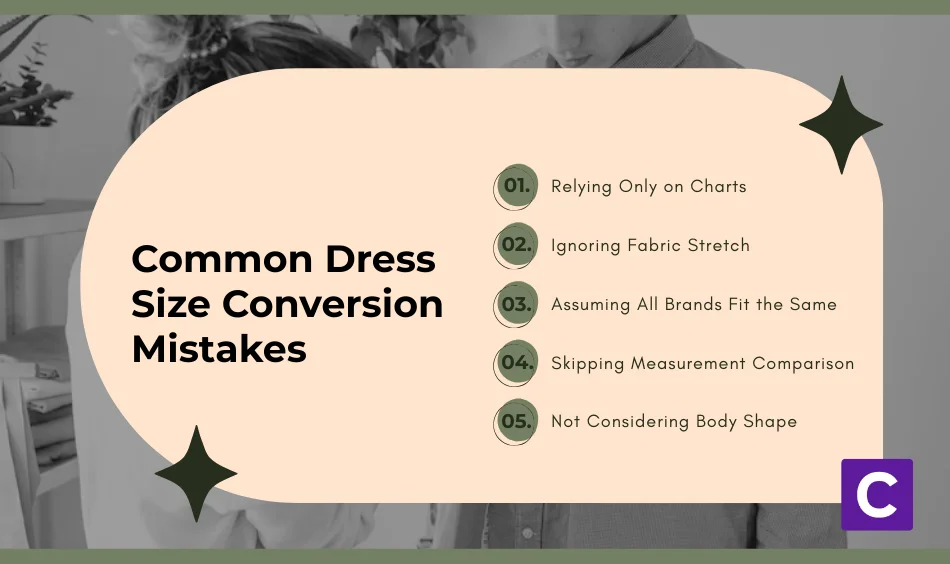
Many shoppers make avoidable mistakes when using dress size conversion charts, especially when shopping across regions or brands. These mistakes often lead to wrong-size orders, hesitation during checkout, and higher return rates. Below are the most common issues and why they matter.
Relying Only on Conversion Charts
Size charts show numeric equivalents, but they do not explain how a dress actually fits on the body. Charts ignore factors like cut, silhouette, and garment construction. This forces shoppers to guess, especially when the dress style is fitted or tailored.
Ignoring Fabric Stretch and Material Type
Fabric plays a major role in fit. Stretchy materials like jersey, knit, or elastane blends offer flexibility and may allow sizing down. Structured fabrics such as satin, linen, or woven cotton have little give and often require more precise sizing. Many shoppers overlook this, leading to tight or uncomfortable fits.
Assuming All Brands Fit the Same
Brand sizing differs even within the same country. A US size 8 from one brand may fit like a US size 6 from another. These variations come from different fit models and grading rules. This is why relying on past size experience alone often causes errors.
Skipping Measurement Comparison
Labels and conversion numbers are only references. Body measurements provide a more reliable foundation. Shoppers who skip comparing bust, waist, and hip measurements are more likely to choose the wrong size, especially when buying internationally.
Not Considering Body Shape and Proportions
Two people with identical measurements can have very different body shapes. Shoulder width, torso length, and hip placement all affect how a dress fits. Conversion charts cannot account for these differences, which is why some dresses feel right in one area but wrong in another.
Overlooking Fit Descriptions and Model Information
Modern product pages often include fit notes like “runs small,” “relaxed fit,” or “model wears size M.” Shoppers who ignore these details miss valuable context that can guide better size choices.
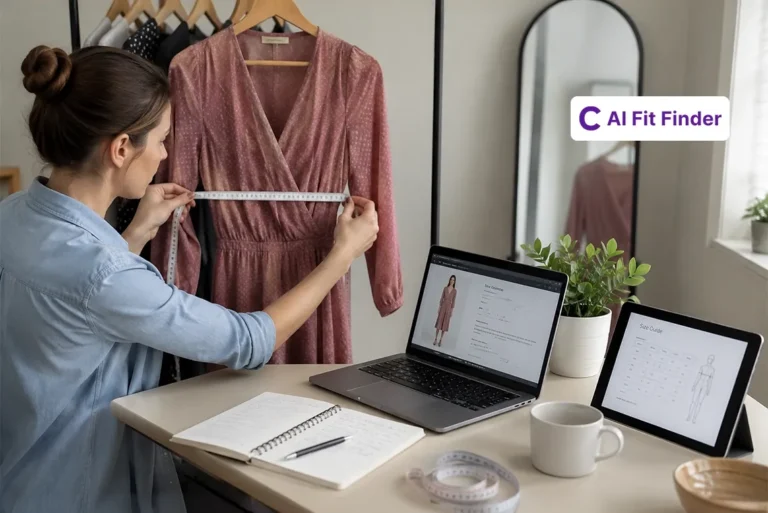
Dress size conversion works best when you start with accurate body measurements. Before using any conversion chart, it’s important to measure your bust, waist, and hips correctly. Our step-by-step guide on how to measure for a dress explains the exact process, common mistakes to avoid, and tips for getting reliable measurements at home.
How Dress Size Conversion Affects Online Shopping Returns
Size confusion directly impacts return rates.
Wrong Conversions Lead to Wrong Orders
When shoppers choose the wrong converted size, returns increase.
Returns Reduce Confidence
A bad fit experience makes shoppers more cautious during future visits.
Conversion Rates Suffer
Hesitation caused by size uncertainty reduces completed purchases.
How to Choose the Right Size When Shopping Internationally
Shoppers can reduce mistakes by following a structured approach.
Step 1: Start With Body Measurements
Measurements provide a stable reference across regions.
(Internal link opportunity: How to Measure for a Dress)
Step 2: Use Brand-Specific Charts
Always prioritize the brand’s own size guide.
Step 3: Read Fit Descriptions
Words like slim, relaxed, or oversized matter.
Step 4: Compare Model Information
Model height, size worn, and fit notes offer helpful context.
Step 5: Use Smart Fit Tools
Tools that combine measurements, fit preference, and brand data reduce guesswork.
Size Charts vs AI Fit Tools for Dress Size Conversion
| Factor | Size Charts | AI Fit Tools |
| Accuracy | Medium | High |
| Body Shape | Ignored | Considered |
| Brand Differences | Manual | Automatic |
| Mobile Experience | Limited | Optimized |
| Return Risk | Higher | Lower |
Size charts help, but AI fit tools provide deeper guidance by adjusting for multiple variables.
How AI Fit Finder Helps With Dress Size Conversion
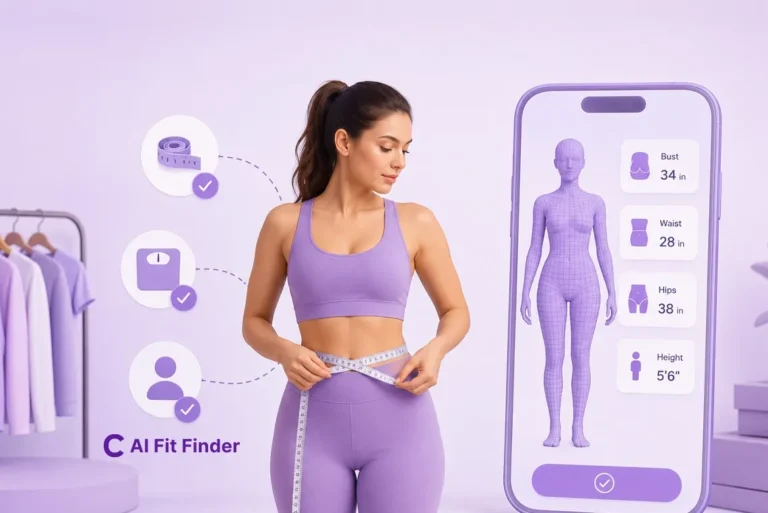
AI Fit Finder helps shoppers navigate dress size conversion by combining measurements, fit preferences, and brand-specific data. Instead of manually comparing charts, shoppers receive guided size suggestions that adapt across regions.
For fashion stores, this approach reduces size-related returns and increases buyer confidence during checkout.
FAQs About Dress Size Conversion
1. Why do dress sizes differ by country?
Each region uses its own sizing system based on historical and demographic factors.
2. Is UK sizing smaller than US sizing?
Yes. UK sizes are usually four numbers higher than US sizes.
3. How accurate are dress size conversion charts?
Charts provide guidance but do not guarantee fit.
4. Should I size up when buying from Asia?
Often, yes, because Asian sizing tends to run smaller.
5. Can AI tools replace size conversion charts?
AI tools improve accuracy by analyzing more data points than charts alone.
Conclusion
Dress size conversion plays a major role in online fashion shopping. Confusion between US, UK, EU, and Asian sizing leads to hesitation, wrong orders, and high return rates. Conversion charts help, but they are only part of the solution.
Shoppers who combine body measurements, brand-specific charts, and smart sizing tools achieve better results. Fashion brands that improve size clarity also benefit from higher conversion rates and stronger customer trust.
Understanding dress size conversion is no longer optional. It is essential for confident global shopping and sustainable fashion e-commerce growth.