
Finding the right dress size can feel confusing, especially when shopping online. If you’ve ever ordered a dress that didn’t fit as expected, you’re not alone. Understanding how to find out your dress size is one of the biggest challenges for online fashion shoppers today. Different brands follow different sizing rules, body shapes vary widely, and fabric types affect how a dress fits.
This complete guide explains the exact steps to find your accurate dress size, common mistakes to avoid, global size conversions, and how modern AI tools such as AI Fit Finder give you a more personalized size suggestion. Whether you’re buying a casual dress, a formal gown, or a bodycon style, this guide helps you shop with confidence.
Why Finding Your Dress Size Is Still Hard Today
Even with size charts on product pages, many shoppers struggle to pick the correct dress size. Below are the main reasons.
Inconsistent Sizing Across Brands
A size “M” from one brand may fit like an “S” or “L” from another. Retailers design their own sizing standards, which causes confusion when comparing dresses.
Body Shape Differences Affect Fit
Two people with the same bust, waist, and hip measurements may have different proportions. Body shapes such as pear, hourglass, apple, or athletic influence how a dress drapes.
Fabric, Stretch & Style Impact Fit
Dress types such as wrap, bodycon, A-line, maxi, or shift styles all fit differently. Stretchy fabrics hug the body closer, while structured fabrics run tighter.
Regional Sizing Variations
US, UK, EU, and Asian dress sizes differ. A US size 8 does not equal a UK size 8. International buyers need clear conversions to avoid mistakes.
How to Find Out Your Dress Size (Step-by-Step Guide)
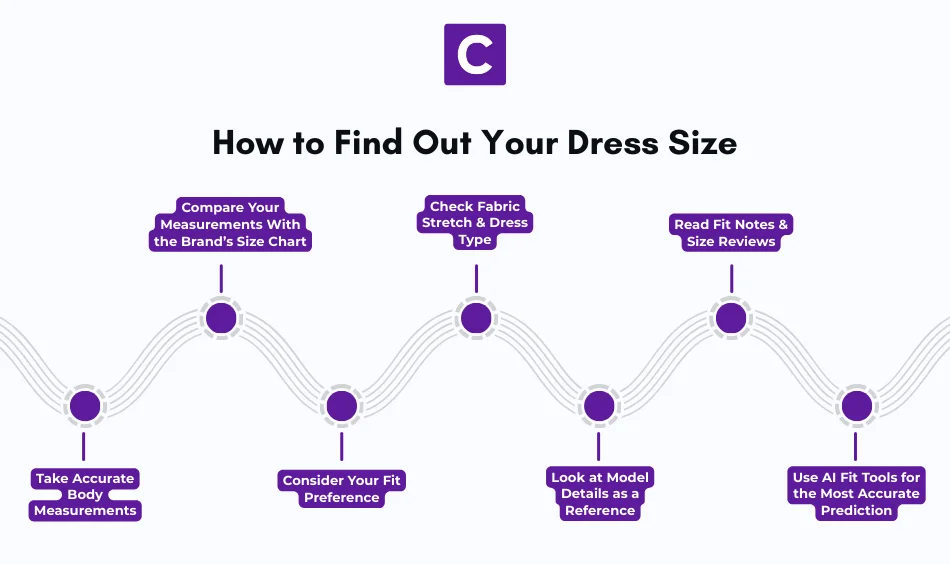
Below is a proven, accurate method used by stylists, brands, and fashion fit experts.
Step 1 — Take Accurate Body Measurements
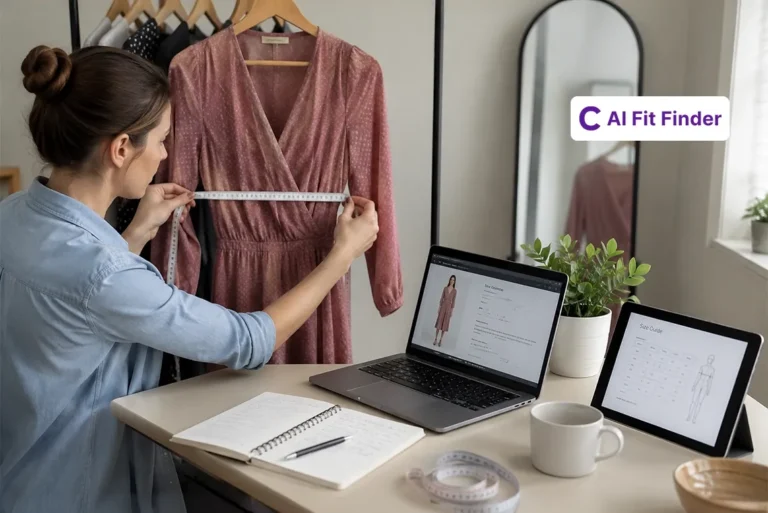
This is the most important step when learning how to measure for a dress. These measurements help match your body to the dress’s cut and design.
Measure the following:
Bust
Measure around the fullest part of your chest. Keep the tape straight and relaxed.
Waist
Measure the smallest part of your torso, usually above the belly button.
Hips
Measure around the widest part of your hips and bottom.
Shoulder Width
Useful for dresses with structured shoulders or fitted sleeves.
Height
Important for maxi dresses, gowns, and length-sensitive styles.
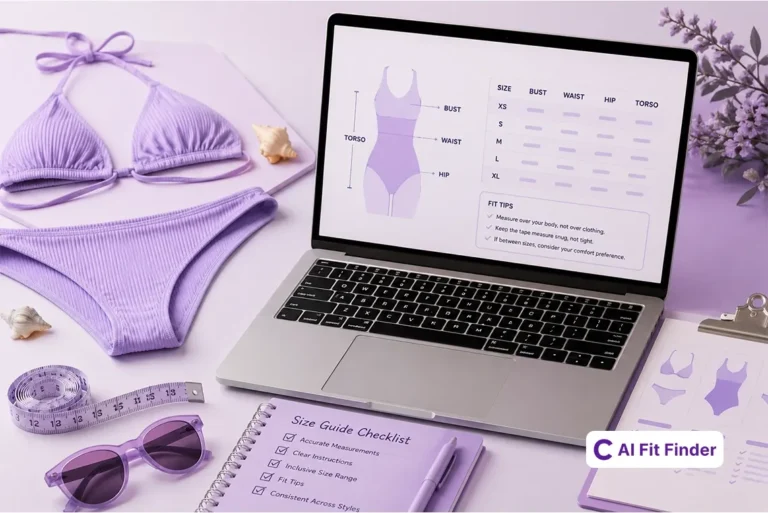
Step 2 — Compare Your Measurements With the Brand’s Size Chart
Each brand defines its own size chart based on factory patterns. Once you have your measurements:
- Match your bust, waist, and hip measurements to their chart
- See which size corresponds to most of your measurements
- Consider the garment fit notes (tight, regular, loose)
If you’re between sizes, consider the fabric stretch level and fit preference.
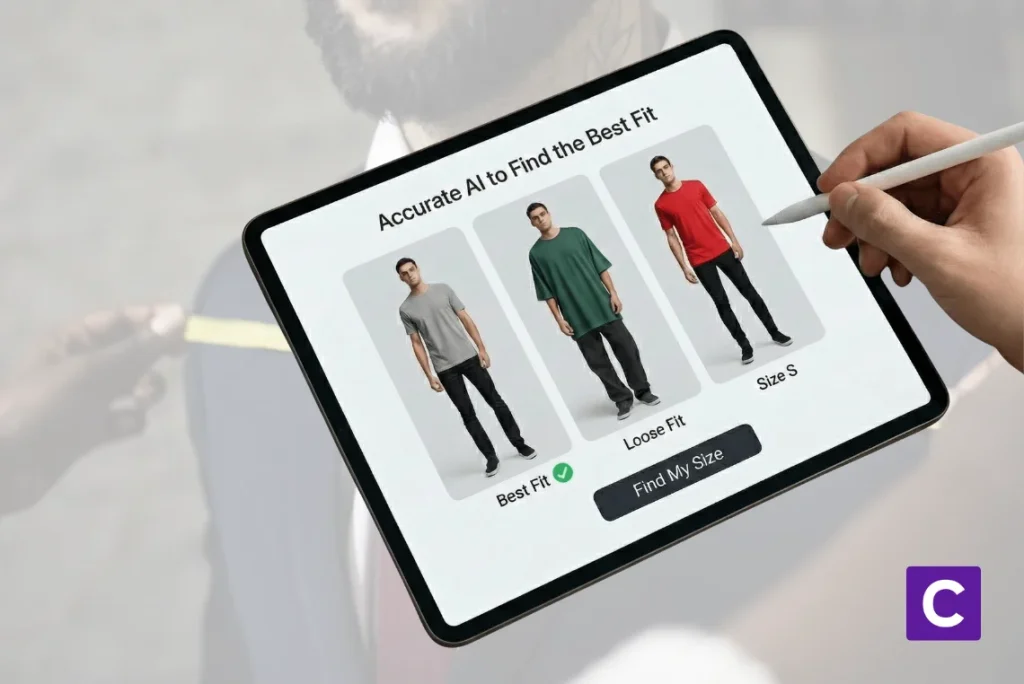
Step 3 — Consider Your Fit Preference
Even if the measurement matches perfectly, your personal style influences the best size for you:
- Tight fit → may require sizing down
- Regular fit → follow the chart size
- Loose fit → may size up depending on dress type
AI Fit Finder tools factor fit preference automatically.
Step 4 — Check Fabric Stretch & Dress Type
Fabric stretch changes how the dress fits.
- 0–2% stretch: more structured, may feel tighter
- 5–10% stretch: flexible but still fitted
- 10%+ stretch: body-hugging, flattering on curves
Dress types like wrap dresses or A-line dresses are more forgiving, while bodycon dresses require precise sizing.
Step 5 — Look at Model Details as a Reference
Most fashion brands now share:
- Model height
- Model measurements
- Dress size worn in photos
This helps understand how the dress fits someone with similar proportions.
Step 6 — Read Fit Notes & Size Reviews
Real shopper reviews often reveal:
- “Runs small”
- “Runs large”
- “Tight at the bust.”
- “Perfect for curvy shapes.”
Reviews provide context no chart can match.
Step 7 — Use AI Fit Tools for the Most Accurate Prediction
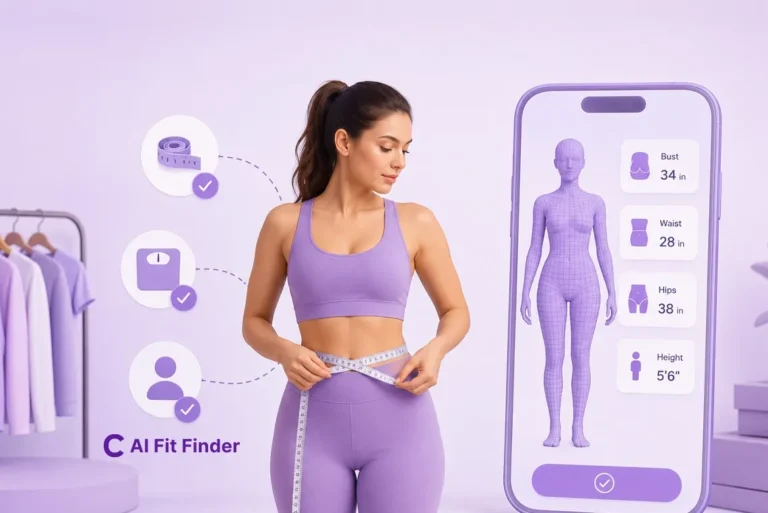
Size charts still require manual interpretation, and most shoppers skip complex steps, especially on mobile. AI tools like AI Fit Finder analyze:
- Body measurements
- Fit preference
- Height + weight
- Past return behavior
- Dress cut + fabric type
- Brand-specific sizing
- Regional differences
The result is a personalized size suggestion that’s far more accurate than guessing or relying only on static tables.
Fashion stores that want better size clarity and higher conversions often benefit from a structured sizing approach. If you want to understand how size tools influence buyer decisions, you can read our detailed guide on how a size chart Shopify app boosts fashion conversions and helps shoppers make more confident purchases.
Dress Size Conversion Chart (US, UK, EU, Asian)
|
US Size |
UK Size | EU Size | Asian Size (Approx.) |
|
2 |
6 | 34 | S |
|
4 |
8 | 36 | S/M |
|
6 |
10 | 38 |
M |
| 8 | 12 | 40 |
M/L |
| 10 | 14 | 42 |
L |
| 12 | 16 | 44 |
XL |
| 14 | 18 | 46 |
XXL |
(This table can be expanded per dress type.)
How AI Fit Tools Improve Dress Size Accuracy
Traditional charts cannot handle personal variables, but AI tools can. Here’s why they’re becoming essential.
AI Analyzes More Data
AI considers measurements, body structure, regional differences, fabric, reviews, and real user behavior.
AI Reduces Bracketing
Bracketing = ordering 2–3 sizes → returning the rest.
AI suggestions reduce this dramatically.
AI Is More Reliable for First-Time Shoppers
New customers often cannot estimate their size. AI helps them pick the first time.
AI Learns & Improves Over Time
Unlike static charts, AI evolves as shoppers interact with products.
Common Mistakes Shoppers Make When Finding Their Dress Size
Even experienced shoppers make sizing errors that lead to disappointment and returns. Understanding these mistakes and how to avoid them helps improve fit accuracy and confidence when buying dresses online. Here are the most common issues:
1. Guessing Based on Past Purchases
Many shoppers assume they know their size because they always buy “M” or “8.” But dress sizing changes across brands, regions, and styles. Studies show that up to 40% of online returns happen because shoppers rely on outdated size assumptions rather than actual measurements. With inconsistent sizing across brands, guessing almost always leads to mistakes.
2. Ignoring Fabric Details and Stretch Levels
Fabric type plays a big role in how a dress fits. A structured satin dress fits differently from a stretchy jersey dress, even if both are labeled the same size. Shoppers often skip the fabric section, but the stretch percentage can influence whether you should size up or down.
Modern product pages now include stretch ratings (“no stretch,” “slight stretch,” “high stretch”), but many users still ignore them.
3. Measuring Incorrectly or Using Old Measurements
A small error in bust, waist, or hip measurement can cause a full-size mismatch. Another common mistake is using body measurements taken months or years ago.
Because body shape and posture change over time, experts recommend re-measuring every 3–6 months for the most accurate results.
4. Relying Only on Model Photos
Product photos can be misleading. Models often wear pinned, altered, or sample-size dresses during shoots. Shoppers try to compare their body shape to the model, which rarely works.
Brands such as ASOS and Aerie now show multiple models per product, but relying solely on visuals still leads to wrong size expectations.
5. Skipping the Size Chart on Mobile Devices
Mobile shoppers scroll quickly and often miss or skip the size guide because it’s hidden behind a small icon. Poor mobile UX is a major reason shoppers pick the wrong size.
Recent UX studies show that over 60% of shoppers do not open the size chart when browsing on mobile, which increases the likelihood of returns.
6. Not Considering Their Body Shape
Dress fit depends heavily on proportions, not just measurements. Two people with the same bust and hip numbers may have different body shapes (pear, apple, hourglass, rectangle), and the dress may fit each one differently.
AI tools have become popular because they consider shape, not just numbers.
Dress Size Tips for Different Dress Types
Bodycon Dresses
Follow bust + hip measurements strictly.
A-Line Dresses
More forgiving at the hips.
Wrap Dresses
Adjustable; waist measurement is key.
Maxi & Long Dresses
Height matters significantly.
Formal Dresses
Bust + shoulder width is crucial for structured fits.
When to Use Size Charts vs AI Fit Tools
Below is a detailed comparison table to help shoppers understand the best scenario for each sizing method:
| Use Case | Size Charts | AI Fit Tools |
| Best For | Shoppers with accurate, up-to-date body measurements | Shoppers who want quick, personalized size suggestions |
| Accuracy Level | Medium (depends on correct measuring & chart clarity) | High (considers body shape, fit preference, fabric, brand patterns) |
| Works Best On | Desktop browsing | Mobile browsing & fast decision-making |
| When Fabric Is… | Structured, non-stretch fabrics where exact measurements matter | Stretchy, blended, variable fabrics require interpretation |
| Time Required | More time — needs to compare numbers manually | Instant — one-tap suggestion |
| Understanding Brand Sizing | Requires awareness of brand differences | AI adjusts for brand-specific sizing automatically |
| Body Shape Support | None — only measurement-based | Yes — considers shape & proportional differences |
| Fit Preference | Must be interpreted manually | Integrated (tight/regular/loose) |
| Ideal For | Tailored dresses, formal wear, gowns | Every day dresses, online shopping, fast browsing |
| Mobile Experience | Low — charts are often hard to view on small screens | High — designed for mobile first |
| Return Risk | Higher if measurements or charts are misunderstood | Lower due to personalized recommendations |
| International Shopping | Requires manual conversion between US/UK/EU/Asian sizes | AI detects region & recommends correct size |
| Beginner Friendliness | Requires some experience | Very easy, even for first-time shoppers |
| Data Used | Bust, waist, hips | Measurements + height, weight, shape, fabric, returns data, brand behavior |
| Best Situation | When shoppers want full control over numbers | When shoppers want speed, accuracy, and confidence |
How AI Fit Finder Helps You Find Your Dress Size
AI Fit Finder gives accurate size suggestions for dresses of all styles. It supports global sizing systems, works seamlessly on mobile devices, and utilizes intelligent logic to minimize guesswork. It also helps fashion brands reduce returns and improve buyer satisfaction.
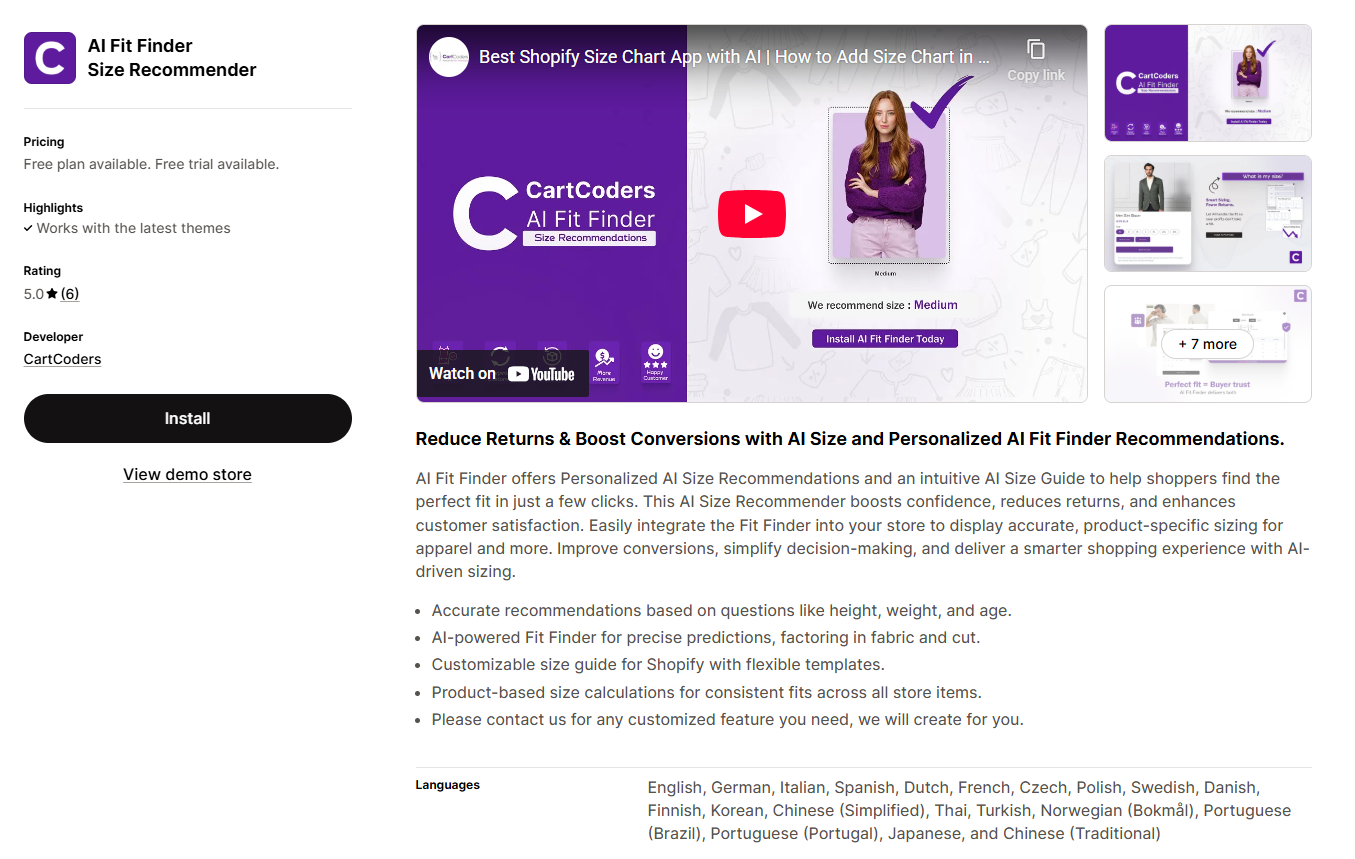
👉 Try AI Fit Finder: https://apps.shopify.com/ai-size-chart-app
FAQs About How to Find Out Your Dress Size
- What’s the easiest way to find my dress size?
Measure bust, waist, hips → compare with size chart → use AI tool. - Do brands have different dress sizes?
Yes. That’s why charts differ. - How to Measure for a Dress Correctly?
Use soft tape, measure bust/waist/hips accurately, and follow the guidelines above. - What if I’m between two sizes?
Choose based on fabric stretch and fit preference. - Is AI sizing more accurate than charts?
Yes—AI analyzes many more data points. - Can I find my dress size without measurements?
AI tools help, but measurements are always best.
Conclusion
Learning how to find out your dress size helps you shop smarter and avoid wrong-size orders. By measuring correctly, checking charts, reading reviews, and using AI tools like AI Fit Finder, you can find the perfect fit every time. Accurate sizing leads to fewer returns, more confidence, and better shopping experiences.