

Vanity sizing has quietly shaped the fashion industry for decades. What began as a marketing tactic to make shoppers feel better about clothing sizes has now become one of the most overlooked problems in online apparel sales. For Shopify brands, vanity sizing is no longer just a design or labeling issue. It directly affects shopper confidence, conversion rates, return volumes, and long-term brand trust.
Many apparel brands underestimate the real cost of vanity sizing. Shoppers may not always recognize it by name, but they feel its impact every time a size does not fit as expected. In e-commerce, where buyers cannot try items on, this confusion becomes even more damaging.
This article explains what vanity sizing is, why it exists, how it confuses online shoppers, and why it silently hurts Shopify brands. More importantly, it explores how apparel merchants can move beyond vanity sizing toward size accuracy and confidence-driven growth.
What Is Vanity Sizing?
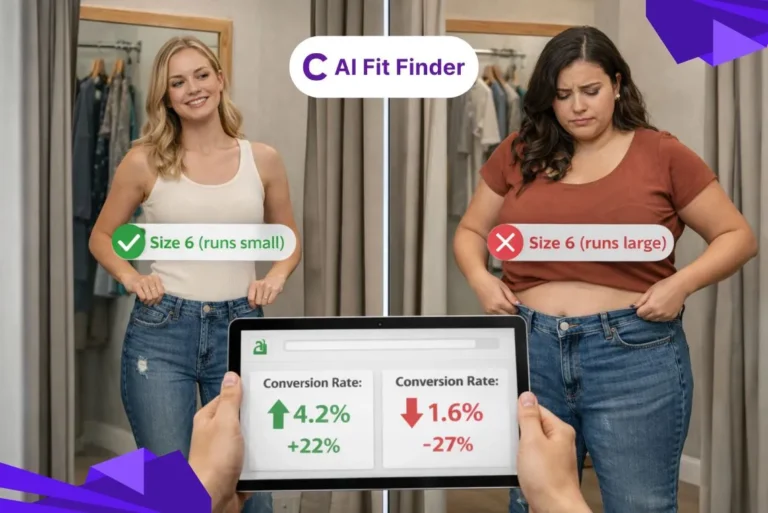
Vanity sizing is the practice of labeling clothing with smaller size numbers than the garment’s actual measurements would traditionally indicate. For example, a dress that once measured as a size 8 might now be labeled as a size 6 or even a size 4.
The garment itself has not changed. Only the label has.
Vanity sizing is based on the idea that shoppers feel better when they fit into a smaller size. While this may boost short-term emotional appeal in physical stores, it creates serious problems in online shopping, where fit accuracy matters more than perception.
Vanity Sizing vs Standard Sizing
There is no global standard for clothing sizes. Each brand defines its own sizing rules based on design choices, target customers, and market positioning. Vanity sizing takes this flexibility further by deliberately shrinking size labels over time.
In physical retail, shoppers can try multiple sizes until one feels right. Online, they must rely on size labels, charts, and guidance. This is where vanity sizing confuses.
Understanding vanity sizing becomes much easier when shoppers know their real body measurements. If buyers rely only on size labels, confusion increases across brands and collections. This is why every apparel store should also help customers learn how to find out your dress size using accurate measurements, so they can make confident size decisions even when labels differ.
Why Vanity Sizing Exists in the Fashion Industry
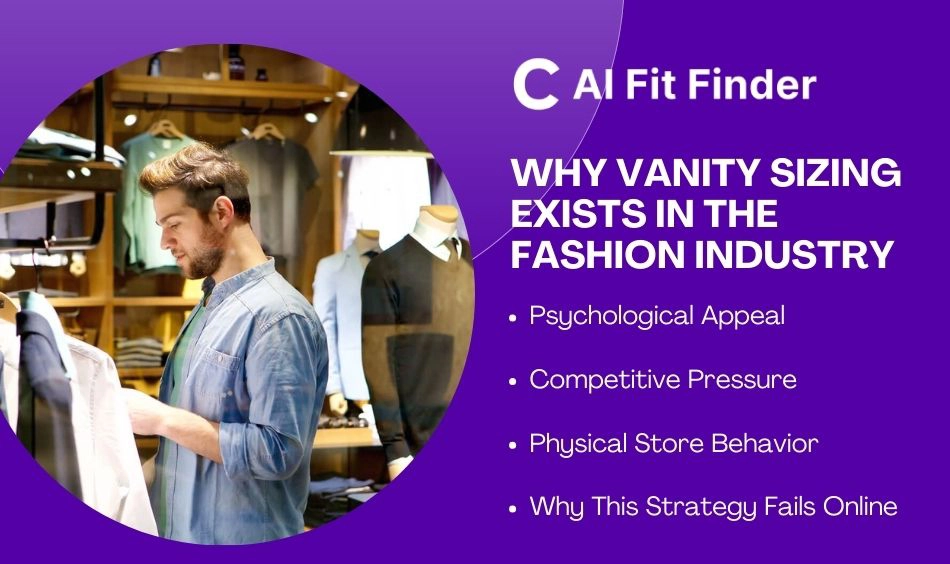
Vanity sizing did not appear by accident. Several forces contributed to its rise.
Psychological Appeal
Shoppers often associate smaller sizes with attractiveness, confidence, and status. Brands learned that customers were more likely to buy when they felt good about the size they selected.
Competitive Pressure
As brands compete for attention, size labels have become a subtle marketing tool. If one brand labels garments more generously, shoppers might feel better choosing that brand over others.
Physical Store Behavior
In physical stores, vanity sizing worked because shoppers could try on multiple items. The emotional reward came from the label, not necessarily the fit.
Why This Strategy Fails Online
Online shopping removes the fitting room. Without the ability to try clothes on, shoppers depend heavily on size accuracy. Vanity sizing breaks that trust and introduces uncertainty at the most critical decision point.
How Vanity Sizing Confuses Online Shoppers
Vanity sizing affects shoppers differently online than in-store. In e-commerce, size confusion directly interrupts the buying journey.
Shoppers Expect Consistency
Online shoppers expect consistency across brands and purchases. When a shopper orders the same labeled size but receives garments that fit differently, confidence drops.
Size Labels Lose Meaning
When labels no longer reflect actual measurements, shoppers stop trusting them. This forces buyers to guess, hesitate, or abandon the purchase entirely.
The First-Time Buyer Problem
First-time buyers are the most vulnerable. They do not yet understand a brand’s sizing behavior. A single bad fit experience can prevent future purchases.
The Hidden Business Cost of Vanity Sizing for Shopify Brands
Vanity sizing rarely shows up as a line item in analytics dashboards, but its impact is real and measurable.
Lower Conversion Rates
When shoppers hesitate at the size selection stage, conversion rates suffer. Many visitors leave the product page without adding items to the cart simply because they are unsure about fit.
Higher Cart Abandonment
Size uncertainty often resurfaces during checkout. Even after adding items to the cart, shoppers may rethink their choice and abandon the purchase.
Increased Return Rates
Returns are one of the most expensive consequences of vanity sizing. When garments do not fit as expected, shoppers return them. Each return costs money in shipping, handling, and lost inventory value.
Reduced Customer Lifetime Value
A poor sizing experience reduces trust. Shoppers who return items due to fit issues are less likely to buy again. This quietly erodes long-term revenue.
Vanity Sizing and Return Rates in Apparel E-commerce
“Didn’t fit as expected” is one of the most common reasons for apparel returns. Vanity sizing plays a major role in this issue.
Shoppers may choose a size based on past experiences, only to receive a garment that feels smaller, larger, tighter, or looser than expected. This mismatch creates frustration.
Over time, return-heavy customers become cautious buyers. They spend more time deciding or avoid purchasing altogether. This behavior impacts future conversion rates and brand loyalty.
Why Size Charts Fail to Fix Vanity Sizing
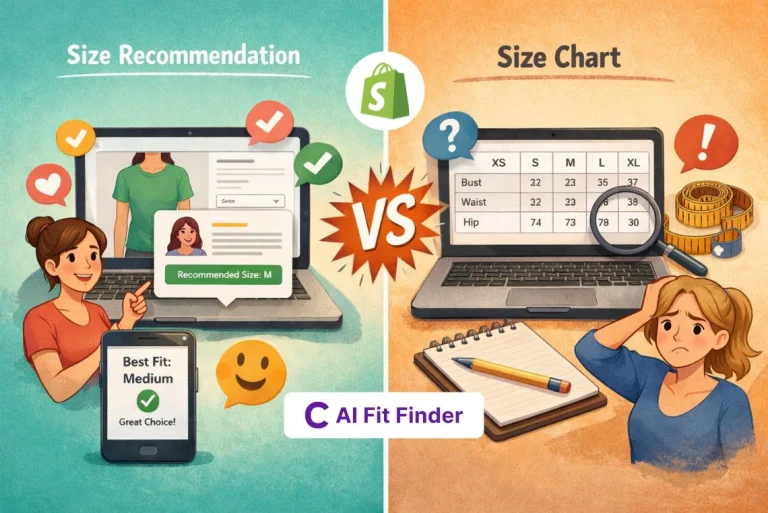
Many brands rely on size charts to compensate for inconsistent sizing. Unfortunately, charts rarely solve the underlying problem.
Charts Assume Accurate Measurements
Size charts require shoppers to measure themselves correctly. Many do not. Even small measurement errors can lead to incorrect size selection.
Charts Do Not Explain Fit
Charts show numbers but do not explain how a garment fits when worn. Fabric stretch, cut, and design details matter, but charts rarely account for them.
Vanity Sizing Undermines Chart Reliability
When labels do not match historical expectations, charts become harder to trust. Shoppers may follow the chart and still receive an unexpected fit.
Vanity Sizing vs Size Accuracy: What Shoppers Actually Want
Shoppers do not care about fitting into a smaller label. They care about comfort, confidence, and predictability.
Size accuracy means:
- Consistent fit across products
- Clear expectations before purchase
- Fewer surprises after delivery
In e-commerce, accuracy builds trust. Perception tricks do not.
How Vanity Sizing Impacts Shopify Conversion Rates
Vanity sizing creates friction before checkout even begins.
Shoppers ask themselves:
- Should I size up or down?
- Does this brand run small or large?
- What if it doesn’t fit and I have to return it?
These unanswered questions slow decision-making. Slower decisions lead to lower conversion rates.
Discounts, better images, and faster checkout flows cannot fix this problem if size confidence remains low.
Vanity Sizing vs Modern Size Guidance
Below is a clear comparison that highlights why vanity sizing struggles in e-commerce and why accurate size guidance performs better.
| Factor | Vanity Sizing | Size Accuracy & Guidance |
| Label consistency | Low | High |
| Shopper confidence | Low | High |
| Conversion impact | Negative | Positive |
| Return rates | Higher | Lower |
| Trust over time | Declines | Improves |
| Suitability for e-commerce | Poor | Strong |
This comparison explains why more Shopify brands are rethinking their sizing strategy.
Why Apparel Shopify Brands Are Rethinking Vanity Sizing
The e-commerce landscape has changed. Shoppers are more informed and less tolerant of friction.
Rising Return Costs
Shipping and logistics costs continue to increase. Brands can no longer afford to avoid returns caused by poor size clarity.
Stronger Competition
Shoppers can switch brands instantly. One poor sizing experience is enough to lose a customer to a competitor.
Mobile-First Shopping
Mobile shoppers expect instant clarity. Vanity sizing combined with unclear charts fails badly on small screens.
Modern Alternatives to Vanity Sizing in E-commerce
Forward-thinking Shopify brands are moving away from vanity sizing and toward clarity-driven strategies.
Fit Transparency
Brands now describe how garments fit:
- Slim, regular, or relaxed
- Structured or stretchy
- Designed to size up or down
This context helps shoppers visualize fit.
Brand-Specific Size Logic
Instead of generic labels, brands define how their sizing behaves across collections.
Guided Size Selection
Guidance replaces guesswork. Shoppers receive guidance rather than raw data.
How Size Recommendation Tools Reduce the Impact of Vanity Sizing
Size recommendation tools help bypass misleading labels altogether.
Rather than relying on size numbers, these tools guide shoppers based on:
- Body inputs
- Fit preferences
- Brand-specific behavior
This approach:
- Reduces hesitation
- Improves conversion rates
- Lowers return volume
Most importantly, it rebuilds trust.
Why Shopify Brands Must Treat Sizing as a Growth Strategy
Sizing is no longer a support feature. It is a growth lever.
Brands that focus on size accuracy see:
- Higher conversion rates
- Lower return rates
- Stronger repeat purchase behavior
Vanity sizing, by contrast, creates short-term emotional wins but long-term business losses.
How AI Fit Finder Helps Shopify Brands Move Beyond Vanity Sizing
AI Fit Finder supports size accuracy by focusing on guidance rather than labels. It helps Shopify apparel brands:
- Normalize sizing logic across products
- Guide shoppers toward the most likely fit
- Improve confidence without relying on misleading size numbers
This allows brands to maintain consistent experiences even when sizing varies across collections.
Common Myths About Vanity Sizing
“Vanity sizing makes shoppers happier.”
It may be brief, but confusion and returns quickly erase that benefit.
“Everyone does it, so it doesn’t matter.”
In e-commerce, inconsistency matters more than ever.
“Size charts fix vanity sizing.”
Charts alone cannot overcome misleading labels.
Frequently Asked Questions About Vanity Sizing
1. What is vanity sizing in fashion?
Vanity sizing in fashion is the practice of labeling clothing with smaller size numbers than the garment’s actual measurements. Brands do this to make shoppers feel better about fitting into a smaller size, even though the physical dimensions of the clothing may not have changed.
2. What are standard vanity widths?
There are no official “standard” vanity widths in fashion sizing. Vanity sizing varies widely by brand, region, and target audience. Each brand defines its own size labels, which is why the same size can fit very differently across different stores.
3. What is the minimum size for a double vanity?
In home design, the minimum width for a double vanity is typically around 60 inches. This term is unrelated to fashion vanity sizing but often appears in search queries due to the shared word “vanity.”
4. Why is vanity sizing common in the fashion industry?
Vanity sizing became common because it appeals to shopper psychology. Many customers associate smaller sizes with confidence and attractiveness. Over time, brands adopted vanity sizing to stay competitive and make shoppers feel more positive during the buying experience, especially in physical retail.
5. How does vanity sizing affect online shopping?
In e-commerce, vanity sizing creates confusion because shoppers cannot try items on. When size labels don’t match real fit expectations, shoppers hesitate, abandon carts, or order the wrong size. This leads to lower conversion rates and higher returns for online fashion brands.
6. Can vanity sizing increase returns?
Yes. Vanity sizing often leads to mismatched expectations. Shoppers choose a size based on the label, but receive a garment that fits differently than expected. This is a major contributor to “didn’t fit as expected” returns in apparel ecommerce.
7. How can Shopify brands reduce the impact of vanity sizing?
Shopify brands can reduce the impact of vanity sizing by focusing on size accuracy instead of labels. This includes providing clear fit descriptions, using brand-specific sizing logic, offering guided size recommendations, and helping shoppers choose the right size based on fit rather than numbers alone.
Final Thoughts: The Real Cost of Vanity Sizing
Vanity sizing may seem harmless, but its hidden cost is significant. It creates confusion, lowers conversion rates, increases returns, and erodes trust over time.
For Shopify apparel brands, growth depends on confidence, not perception tricks. Shoppers want accuracy, clarity, and predictability. Brands that move beyond vanity sizing and invest in size accuracy position themselves for long-term success.
In e-commerce, the brands that win are not those with the smallest labels, but those with the clearest fit.