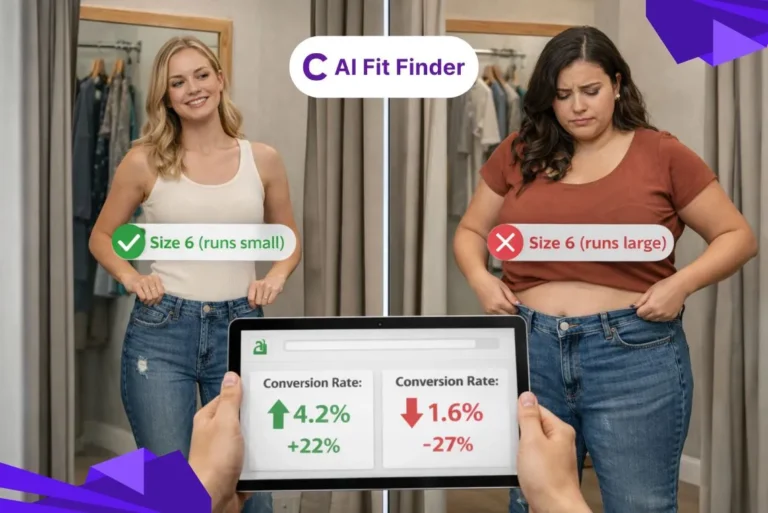

Sizing is one of the most decisive moments in fashion ecommerce. Shoppers may love your designs, trust your brand, and accept your pricing, but if they are unsure about size, the sale often stops right there.
For Shopify fashion stores, sizing is not just a support feature. It directly affects conversion rates, return volume, customer trust, and long-term growth. Yet many merchants still rely on traditional size charts alone, assuming that measurement tables are enough to guide shoppers.
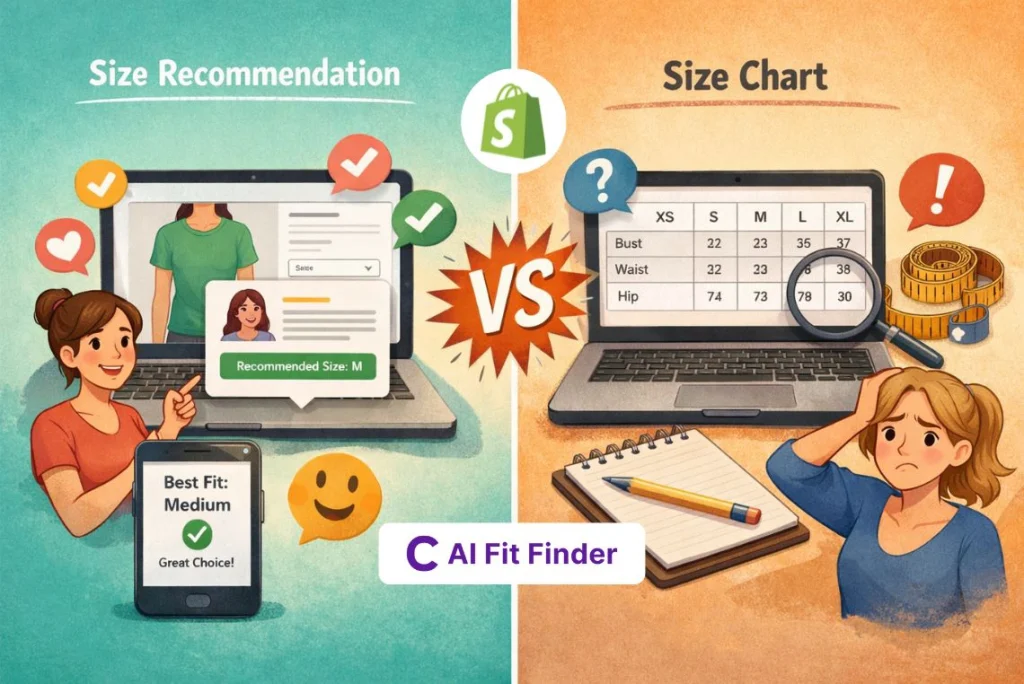
This article breaks down size recommendation vs Shopify size charts, explains how each affects buyer behavior, and shows which approach works better for modern Shopify stores. The goal is not to dismiss size charts entirely, but to understand where they fall short and how size recommendation tools solve the problems charts cannot.
Why Sizing Plays a Critical Role in Shopify Conversions
Fashion ecommerce works differently from other online retail categories. A shopper buying electronics knows exactly what they are getting. A shopper buying clothing must make a personal fit decision without trying the item on.
That decision carries risk.
When size confidence is low, hesitation increases. Hesitation shows up as:
- Lower add-to-cart rates
- Cart abandonment at checkout
- Delayed purchases
- Higher return rates after purchase
Shopify conversion rate optimization often focuses on traffic, page speed, or checkout flow. While those factors matter, sizing uncertainty can block conversions long before checkout begins.
Sizing is a psychological decision as much as a technical one. The easier you make it for shoppers to feel confident, the more likely they are to buy.
What Is a Shopify Size Chart?
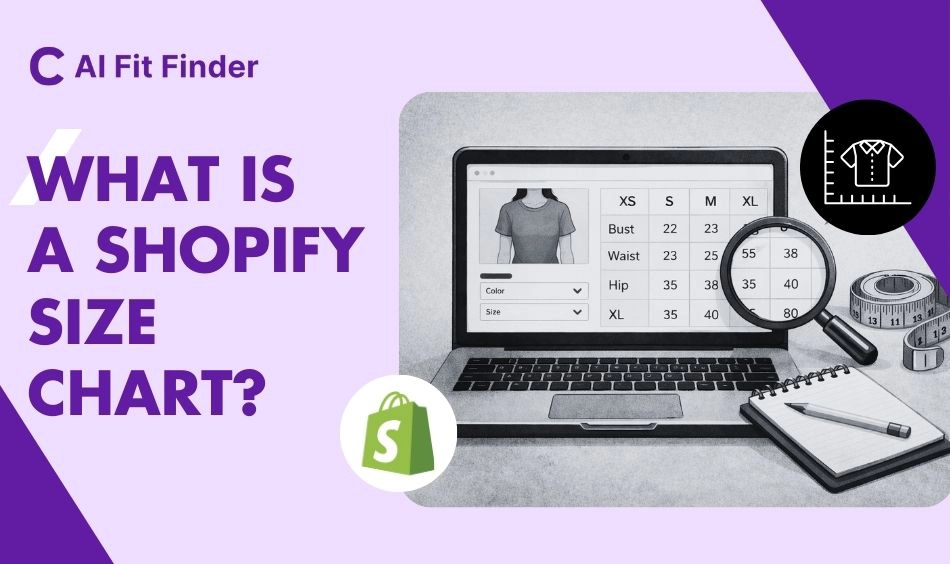
A Shopify size chart is a static reference table that shows garment measurements or size labels. Most charts include information such as:
- Bust, waist, and hip measurements
- Alpha sizing (XS, S, M, L, XL)
- Numeric sizing (US 2–12, EU 36–44)
- Basic conversion tables
Size charts are typically added to product pages as pop-ups, tabs, or expandable sections.
How Shopify Size Charts Are Commonly Used
Size charts are designed to help shoppers compare their body measurements with garment dimensions. In theory, this allows buyers to select the correct size.
For some shoppers, size charts work reasonably well:
- Buyers who already know their measurements
- Customers familiar with the brand’s sizing
- Desktop shoppers are willing to compare numbers
However, real-world shopping behavior rarely matches this ideal scenario.
Limitations of Traditional Shopify Size Charts
While size charts provide information, they often fail to guide decisions. This difference matters.
Size Charts Require Extra Effort From Shoppers
Most shoppers do not browse with a measuring tape in hand. On mobile devices, especially, shoppers avoid:
- Zooming into tables
- Comparing multiple columns
- Interpreting unfamiliar measurement formats
When effort increases, momentum drops.
Charts Do Not Account for Body Shape or Fit Preference
Two shoppers with the same measurements may want very different fits. One prefers a slim look. Another prefers a relaxed fit. Size charts cannot adapt to this difference.
Charts show numbers, not outcomes.
Poor Mobile Experience
Mobile shopping dominates fashion ecommerce. Many size charts:
- Are hidden behind small links
- Load slowly
- Display poorly on small screens
This leads shoppers to skip size charts altogether and guess their size, often incorrectly.
Brand-to-Brand Inconsistency
Sizing standards vary widely between brands. A “Medium” in one store may fit like a “Large” in another. Size charts rarely explain how a brand runs relative to expectations.
This uncertainty limits their effectiveness.
What is the size recommendation on Shopify?
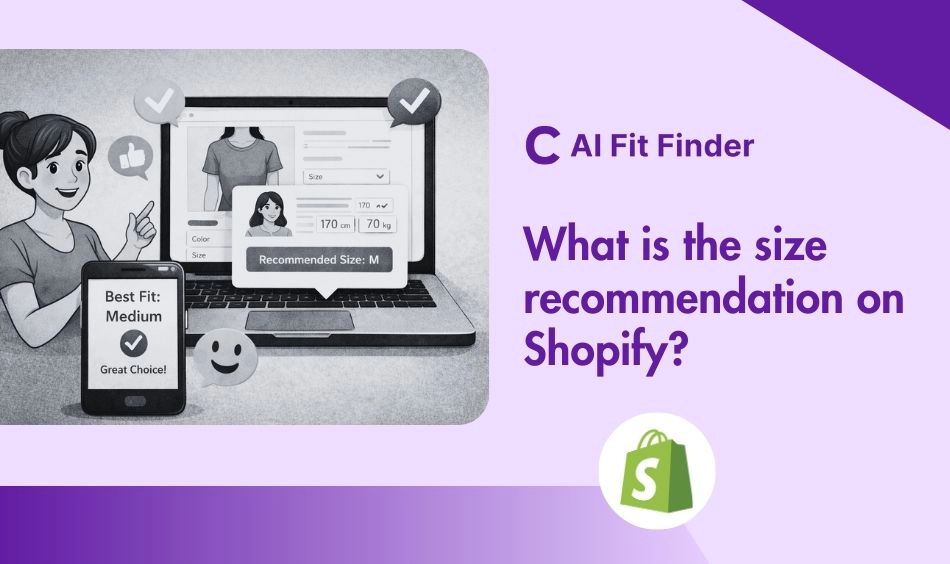
Size recommendation tools move beyond static data. Instead of asking shoppers to interpret measurements, they guide them toward the most likely fit.
A size recommendation Shopify solution typically uses:
- Height and weight inputs
- Fit preference (tight, regular, loose)
- Brand-specific sizing behavior
- Product-level fit rules
- Historical data (returns, purchases, feedback)
Rather than showing raw numbers, size recommendation tools answer the question shoppers actually care about:
“Which size should I buy?”
Many Shopify merchants exploring size recommendation tools also consider virtual fit room solutions. For a deeper understanding of how these tools work together, read our detailed guide on Shopify virtual fit room apps and how size recommendations work. This guide explains how visual fit guidance and smart sizing combine to enhance shopper confidence and reduce returns.
How Size Recommendation Tools Change Shopper Behavior
The difference between information and guidance is critical.
Size charts provide shoppers with the measurements.
Size recommendation tools tell shoppers what to do.
This shift reduces mental effort and removes decision fatigue.
Faster Decisions
When shoppers receive a clear recommendation, they move faster toward checkout. They do not need to analyze charts or compare numbers.
Higher Confidence
Confidence increases when responsibility shifts from the shopper to the system. Shoppers feel supported rather than left to guess.
Reduced Fear of Returns
Clear guidance reduces anxiety about wrong sizing. When fear drops, conversion increases.
Size Recommendation vs Shopify Size Chart: Side-by-Side Comparison
Below is a clear comparison to highlight the differences between traditional size charts and modern size recommendation tools.
| Feature | Shopify Size Chart | Size Recommendation Shopify |
| Shopper effort | High | Low |
| Personalization | None | Yes |
| Fit preference support | No | Yes |
| Mobile usability | Weak | Strong |
| Body shape consideration | No | Yes |
| Conversion impact | Limited | Strong |
| Return reduction | Minimal | Significant |
| Learning over time | No | Yes |
This comparison explains why many Shopify fashion brands are shifting away from relying solely on size charts.
Which Option Improves Shopify Conversion Rates More?
Conversion rate is driven by confidence. When shoppers feel confident, they buy. When they hesitate, they leave.
Why Size Charts Struggle to Improve Conversion Rates
Size charts:
- Increase cognitive load
- Delay decisions
- Push responsibility onto the buyer
This often leads to browsing without buying.
Charts may help experienced buyers, but they rarely convert first-time visitors.
Why Size Recommendation Drives Higher Conversions
Size recommendation:
- Reduces decision friction
- Provides clarity at the right moment
- Works seamlessly on mobile
By guiding shoppers instead of asking them to interpret data, size recommendation improves add-to-cart rates and checkout completion.
Impact on Returns: Size Recommendation vs Size Charts
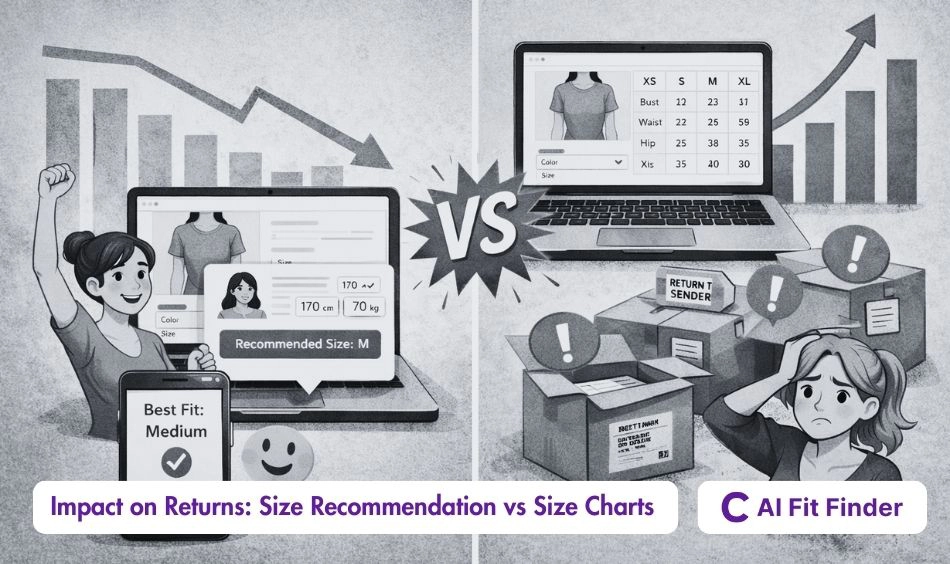
Returns are one of the highest hidden costs in fashion ecommerce.
Why Size Charts Do Little to Reduce Returns
When shoppers guess their size:
- Bracketing increases (ordering multiple sizes)
- Wrong-size purchases rise
- Return volume grows
Charts alone do not prevent these behaviors.
How Size Recommendation Reduces Returns
Size recommendation tools:
- Reduce guesswork
- Minimize bracketing behavior
- Improve first-purchase accuracy
Many merchants report return rate reductions of 20–30% after implementing guided sizing solutions.
Lower returns also improve repeat purchase rates and customer lifetime value.
Mobile Shopping Has Changed How Sizing Works
Mobile users behave differently from desktop shoppers. They browse quickly, scroll fast, and expect instant clarity.
Why Size Charts Fail on Mobile
On small screens:
- Tables become unreadable
- Links are missed
- Extra taps reduce engagement
As a result, mobile shoppers often skip size charts entirely.
Why Size Recommendation Fits Mobile Behavior
Size recommendation tools:
- Display guidance in one tap
- Avoid long tables
- Fit naturally into mobile UX
This aligns with modern shopping behavior and supports higher mobile conversion rates.
When Shopify Size Charts Still Have Value
Size charts are not useless. They still serve a purpose when used correctly.
Size charts work best when:
- Used as secondary reference material
- Paired with clear fit guidance
- Designed with mobile readability in mind
Charts should support confidence, not replace guidance.
Best Practice: Combining Size Recommendation With Size Charts
The strongest Shopify sizing strategy is hybrid.
A recommended approach:
- Use the size recommendation as the primary decision guide
- Keep size charts available for transparency and reassurance
- Place guidance near the size selector
- Position charts slightly away from the main decision flow
This setup supports both new and experienced shoppers.
Which Option Should Shopify Merchants Choose?
Small Shopify Stores
Start with:
- Clean, mobile-friendly size charts
- Clear fit descriptions
As traffic grows, add size recommendations to reduce returns.
Growing Fashion Brands
Size recommendation becomes essential:
- First-time visitors convert better
- Mobile performance improves
- Return rates decline
Scaling Shopify Stores
At scale, guided sizing is no longer optional. Behavior-based recommendations support consistent growth and protect margins.
How AI Fit Finder Supports Size Recommendation on Shopify
AI Fit Finder helps Shopify fashion stores move beyond static charts. It provides:
- Smart size recommendations based on shopper inputs
- Clean, mobile-ready design
- Support for global sizing standards
- Easy integration with product pages
By combining clarity with guidance, AI Fit Finder helps improve conversion rates while reducing size-related returns.
Common Misconceptions About Size Recommendation Tools
“They replace size charts completely.”
Most successful stores use both. Size recommendation leads, charts support.
“They are only for large brands.”
Many tools are built for small and mid-sized Shopify stores.
“They are difficult to configure.”
Modern solutions are quick to install and require minimal setup.
Frequently Asked Questions About Size Recommendation
- What is a size recommendation?
A size recommendation is a guided suggestion that helps shoppers choose the most suitable size based on factors like height, weight, body shape, fit preference, and brand-specific sizing behavior. Unlike static charts, size recommendations reduce guesswork and help shoppers make faster, more confident decisions.
- Are sizing charts accurate?
Sizing charts can be accurate as reference tools, but they are not always reliable for decision-making. They assume shoppers measure themselves correctly and interpret data properly. Differences in body shape, fabric stretch, and brand sizing often make charts less effective on their own.
- What is the main purpose of a size chart?
The main purpose of a size chart is to provide measurement information for transparency. It helps shoppers compare body measurements with garment dimensions. However, size charts are best used as secondary support rather than the primary sizing solution.
- Why are size charts so different across brands?
Size charts differ because there is no universal sizing standard in fashion. Brands use different design patterns, target audiences, fabric types, and fit philosophies. As a result, the same size label can fit very differently from one brand to another.
- What are the common mistakes when using size charts?
Common mistakes include guessing measurements, ignoring fabric stretch, relying only on the size label, skipping charts on mobile due to poor readability, and assuming all brands follow the same sizing rules. These errors often lead to wrong-size purchases and returns.
Final Verdict: What Works Better on Shopify?
Shopify size charts provide information.
Size recommendation provides direction.
In modern fashion ecommerce, direction converts better than data alone.
Merchants who rely only on charts leave conversions on the table. Those who guide shoppers toward the right size reduce friction, lower returns, and grow revenue more efficiently.
For Shopify stores focused on conversion growth, size recommendation works better, especially when paired with clean, supportive size charts.