
Most Shopify fashion stores spend heavily on traffic acquisition. Ads are optimized, creatives are refreshed, and landing pages are improved. Yet despite strong visitor numbers, conversion rates often remain stubbornly low.
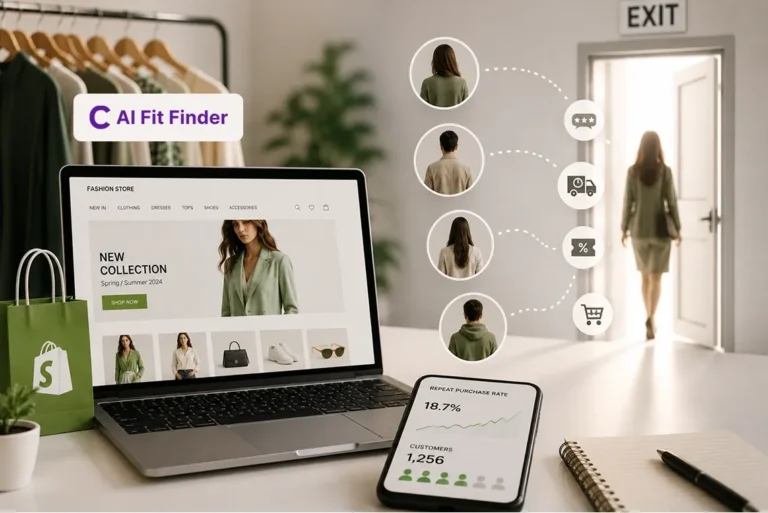
For apparel brands, the problem is rarely a lack of interest. Shoppers browse product pages, scroll through images, and even add items to their carts. The drop-off happens when they are asked to make one final decision: choosing the right size.
This is where Shopify virtual fit room apps change the equation. These tools improve size confidence at the exact moment when hesitation normally appears. By fixing sizing uncertainty, they help stores improve Shopify conversion rate without increasing ad spend.
This article explains how virtual fit room apps improve conversion rates, why traditional CRO tactics fail without sizing clarity, and how fashion brands use fit technology to turn hesitation into completed orders.
Understanding Shopify Conversion Rate in Fashion E-commerce
What Is a Shopify Conversion Rate?
Shopify conversion rate measures the percentage of visitors who complete a purchase. The formula is simple:
Conversion rate = (Orders ÷ Sessions) × 100
If a store receives 20,000 visitors and makes 400 sales, the conversion rate is 2%. While this metric applies to all e-commerce stores, fashion brands face unique challenges that make conversion more difficult.
Why Apparel Stores Often Convert Below Average
Fashion conversion rates are typically lower than other e-commerce categories because:
- Products require personal fit decisions
- Shoppers cannot try items before buying
- Sizing varies by brand and product type
- Mobile shoppers dominate traffic
Even when pricing and design are strong, uncertainty around fit slows decision-making and lowers conversion rates.
Why Traditional CRO Tactics Plateau in Fashion Stores
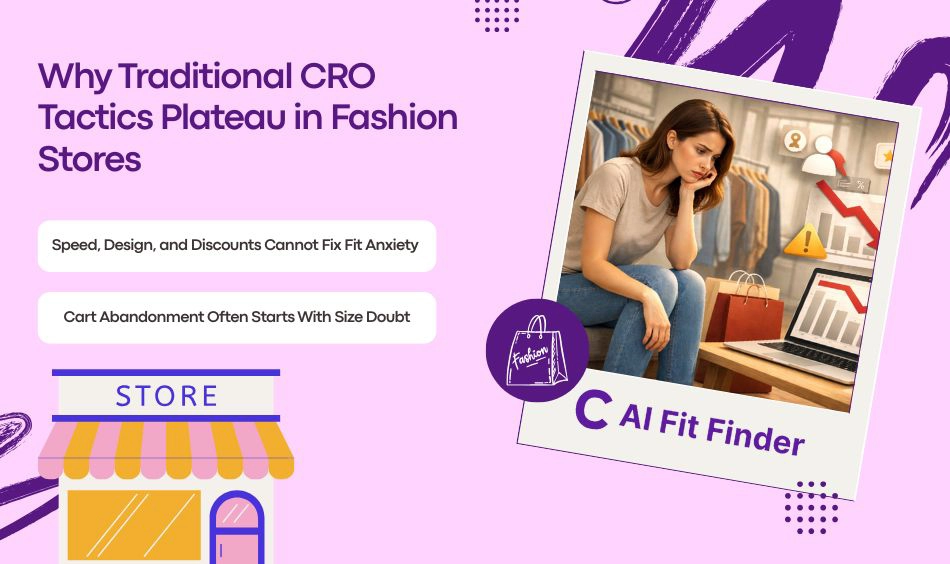
Speed, Design, and Discounts Cannot Fix Fit Anxiety
Improving page speed, upgrading themes, and adding trust badges are all valid CRO tactics. However, they do not address the most common concern fashion shoppers have: Will this fit me?
A shopper may trust your brand and like your product, but still hesitate because sizing feels risky. No amount of visual polish can answer fit-related questions.
Cart Abandonment Often Starts With Size Doubt
Size hesitation appears at two points:
- When selecting a size on the product page
- When reconsidering the decision during checkout
Many carts are abandoned not because of price or shipping costs, but because the shopper suddenly doubts their size choice. This is where conversion rate optimization fails without sizing clarity.
The Role of Size Confidence in Conversion Rate Optimization
Size Information vs Size Guidance
There is a critical difference between information and guidance.
- Size information shows measurements and tables
- Size guidance helps shoppers decide
A standard Shopify size chart provides information. It assumes shoppers will measure themselves, interpret numbers correctly, and translate them into a confident decision. In reality, most shoppers do not want to analyze data. They want reassurance.
How Size Confidence Accelerates Buying Decisions
When shoppers feel confident about fit:
- Decision time shortens
- Add-to-cart rates increase
- Checkout completion improves
Confidence removes mental friction. The easier the size decision feels, the faster shoppers move through the funnel.
What Are Shopify Virtual Fit Room Apps?
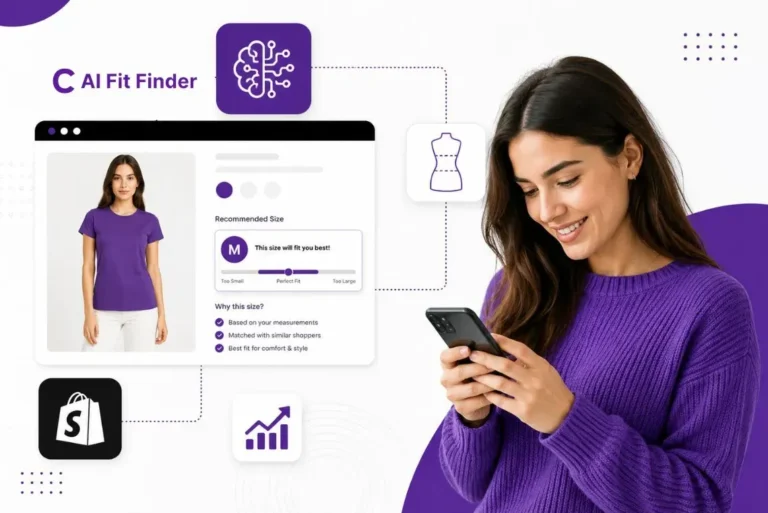
Shopify virtual fit room apps are sizing tools that guide shoppers toward the most suitable size using inputs such as measurements, fit preferences, and brand-specific sizing logic.
Unlike static charts, these apps:
- Reduce effort during size selection,
- Adapt to different products and brands,
- Work smoothly on mobile devices.
They are designed to remove hesitation, not just display data.
How Shopify Virtual Fit Room Apps Improve Conversion Rates
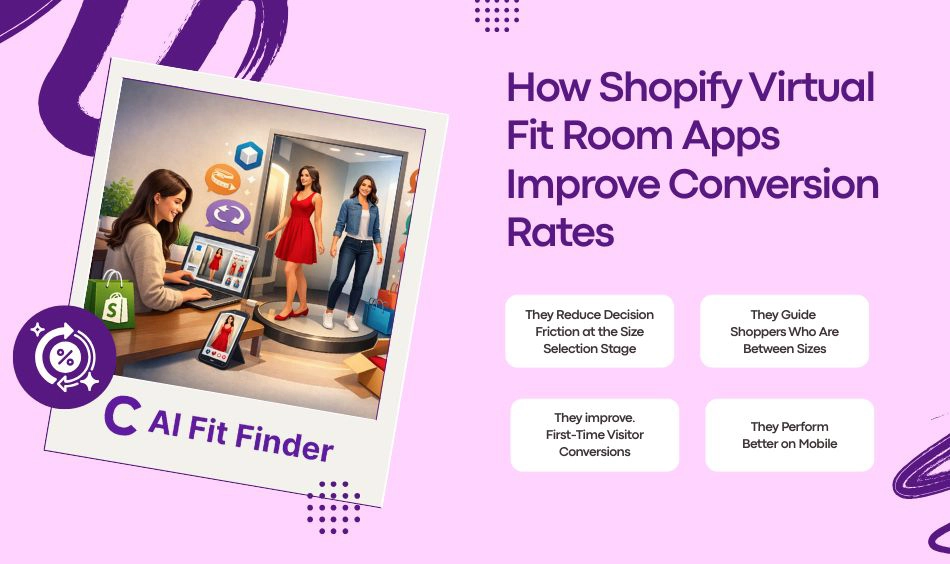
They Reduce Decision Friction at the Size Selection Stage
Every additional click or comparison slows buying momentum. Virtual fit room apps simplify the size selection process by:
- Presenting recommendations directly near the size selector
- Eliminating the need to analyze charts
- Reducing back-and-forth thinking
Lower effort leads to higher conversion.
They Guide Shoppers Who Are Between Sizes
Many shoppers fall between two sizes. Without guidance, they guess or abandon the purchase. Fit room apps solve this by:
- Recommending whether to size up or down
- Explaining the recommendation clearly
- Removing decision pressure from the shopper
When responsibility shifts from the buyer to the system, confidence improves.
They Improve First-Time Visitor Conversions
First-time visitors do not know how a brand’s sizing runs. This makes them more cautious. Virtual fit room apps shorten the trust-building process by providing immediate clarity.
This is especially valuable for:
- New brands
- Paid traffic
- Influencer-driven visits
They Perform Better on Mobile
Mobile shoppers often skip size charts because they are hard to read and scroll. Virtual fit room apps present guidance in a clean, tap-friendly format.
This improves:
- Mobile add-to-cart rates
- Mobile checkout completion
- Overall Shopify conversion rate
Improving conversion rates is closely connected to reducing returns. When shoppers feel confident about sizing, they are more likely to complete a purchase and less likely to send items back. Our detailed guide on how Shopify virtual fit room apps reduce returns in fashion ecommerce explains how better size guidance lowers return rates while protecting profit margins.
Virtual Fit Room Apps vs Size Charts for CRO
| Factor | Size Charts | Virtual Fit Room Apps |
| Shopper Effort | High | Low |
| Personalization | None | High |
| Mobile Usability | Poor | Optimized |
| Fit Confidence | Low | High |
| Conversion Impact | Limited | Strong |
| CRO Scalability | Low | High |
This comparison highlights why size charts alone rarely move conversion rates, while fit room apps act as a true CRO lever.
Key Conversion Metrics Impacted by Better Sizing
Improved Add-to-Cart Rates
When shoppers trust the size recommendation, they act faster. Clear guidance increases add-to-cart activity, especially on high-traffic product pages.
Higher Checkout Completion Rates
Sizing doubts often resurface at checkout. When guidance is strong earlier in the journey, last-minute hesitation decreases, and checkout completion improves.
Higher Repeat Purchase Rates
Correct fit experiences build trust. Shoppers who receive the right size the first time are more likely to return and buy again, improving lifetime value.
How Fashion Brands Use Fit Technology to Drive CRO
High-Traffic Product Pages
Brands often apply virtual fit room tools to their most-viewed products first. This delivers immediate conversion gains where traffic is highest.
International Shoppers
Global customers struggle with size conversions. Virtual fit room apps automatically adjust size logic based on region, reducing confusion and boosting conversions.
Large Catalogs
For brands with hundreds of SKUs, fit technology scales CRO improvements without requiring manual chart updates for every product.
Common CRO Mistakes Shopify Fashion Stores Make With Sizing
Many stores unknowingly block conversions by:
- Treating sizing as a customer support issue
- Assuming size charts are enough
- Ignoring the mobile sizing experience
- Optimizing checkout before fixing product-page hesitation
Sizing decisions happen at the moment of conversion. They must be treated as part of the sales experience, not an afterthought.
How AI Fit Finder Helps Improve Shopify Conversion Rates
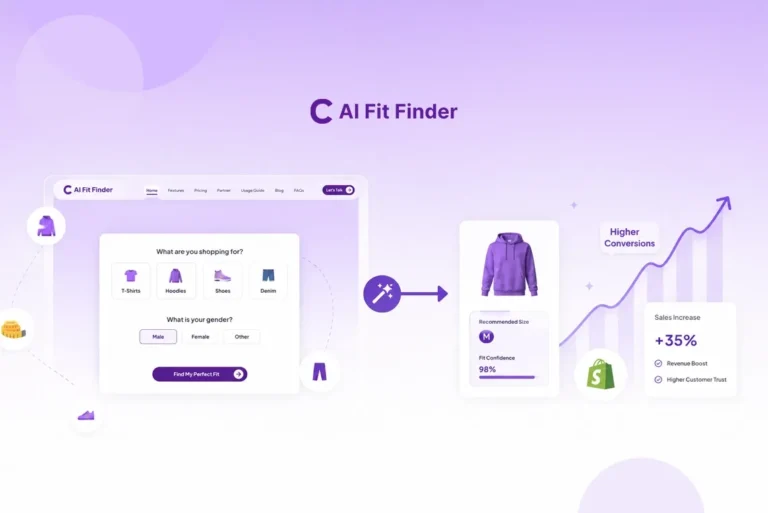
AI Fit Finder helps fashion brands improve Shopify conversion rate by focusing on size guidance rather than static information.
The app offers:
- Smart size recommendations
- Mobile-first design
- Brand-specific sizing logic
- Support for global size standards
By reducing size confusion, AI Fit Finder helps shoppers decide faster, lowers hesitation, and increases completed purchases.
FAQs About Shopify Conversion Rate and Sizing
1. Why is my Shopify conversion rate so low?
A low Shopify conversion rate is often caused by buyer hesitation rather than a lack of traffic. Common reasons include unclear sizing, poor mobile experience, slow page speed, lack of trust signals, or confusing product information. For fashion stores, size confusion and fit uncertainty are among the biggest conversion blockers.
2. Is 2% a good conversion rate on Shopify?
A 2% conversion rate is generally considered average for Shopify stores. For fashion and apparel brands, conversion rates typically range between 1.5% and 3%. Stores that provide clear size guidance and reduce hesitation often perform above this average.
3. What is a good conversion rate for Shopify stores?
A good Shopify conversion rate depends on the industry, traffic source, and product type.
- Below 1.5%: Needs improvement
- 1.5%–2.5%: Average
- 2.5%–4%: Strong
- Above 4%: High-performing
Fashion stores with strong sizing clarity and low friction often reach the higher end of this range.
4. How can I increase my Shopify conversion rate?
You can increase your Shopify conversion rate by reducing buyer hesitation at key decision points. This includes improving size clarity, adding fit context to product pages, simplifying checkout, optimizing for mobile, improving page speed, and guiding shoppers instead of forcing them to guess—especially when selecting a size.
5. How much does Shopify take from a $100 sale?
Shopify’s fees depend on your plan and payment method. On average:
- Shopify Payments charges around 2.4%–2.9% + $0.30 per transaction
- For a $100 sale, Shopify typically takes $2.70–$3.20 in payment processing fees
- Additional transaction fees may apply if you use third-party payment gateways
Reducing returns and improving conversion rates helps offset these costs and protect profit margins.
Conclusion: Conversion Rate Growth Starts With Fit Confidence
Improving Shopify conversion rate is not just about speed, design, or discounts. For fashion ecommerce, it is about confidence at the moment of decision.
Shopify virtual fit room apps improve conversion rates by fixing the most common source of hesitation: size confusion. They reduce effort, guide decisions, and help shoppers move forward with confidence.
For fashion brands looking to grow revenue without increasing traffic costs, fixing sizing is one of the highest-impact CRO strategies available.