
Fashion e-commerce continues to grow, but one challenge remains unchanged: the issue of size confidence.
Shoppers love browsing apparel online, but many hesitate at the final step because they are unsure about fit. This hesitation quietly hurts sales, increases cart abandonment, and drives costly returns.
For Shopify fashion stores, sizing problems are not just a customer experience issue. They directly affect revenue. This is why Shopify virtual fit room apps are gaining attention. These tools help shoppers choose the right size by combining size recommendation logic with measurement-based guidance.
This article explains what Shopify virtual fit room apps are, how size recommendations and measurements work behind the scenes, and why more fashion brands are using these tools to improve conversions and reduce returns.
What Is a Shopify Virtual Fit Room App?
A Shopify virtual fit room app is a sizing tool designed to help shoppers choose the correct size before checkout. Unlike traditional size charts, these apps do not rely only on static tables.
Instead, they guide shoppers through a more interactive sizing experience using:
- Body-related inputs
- Fit preferences
- Brand-specific size rules
- Product-level fit data
The goal is simple: reduce size guesswork and improve buying confidence.
Virtual Fit Room vs Traditional Size Charts
Traditional size charts show numbers.
Virtual fit room apps explain fit.
Size charts require shoppers to:
- Know their exact measurements
- Interpret charts correctly
- Guess how the garment will feel
Virtual fit room Shopify apps remove much of this effort by offering clearer guidance at the moment of decision.
How Size Recommendation Works in Shopify Virtual Fit Room Apps
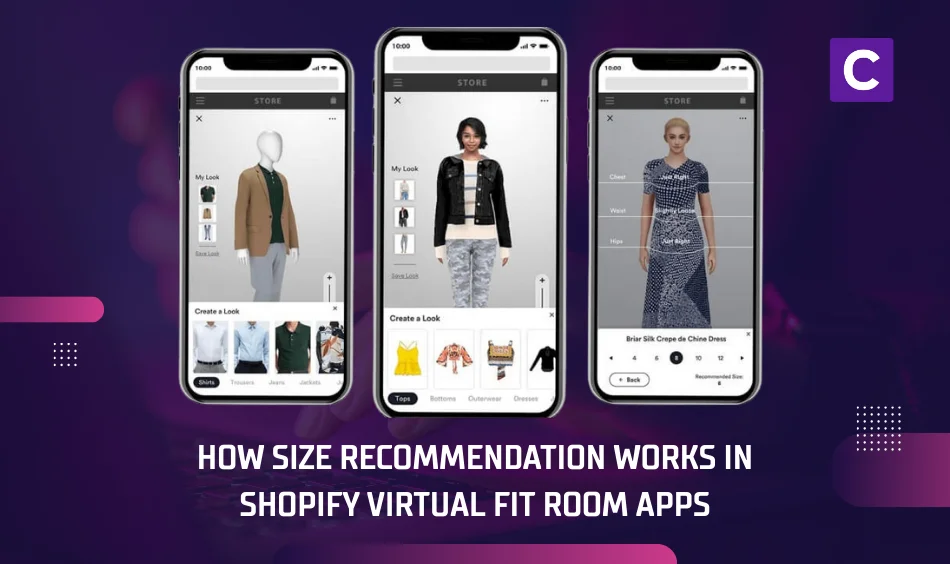
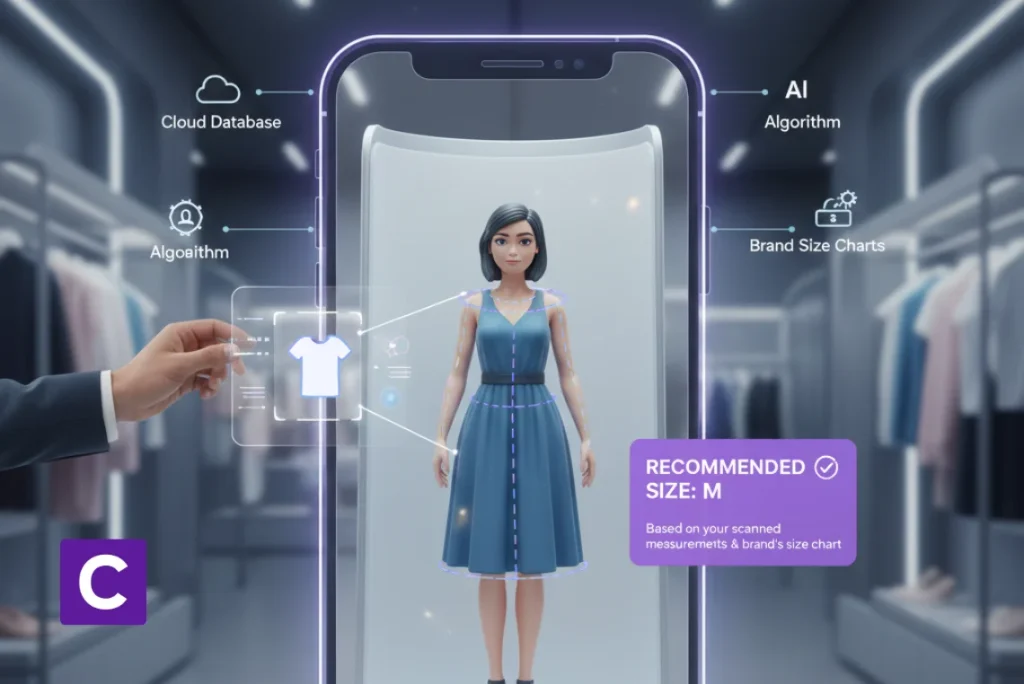
Size recommendation is the core feature of most virtual fit room tools. It helps shoppers pick the most suitable size based on their inputs and product data.
Data Inputs Used for Size Recommendation
Most Shopify size recommendation apps use a combination of the following inputs:
- Height and weight
- Bust, waist, and hip measurements (optional)
- Fit preference (tight, regular, relaxed)
- Brand sizing behavior
- Product type (dress, top, pants, kidswear)
- Regional sizing rules (US, UK, EU, Asian)
Some advanced tools also analyze:
- Past purchases
- Return reasons
- Size exchanges
This data helps the app predict which size is most likely to fit the shopper.
How Measurement-Based Fit Tools Improve Accuracy
Measurement-based sizing remains an important part of fit accuracy. Many shoppers still prefer entering measurements when buying fitted or structured garments.
Manual Measurement Matching
Manual sizing works by matching a person’s body measurements with the corresponding garment measurements.
This method is helpful when:
- The shopper knows their measurements
- The garment has little stretch
- Precision matters
However, manual measurement alone has limits. Many shoppers measure incorrectly or skip this step entirely, especially on mobile.
AI-Based Measurement Models
Modern size measurement apps on Shopify go beyond manual input.
They estimate fit using predictive logic, even when shoppers do not provide exact measurements.
These tools work well for:
- Mobile shoppers
- First-time visitors
- Shoppers are unsure about brand sizing
By reducing the effort required, AI-based sizing improves accuracy without slowing down the buying process.
Types of Shopify Virtual Fit Room Apps
Not all virtual fit room apps work the same way. Shopify merchants typically choose from three categories.
Size Recommendation Apps
These apps focus on predicting the correct size using shopper inputs and product rules.
They are lightweight, fast, and conversion-focused.
Best for:
- High-traffic fashion stores
- Mobile-first shoppers
- Brands focused on reducing returns
Virtual Try-On and Visualization Tools
These tools use avatars or AR to show how clothing may look on a body.
They improve engagement but may require more setup and device compatibility.
Limitations include:
- Higher friction
- Slower load times
- Less focus on actual fit accuracy
Hybrid Fit Room Solutions
Hybrid tools combine:
- Size charts
- AI size recommendation
- Visual cues
This approach gives shoppers both clarity and flexibility.
Why Size Recommendation Matters More Than Virtual Try-On
While virtual try-on visuals look impressive, most shoppers care more about one thing:
Will this fit me?
Size recommendation tools answer this question quickly and clearly.
Key reasons the size recommendation works better:
- Faster decision-making
- Less effort on mobile
- Reduced fear of returns
- Clear guidance at checkout
For conversion-focused Shopify stores, size accuracy matters more than visuals alone.
Impact of Virtual Fit Room Apps on Shopify Performance
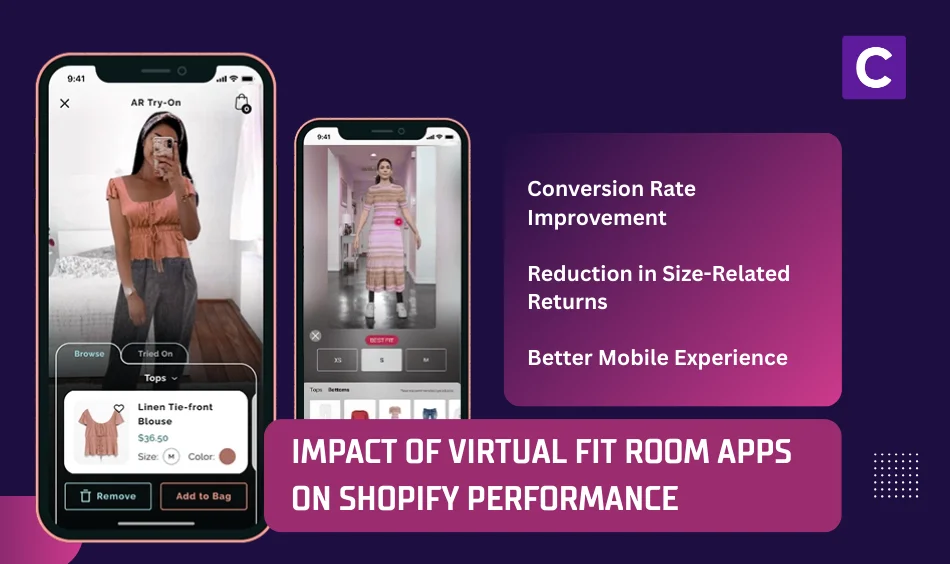
Sizing tools affect multiple performance metrics across the buying journey.
Conversion Rate Improvement
When shoppers feel confident about size, they move forward faster.
Clear size guidance reduces hesitation at the product page and checkout.
Many Shopify fashion brands see:
- Higher add-to-cart rates
- Faster checkout completion
- Improved first-time buyer conversions
Reduction in Size-Related Returns
Size mismatch is the leading reason for fashion returns.
Virtual fit room apps reduce this by helping shoppers choose the correct size the first time.
Lower returns mean:
- Reduced reverse logistics cost
- Better profit margins
- Higher customer satisfaction
Better Mobile Experience
Mobile shoppers dislike scrolling through large tables.
A one-tap size recommendation improves usability and keeps shoppers engaged.
How Shopify Merchants Use Virtual Fit Room Apps
Helping First-Time Buyers
New visitors do not know a brand’s sizing rules.
A size recommendation from the Shopify app provides instant clarity, improving trust and conversion.
Supporting International Customers
Global shoppers face confusing size conversions.
Virtual fit room Shopify tools detect region and adjust recommendations automatically.
Managing Large Product Catalogs
Brands with hundreds of SKUs need scalable sizing logic.
Virtual fit room apps apply size rules across collections without manual updates.
Key Features to Look for in Shopify Virtual Fit Room Apps
Before choosing a tool, merchants should evaluate these features:
- Mobile-friendly interface
- Custom size charts per product type
- AI-based size recommendation
- Multi-region sizing support
- Easy theme integration
- Fast setup without coding
Shopify Virtual Fit Room Apps vs Traditional Size Charts
| Feature | Traditional Size Charts | Shopify Virtual Fit Room Apps |
| User Effort | High | Low |
| Personalization | None | High |
| Mobile Experience | Poor | Optimized |
| Size Accuracy | Limited | Strong |
| Fit Preference Support | No | Yes |
| Return Reduction | Low impact | Proven reduction |
| Conversion Impact | Minimal | Significant |
This comparison explains why many Shopify fashion stores are upgrading from static charts to smart fit tools.
Common Misconceptions About Virtual Fit Room Apps
Despite their growing adoption, many fashion brands still hesitate to use virtual fit room apps due to outdated assumptions. These misconceptions often prevent stores from fixing sizing issues that directly impact conversions and returns.
“Virtual Fit Room Apps Replace Size Charts Completely”
This is one of the most common misunderstandings. In reality, most successful Shopify stores use virtual fit room apps alongside size charts, not instead of them. Size charts provide baseline measurement data, while fit tools add clarity by interpreting that data in a shopper-friendly way. Together, they create a stronger sizing experience that reduces guesswork.
“They Are Only for Large or Enterprise Brands”
Virtual fit room apps are no longer limited to large fashion retailers. Many modern Shopify apps are built specifically for small and mid-sized stores, offering quick installation and easy configuration. These tools scale with the store, making them suitable for growing brands that want to reduce returns early rather than wait until problems grow.
“They Are Hard to Set Up and Maintain”
Earlier sizing tools required heavy configuration and technical work. Today’s virtual fit room apps focus on simple onboarding, minimal data input, and compatibility with common Shopify themes. Most apps work across large catalogs without needing manual size updates for every product, saving time for store owners.
“Shoppers Won’t Trust Automated Size Recommendations”
Modern shoppers are already familiar with personalized recommendations across e-commerce platforms. When size guidance is presented clearly and transparently, shoppers are more likely to trust it than static charts. Fit tools that explain why a size is recommended build confidence and support faster purchase decisions.
How AI Fit Finder Supports Size Recommendation on Shopify
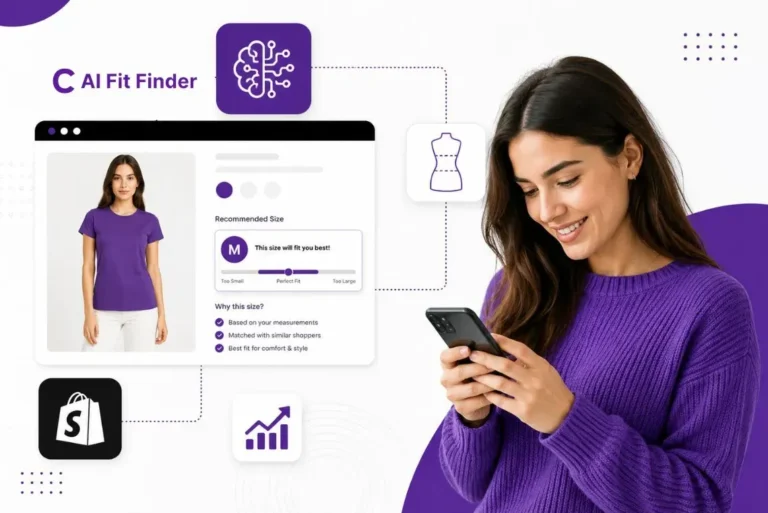
AI Fit Finder helps fashion brands deliver accurate size guidance with minimal friction.
The app offers:
- Clean, mobile-ready size charts
- Smart AI size recommendations
- Support for US, UK, EU, and Asian sizes
- Scalable sizing rules across catalogs
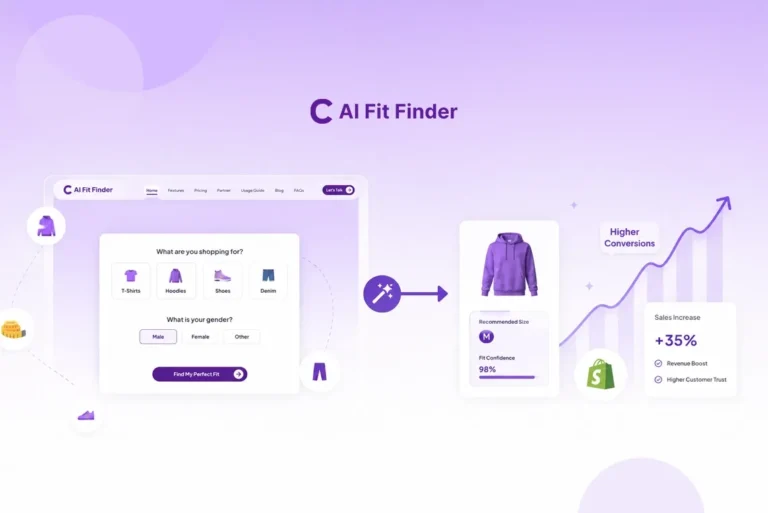
Brands use AI Fit Finder to improve size clarity, reduce returns, and increase conversions without disrupting the shopping experience.
The Future of Virtual Fit Rooms on Shopify
Fit technology continues to evolve.
Future trends include:
- Smarter AI prediction models
- Better personalization
- Deeper integration with shopper behavior
- Fit is becoming a core conversion metric
As competition increases, sizing accuracy will separate high-performing stores from average ones.
FAQs About Shopify Virtual Fit Room Apps
1. What are virtual fitting rooms?
Virtual fitting rooms are digital tools that help shoppers choose the right clothing size online. They use size recommendation logic, measurements, or AI-based inputs to predict how a garment will fit, reducing guesswork and returns.
2. What is the 3-3-3 rule in fashion?
The 3-3-3 rule in fashion is a styling concept where shoppers create outfits using three tops, three bottoms, and three pairs of shoes. It helps simplify wardrobe choices but is not directly related to sizing or fit accuracy.
3. How can a brand create a virtual fitting room?
Brands can create a virtual fitting room by installing a Shopify virtual fit room app. These apps use size charts, measurements, AI size recommendations, or body-data logic to guide shoppers. Most modern tools require no coding and integrate directly with product pages.
4. How does a virtual bra fitting work?
A virtual bra fitting works by analyzing measurements like bust and underbust size, along with fit preference. Some tools also use past purchase behavior or guided questions to suggest the most accurate size without requiring an in-store fitting.
5. What are virtual fitting rooms, how do they work, and which apps are used in 2025?
Virtual fitting rooms in 2025 combine size recommendation, measurement logic, and AI models. They collect shopper inputs such as height, weight, or fit preference, then match this data with garment sizing rules. Shopify merchants commonly use size recommendation and virtual fit room apps to improve conversions and reduce returns.
6. What is the meaning of virtual fashion?
Virtual fashion refers to digital clothing experiences, including virtual try-ons, 3D garments, and online fit tools. In e-commerce, it mainly focuses on improving how shoppers view, size, and interact with fashion products online.
7. What is an example of virtual technology in fashion ecommerce?
An example of virtual technology in fashion ecommerce is a Shopify virtual fit room app that recommends the correct size based on shopper data. Other examples include virtual try-on tools, AI size advisors, and measurement-based fit guides.
Conclusion
Sizing remains one of the biggest conversion blockers in fashion e-commerce. Traditional size charts alone are no longer enough to meet shopper expectations.
Shopify virtual fit room apps solve this problem by combining size recommendation and measurement-based logic. They help shoppers choose confidently, reduce returns, and improve conversion rates.
For Shopify fashion brands focused on growth, fit accuracy is no longer optional. It is becoming a key part of conversion optimization and long-term customer trust.